
Free advice from our biologist and nutritionist. Learn More




Activated Zeolite
Price range: 20,00 € through 39,00 €
100 Capsules / 100 g
Get to know zeolite and choose your format.
Activated Zeolite is available in capsules and powder. The full product information explains the composition, micronisation process and mineral characteristics, helping you make an informed choice with our support.
- ✓ Micronised mineral.
- ✓ Capsule and powder formats.
- ✓ Read the intended use and directions on the pack.
- Free shipping in Italy on orders of €70 or more
- Prepared within 1 working day + GLS transit of 2–4 working days
- Buy directly from our laboratory
- Free product advice from our biologist and nutritionist
The complete product information: features, composition and directions for use.


For capsules and softgels, this refers to the contents, excluding the shell.
Micronised Zeolite: a natural mineral with a high specific surface area, discussed in intestinal wellbeing routines
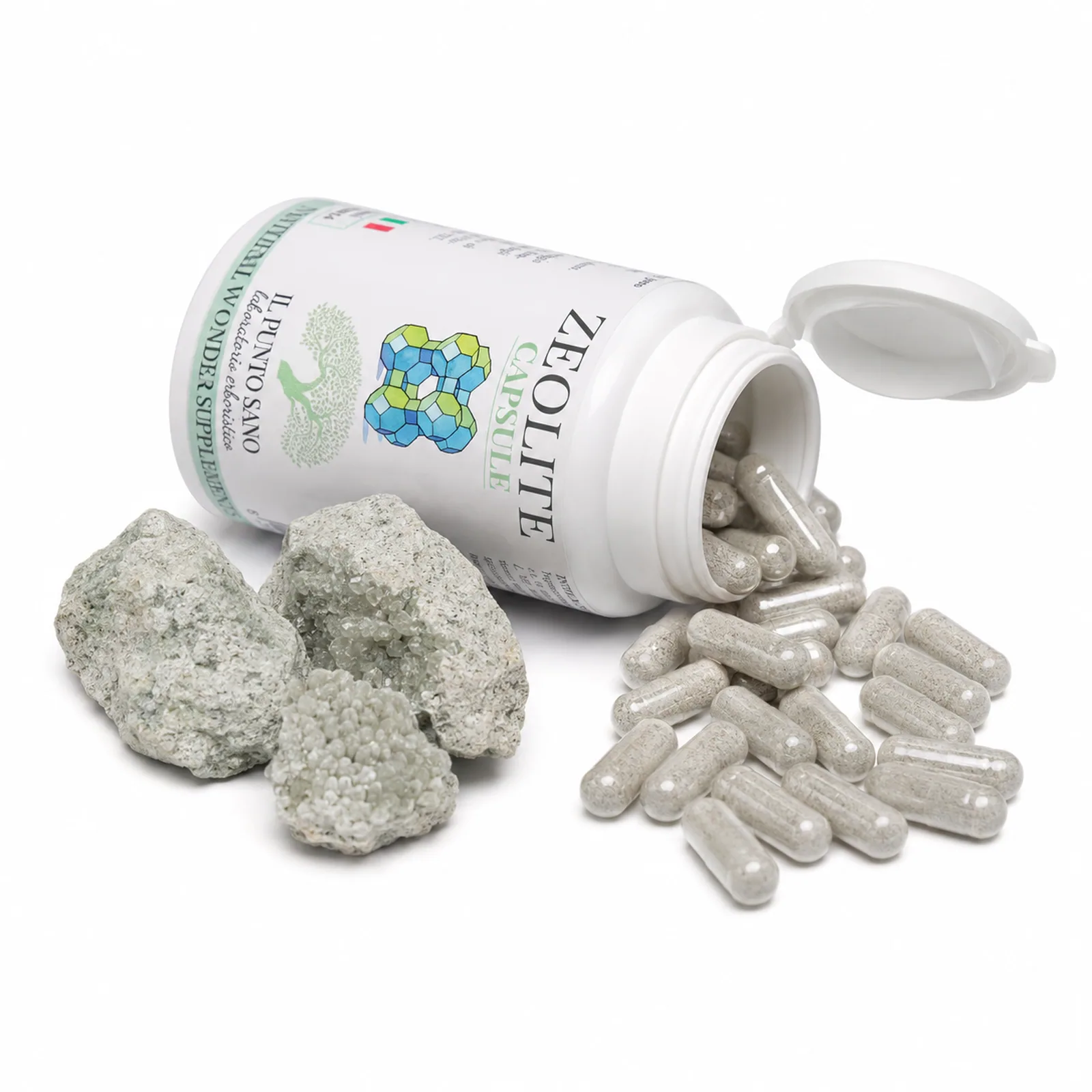
The Micronised Zeolite is a product based on natural volcanic minerals that undergo micronisation, a process reducing the raw material’s particle size and increasing the mineral’s specific surface area.
Zeolite is known for its distinctive microporous structure and physicochemical properties of adsorption and ion exchange. These features make it a raw material of considerable interest in environmental, technical, animal-husbandry and nutritional fields.
Our Zeolite is available in two formats: capsules, convenient to take, and powder, ideal for anyone preferring a loose form to measure into water.
What is zeolite?
Zeolites are naturally occurring volcanic minerals belonging to the aluminosilicate family. Their structure consists of silicon and aluminium tetrahedra connected by oxygen atoms, forming a porous crystalline network.
Among natural zeolites, clinoptilolite is one of the most widespread and studied. Its microporous structure allows interaction with various molecules and ions, making it interesting for adsorption and ion-exchange applications.
It is important to distinguish the mineral’s physicochemical properties from permitted health claims for a product intended for human consumption. Technical information on zeolite is included here as descriptive and documentary background.
Why choose Micronised Zeolite
- A natural volcanic mineral, processed by micronisation.
- High specific surface area, through reduced particle size.
- Microporous structure, characteristic of natural zeolites.
- An essential raw material, without preservatives.
- Available in capsules and powder, for different usage preferences.
- 0% excipients in the contents: the contents consist of micronised zeolite.
- Full composition available in the product information.
Micronisation: why it matters
The process of micronisation reduces zeolite particle size, increasing the mineral’s contact surface. Greater specific surface area may improve zeolite’s physical interaction with the environment in which it is dispersed.
This is particularly relevant to a raw material whose action is associated with porous structure and ion-exchange capacity. Micronisation therefore produces a finer, more uniform powder that is easily dispersed in water.
Zeolite and adsorption properties
Zeolite is studied for its adsorption, meaning its ability to retain certain substances on its surface or within its porous structure.
In technical and environmental settings, zeolites have long been used for water treatment, wastewater management, ammonia control and ion exchange. These uses demonstrate the mineral’s physicochemical interest but must not be confused with therapeutic or health indications for the product.
In nutritional contexts, zeolite is chosen by people seeking a natural mineral product within general wellbeing routines, always as part of a balanced lifestyle with adequate hydration.
Volcanic origin and natural formation
Natural zeolites form through complex geological processes, often associated with the transformation of volcanic rocks under particular conditions of temperature, pressure and water availability.
During these processes, volcanic materials undergo structural changes that produce porous minerals, including clinoptilolite. Zeolite’s final structure depends on the original rock composition and environmental conditions during zeolitisation.
Zeolite and scientific research
Zeolite has been extensively studied in fields including environmental chemistry, animal husbandry, agriculture, materials technology and nutritional research.
Many studies have assessed clinoptilolite’s ability to interact with ions and molecules under specific experimental conditions. Researchers have also examined how particle size, micronisation and porous structure affect the mineral’s adsorptive properties.
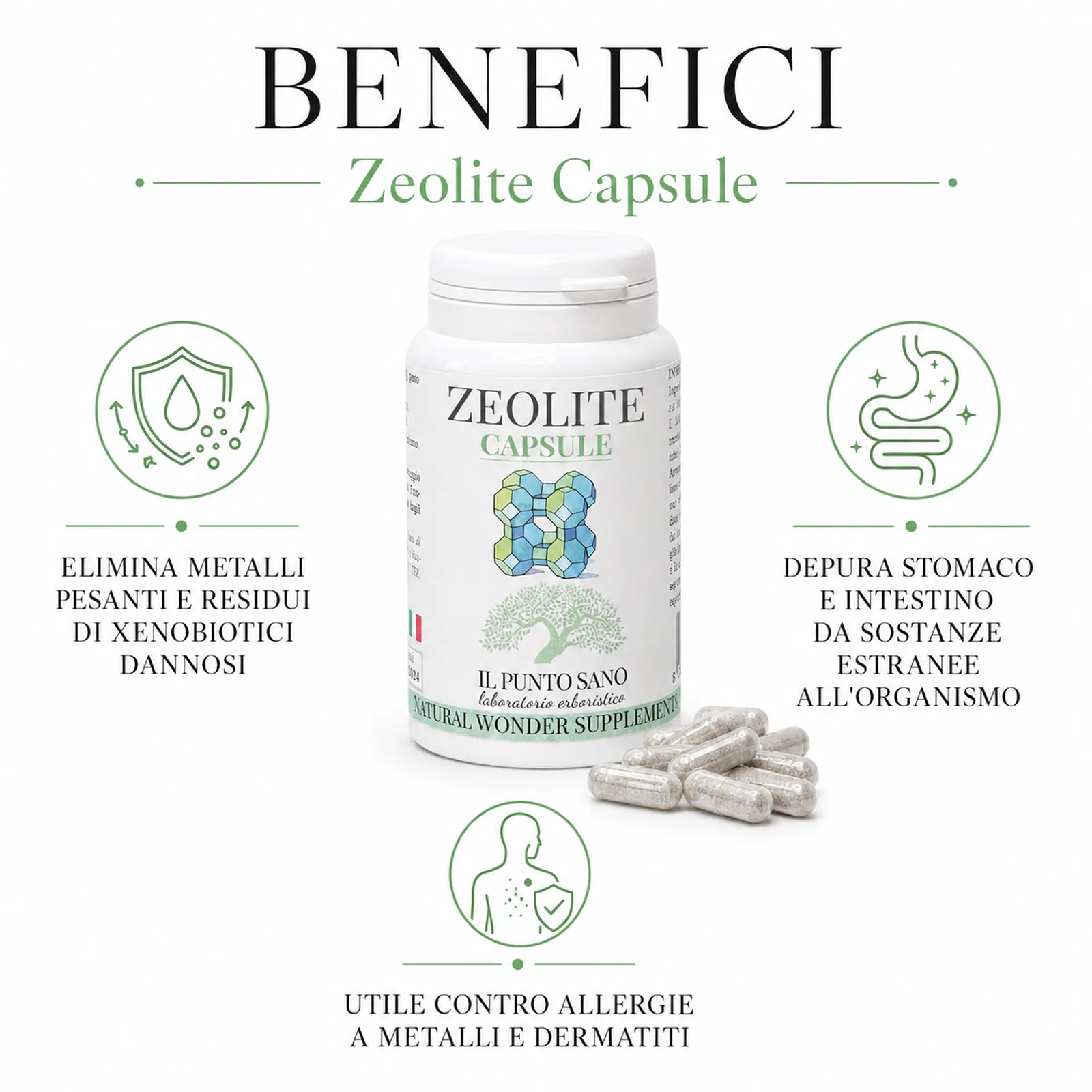
The literature helps explain zeolite’s behaviour as a mineral material. This product information does not promise removal of toxins, heavy metals or harmful substances from the body.
Ingredients and daily amounts
Composition of the two formats: capsules and powder
| Format | Ingredient | Daily amount | Notes |
|---|---|---|---|
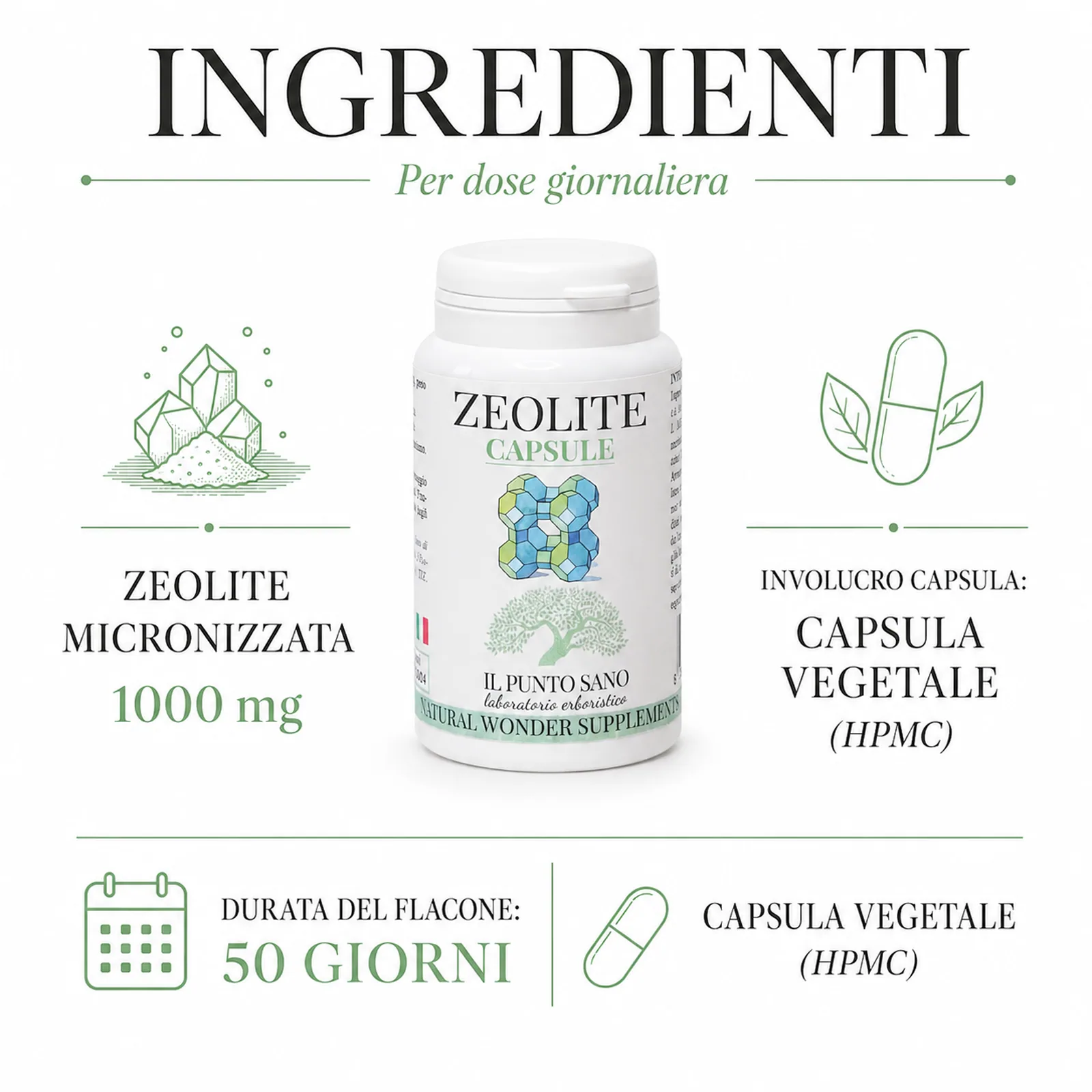
| Zeolite Capsules | Micronised zeolite | 1000 mg | Capsule shell: plant-based HPMC capsule |
| Zeolite Powder | Micronised zeolite | 3000 mg | Loose powder to dissolve or disperse in water |
Directions for use – Zeolite Capsules
According to your needs, take 1 or 2 capsules a day with at least 250 ml of water. Maintain adequate hydration throughout the day.
Directions for use – Zeolite Powder
Take half a small coffee spoon dispersed in approximately 250 ml of water. Stir well before taking. Maintain adequate fluid intake throughout the day.
0% excipients in the contents
The product contents consist of micronised zeolite. The capsule version uses a plant-based HPMC shell.
The information on this website is provided solely for informational and educational purposes. It does not constitute therapeutic advice or replace medical advice. This product is not a medicine and is not intended to diagnose, prevent, treat or cure human disease. References to zeolite’s microporous structure, micronisation, adsorption, ion exchange and technical or environmental uses are descriptive and documentary and must not be interpreted as health or therapeutic claims.
Frequently asked questions
What pack sizes are available?
Choose 100 capsules or a 100 g powder pack.
How should I use the product?
Capsules: take 1 or 2 a day with at least 250 ml of water. Powder: disperse half a small coffee spoon in about 250 ml of water and stir well. Maintain adequate hydration.
| varietà di prodotti | 100 Capsule, Polvere 100 gr |
|---|




 English (UK)
 Italiano
Reviews
There are no reviews yet.