
Free advice from our biologist and nutritionist. Learn More

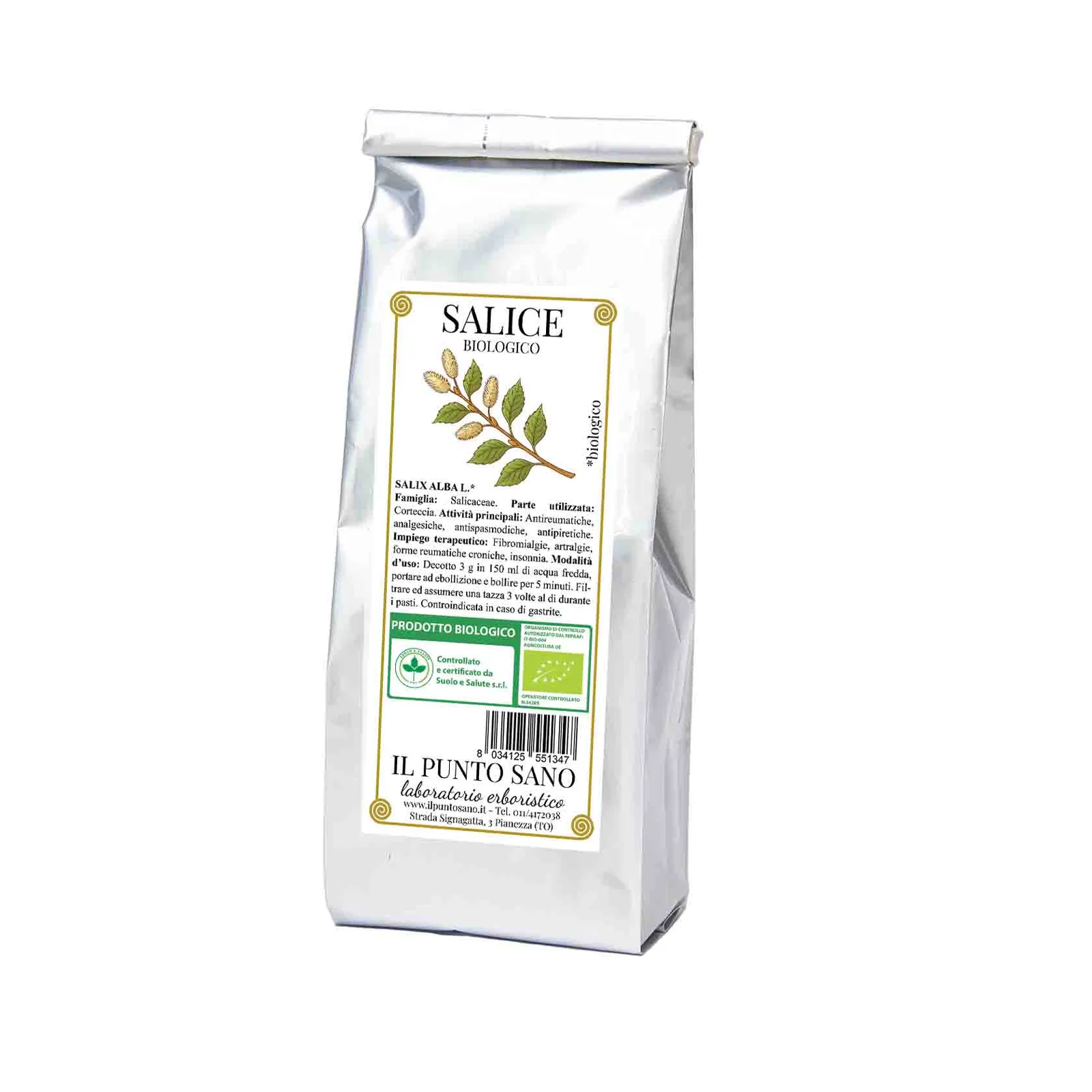



Organic White Willow Bark Herbal Tea
7,60 €
60 g
White willow for your movement routine.
White Willow by Il Punto Sano provides white willow bark, a traditional plant for joint function and localised tension.
- ✓ White willow bark.
- ✓ A traditional plant for joint function and localised tension.
- ✓ Full preparation and directions always available.
- Free shipping in Italy on orders of €70 or more
- Prepared within 1 working day + GLS transit of 2–4 working days
- Buy directly from our laboratory
- Free product advice from our biologist and nutritionist
Full product information: features, ingredients and directions for use.


Organic White Willow: bark for joint function and localised tension
Organic White Willow by Il Punto Sano is a certified organic herbal tea made with bark of Salix alba L., a tree in the Salicaceae family, traditionally known as a defining source of naturally occurring salicylate derivatives.
White Willow bark contains salicin, salicortin, tremulacin, flavonoids, tannins, phenolic compounds and other characteristic herbal constituents. Its role in a wellbeing routine is support for: joint function, localised tension and normal perspiration, rather than acting as an analgesic, antirheumatic, antipyretic or natural medicine.
Traditional descriptions mention antirheumatic, analgesic, antispasmodic and antipyretic uses, fibromyalgia, joint pain, chronic rheumatic conditions and insomnia. These are historical references: White Willow bark may support normal functions, but is not a treatment for pain, fever, rheumatism, fibromyalgia, arthritis, insomnia or diagnosed disease.
Why choose Organic White Willow by Il Punto Sano
- Certified organic bark of Salix alba, a herb from the Salicaceae family.
- Supports joint function, as physiological support rather than treatment.
- Support for localised tension, without a promise of pharmacological pain relief.
- Supports normal perspiration, reflecting traditional use.
- Contains salicin and natural salicylate derivatives, characteristic constituents of the bark.
- Traditional joint and tension-support profile, suited to blends for mobility and musculoskeletal wellbeing.
- Selected, certified organic raw material, without artificial flavourings, colourings or preservatives.
- Intended for adults, with specific warnings concerning salicylates, medicines and sensitive stomachs.
Salix alba: the botany of White Willow
Salix alba L., known as White Willow, White willow or Willow bark, is a deciduous tree in the Salicaceae family, widespread in damp environments, riverbanks and temperate regions.
It has a tree-like habit, flexible branches, lance-shaped leaves with paler undersides and catkin flowers. The name “alba” refers to the pale, silvery appearance of the leaf undersides.
The part used in this preparation is the bark, particularly from young branches, known in herbal practice as Salicis cortex. This is the part most traditionally associated with salicylate derivatives and joint function.
At a glance
Organic White Willow by Il Punto Sano is a certified organic herbal tea made with bark of Salix alba, traditionally used for joint function, localised tension and normal perspiration.
White Willow and traditional use
White Willow bark has a long herbal tradition, historically associated with musculoskeletal complaints, perspiration and cold-season preparations, particularly because it naturally contains salicin and salicylate derivatives.
It should not be regarded as “natural aspirin”, a “natural analgesic”, “natural anti-inflammatory” or “natural antipyretic”: these descriptions can misleadingly suggest that the tea is a medicine.
White Willow bark is best understood as a plant for joint function, localised tension and normal perspiration, with clear attention to salicylate warnings.
White Willow and joint function
The main wellbeing application of White Willow bark is joint function. This places it within routines dedicated to mobility, joints and musculoskeletal wellbeing.
It offers physiological joint-function support, rather than treatment of arthritis, osteoarthritis, rheumatism, fibromyalgia, chronic pain or inflammatory diseases.
Persistent pain, swelling, redness, warmth around a joint, fever, reduced function or a rheumatological diagnosis require medical advice.
White Willow and localised tension
White Willow bark is also traditionally used for localised tension. This is supportive herbal use, rather than an analgesic, painkiller or antispasmodic treatment.
It may be relevant in blends for localised musculoskeletal tension, particularly alongside Devil’s Claw, Ash, Meadowsweet, Boswellia, Turmeric, Nettle or Blackcurrant leaves.
It is not a treatment for significant back pain, neck pain, neuralgia, cramps, spasms, injuries, acute inflammation or chronic pain.
White Willow and perspiration
Its traditional physiological uses also include normal perspiration. This may be relevant in seasonal teas, but should not be interpreted as an antipyretic effect.
The tea should not be described as “lowering fever”, a “natural antipyretic” or “treating fever”. Fever has many possible causes and may need medical assessment.
Do not use White Willow bark as a self-treatment with high or persistent fever, significant respiratory symptoms, chest pain, neck stiffness, rapid deterioration, or in children and adolescents.
White Willow and salicin
The salicin is one of willow bark’s best-known constituents. After ingestion, salicylate derivatives can be converted into metabolites related to salicylic acid, making the warnings particularly important.
Salicin is a characteristic constituent, rather than a basis for promising pain-relieving, anti-inflammatory or fever-reducing effects from this product.
Pay attention to the daily salicin amount stated on the label, which must not exceed the specified limit, and to warnings about antiplatelet and anticoagulant medicines.
White Willow and gastritis
Gastritis is a contraindication requiring attention, as salicylate derivatives can be problematic for a sensitive stomach.
Avoid use with significant gastritis, gastric or duodenal ulcers, marked reflux, gastrointestinal bleeding, black stools, persistent gastric pain or frequent NSAID use.
Traditional use with meals may improve tolerability but does not remove contraindications. With gastric complaints, avoid use or seek medical advice.
White Willow and anticoagulant or antiplatelet medicines
Willow requires particular care with medicines affecting clotting or increasing bleeding risk.
If you take warfarin, heparins, DOACs, acetylsalicylic acid, clopidogrel, ticlopidine, antiplatelets, anticoagulants, NSAIDs, corticosteroids or other medicines increasing bleeding risk, seek medical advice before use.
The same applies with planned surgery, dental extractions, recurrent bleeding, easy bruising, clotting disorders or a history of ulcers.
White Willow and allergies to aspirin, salicylates or NSAIDs
Willow bark is not recommended with allergy or hypersensitivity to aspirin, salicylates or non-steroidal anti-inflammatory drugs.
This also matters for anyone who has experienced bronchospasm, asthma, hives, angioedema, rhinitis or allergic reactions after aspirin or NSAIDs.
The tea should not be considered a safer option simply because it is natural: its salicylates require appropriate care.
White Willow, fibromyalgia and chronic pain
Fibromyalgia appears in historical descriptions, but is not an appropriate product indication: it is a complex, chronic, multifactorial condition.
White Willow is a traditional plant for joint function and localised tension, without a direct indication for treating fibromyalgia.
Widespread pain, marked tiredness, sleep disturbances, chronic pain or diagnosed fibromyalgia require medical and multidisciplinary care.
White Willow, joint pain and rheumatic conditions
Joint pain and rheumatic conditions are medical matters and should not be regarded as direct indications for this tea.
Its role is support for joint function and localised tension.
Seek medical advice before use with arthritis, severe osteoarthritis, rheumatism, persistent joint pain, swelling or treatment with anti-inflammatories, anticoagulants or corticosteroids.
White Willow and insomnia
Insomnia appears in historical descriptions, but should not be a principal reason for choosing White Willow bark.
Willow is not a relaxing or sedative herb such as Passionflower, Lemon Balm, Linden, Hops or Valerian. Historical references to rest may relate to physical discomfort, rather than promising a sleep effect.
Persistent insomnia, frequent waking, anxiety, depression, night-time pain or significant daytime tiredness require professional assessment.
White Willow in children and adolescents
Willow is not recommended for children and adolescents, particularly because of its salicylate derivatives.
This is especially important with fever, influenza, chickenpox, viral infections or seasonal symptoms, where salicylates are not an appropriate choice in childhood.
The product is intended for adults and should not be used in children or adolescents unless specifically advised by a doctor.
White Willow in pregnancy and breastfeeding
Avoid White Willow bark during pregnancy and breastfeeding unless a doctor advises otherwise.
Its salicylate derivatives make it unsuitable for general use during these stages, particularly in the third trimester, close to delivery or alongside medicines.
A botanical product’s safety should never be assumed simply because it is natural: pregnancy and breastfeeding need specific assessment.
White Willow in joint-support blends
In joint-function blends, White Willow can be combined with Devil’s Claw, Ash, Meadowsweet, Boswellia, Turmeric, Nettle, Horsetail, Blackcurrant leaves or Dandelion.
Assess combinations carefully because some plants share cautions relating to the stomach, anticoagulants, anti-inflammatories or particular medical conditions.
These blends offer joint-function support, rather than treatment of pain, inflammation, arthritis or rheumatism.
Characteristic constituents of White Willow
The bark of Salix alba contains a phytocomplex characterised by salicin, salicortin, tremulacin, populin, salicylate derivatives, flavonoids, tannins, catechins, phenolic acids, polyphenolic compounds and bitter substances.
Salicin is the best-known constituent, but the herb should not be reduced to a single molecule. The overall profile also includes tannins and polyphenols responsible for the bark’s bitter, astringent taste.
Raw-material quality depends on correct botanical identification, harvesting bark from young branches, careful drying, a clean cut, absence of mould, a characteristic smell and storage away from light, air and moisture.
White Willow decoction: aromatic profile
White Willow bark decoction has a slightly bitter, tannic, woody, astringent, dry and distinctly herbal taste. This is a preparation with a definite character, rather than a sweet or fragrant tea.
For a more pleasant flavour, it may be combined with Rosehip, Apple, Liquorice, Mint, Fennel, Sweet Orange peel or Cinnamon, always observing each plant’s warnings.
As bark, it is best prepared as a decoction rather than a quick infusion: brief boiling helps extract the constituents from the plant material.
Il Punto Sano quality: certified organic White Willow, selected bark and a herbal cut
Il Punto Sano herbs begin with carefully selected certified organic raw materials, with attention to botanical quality, cleanliness, cut, storage and performance in preparation.
Organic White Willow bark is selected for correct botanical identification, an even cut, absence of impurities and overall quality. Good bark has a clean smell, natural colour and no mould or stale notes.
We use no artificial flavourings, colourings or preservatives. The taste comes from the organic bark of Salix alba: bitter, tannic and naturally herbal. The packaging protects the plant material from light, air and moisture, helping preserve its quality and characteristics over time.
Who is Organic White Willow Bark for?
Organic White Willow by Il Punto Sano is intended for adults seeking a certified organic herbal tea for:
- joint function;
- localised tension;
- normal perspiration;
- mobility and musculoskeletal wellbeing blends;
- traditional bark preparations;
- an interest in salicin and natural salicylate derivatives;
- combinations with Ash, Meadowsweet, Boswellia, Turmeric, Nettle, Horsetail or Blackcurrant leaves;
- informed adult use with attention to contraindications.
Herbal profile
Salix alba L. – certified organic bark
| Botanical name | Salix alba L. |
| Common name | White Willow, Willow, Willow bark, Salicis cortex |
| Family | Salicaceae |
| Plant part used | Bark; cortex; cortex ex ramis, meaning bark from young branches |
| Quality | Certified organic raw material |
| Characteristic constituents | Salicin, salicortin, tremulacin, populin, salicylate derivatives, flavonoids, tannins, catechins, phenolic acids and polyphenols |
| Traditional profile | Joint function, normal perspiration and localised tension; antirheumatic, analgesic and antipyretic uses, fibromyalgia, joint pain, rheumatic conditions and insomnia are historical references requiring careful interpretation |
| Decoction taste | Slightly bitter, tannic, woody, astringent, dry and herbal |
Directions for use
Decoction: use 3 g White Willow bark to 150 ml cold water. Bring to the boil and simmer for 5 minutes. Strain thoroughly and drink one cup up to 3 times a day with meals, as needed and following label directions. Do not use continuously without medical advice. Contraindicated with significant gastritis, ulcers or salicylate sensitivity.
Herbal advice
White Willow bark needs informed use. It can feature in joint-function blends with Ash, Meadowsweet, Nettle, Horsetail, Boswellia or Turmeric, but always requires attention to the stomach, medicines, salicylates and bleeding risk. It is unsuitable for children and adolescents.
Warnings: Do not exceed the recommended amounts. Keep out of reach of children. Intended for adults. Not recommended for children or adolescents. Do not use with allergy or hypersensitivity to Willow, Salicaceae, aspirin, salicylates, NSAIDs or any constituent. Do not use with significant gastritis, gastric or duodenal ulcers, gastrointestinal bleeding, clotting disorders, aspirin/NSAID-induced asthma or bronchospasm, anticoagulant or antiplatelet treatment, or use of acetylsalicylic acid, warfarin, heparins, DOACs, clopidogrel, ticlopidine, NSAIDs, corticosteroids or medicines increasing bleeding risk. During pregnancy or breastfeeding, or with kidney, liver or cardiovascular disease, uncontrolled hypertension, ongoing medication, planned surgery or particular medical circumstances, seek medical advice before use. Daily salicin intake must not exceed the limit stated on the label. Do not use the tea to treat fever, pain, fibromyalgia, joint pain, arthritis, osteoarthritis, rheumatism, headache, insomnia, influenza, infections, inflammation or diagnosed conditions. Stop use and promptly consult a doctor for persistent pain, fever, worsening symptoms, blood in stools, black stools, vomiting blood, significant stomach pain, breathing difficulty, hives, facial swelling, unusual bruising or bleeding. Information on this website is provided for herbal and informational purposes and does not replace medical advice.
Frequently asked questions
Which part of the plant is used?
The plant part listed in the product information is: Bark; cortex; cortex ex ramis, meaning bark from young branches.
Can I ask for advice before choosing?
Yes. Ask our laboratory for free product advice on WhatsApp at +39 334 883 6323.
Ask for advice on WhatsApp


 English (UK)
 Italiano
Reviews
There are no reviews yet.