
Free advice from our biologist and nutritionist. Learn More

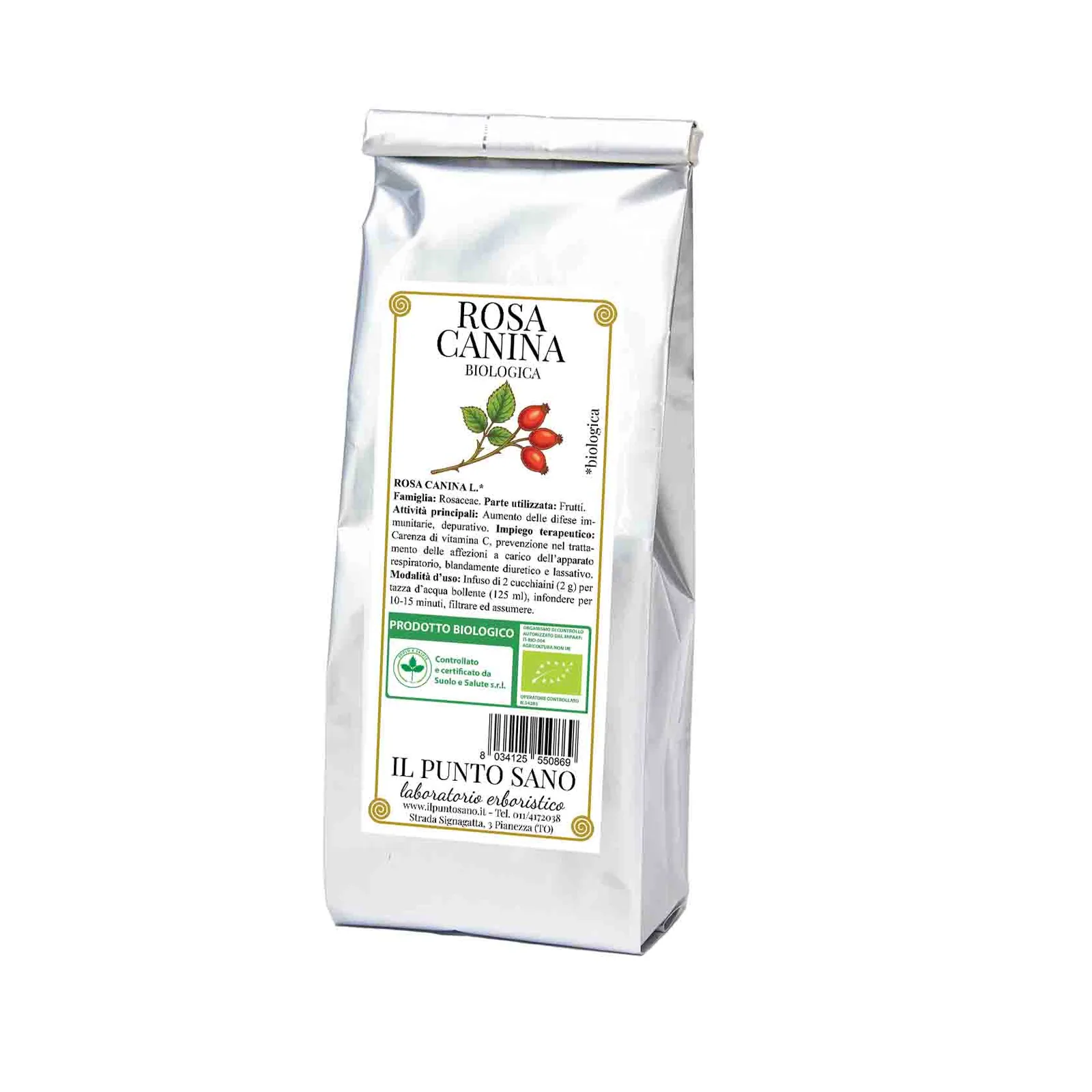



Organic Rosehip Herbal Tea
8,80 €
70 g
A fruity note for your everyday break.
Il Punto Sano Rosehip offers rosehip fruits with a naturally tangy taste, also ideal for exploring in your own blends.
- ✓ Rosehip fruits.
- ✓ A naturally tangy taste, also ideal in your own blends.
- ✓ Complete preparation and directions always available.
- Free shipping in Italy on orders of €70 or more
- Prepared within 1 working day + GLS transit of 2–4 working days
- Buy directly from our laboratory
- Free product advice from our biologist and nutritionist
The complete product information: features, composition and directions for use.


Organic Rosehip: antioxidant rosehips for support, vitality and bowel regularity
Il Punto Sano Organic Rosehip is a certified organic herbal tea made from the fruits of Rosa canina L., a shrubby plant belonging to the Rosaceae. In herbal practice, the part used is often called the fruit, rosehip or false fruit; botanical descriptions may also call it fructus or rosae pseudofructus.
Rosehips are traditionally valued for their antioxidant, restorative profile and naturally tangy profile. They are among the best-known plant ingredients in seasonal teas, fruity blends and products focused on supporting the body.
Traditional accounts mention increased immune defences, vitamin C deficiency, prevention and treatment of respiratory conditions, and cleansing, diuretic and mildly laxative actions. This tea’s role is described instead through its supportive and restorative action, antioxidant, bowel regularity and and fruity, vitamin-associated seasonal character, without promising effects on deficiencies, infections, flu or respiratory disease.
Why choose Il Punto Sano Organic Rosehip
- Certified organic fruits of Rosa canina, a herb in the Rosaceae family.
- Supportive and restorative action, useful in seasonal routines and periods of greater demand.
- Antioxidant action, through its naturally rich profile of characteristic plant compounds.
- Promotes bowel regularity for physiological support, rather than treatment.
- A traditional plant source of vitamin C, without promising to correct deficiencies.
- An enjoyable fruity, tangy taste, ideal in blends with Hibiscus, Elder, Bilberry, Raspberry and citrus peel.
- Contains vitamin C, flavonoids, carotenoids, pectins, tannins and organic acids, characteristic rosehip constituents.
- Selected, certified organic raw material, without artificial flavourings, colourings or preservatives.
Rosehip: the plant’s botany
Rosa canina L., known as Dog Rose, Wild Rose, Dog rose or Wild rose, is a thorny shrub belonging to the Rosaceae.
The plant has arching thorny branches, compound leaves, simple white-pink flowers and red-orange hips when ripe. The structures commonly called fruits are actually false fruits: the fleshy part develops from the floral receptacle, while the true fruits are the small achenes inside.
The part used in this preparation consists of dried, cut rosehips, also described as fructus or rosae pseudofructus. Quality depends on natural colour, a fruity-tangy aroma, proper drying, absence of mould and good storage away from light, air and moisture.
At a glance
Il Punto Sano Organic Rosehip is a certified organic herbal tea made from the rosehips of Rosa canina, traditionally used for supportive, restorative and antioxidant action and bowel regularity.
Rosehip and traditional use
Rosehip is one of the best-known plants in cold-season teas. Its red-orange hips have long been associated with autumn and winter, fruity blends and restorative preparations.
Herbal tradition often associates it with vitamin C, bodily support and seasonal wellbeing blends. This tradition should be understood as background rather than a promise of disease prevention or cure.
Rosehip’s role centres on its antioxidant, supportive and restorative character, its contribution to bowel regularity and its enjoyable place in seasonal blends.
Rosehip’s supportive and restorative role
Rosehip fruits are particularly valued for their supportive and restorative action. This makes them useful in seasonal routines, seasonal transitions and busier periods, or whenever you want a fruity, tangy tea with a distinctive botanical character.
Its restorative role is physiological support, rather than treatment for chronic fatigue, nutritional deficiencies, significant convalescence or medical conditions.
For a more comprehensive blend, combine it with Elder, Blackcurrant, Hibiscus, Acerola, Echinacea, Bilberry, Ginger, Cinnamon or Sweet Orange peel, always considering each plant’s warnings.
Rosehip and antioxidant action
Rosehips are valued for their antioxidant, associated with naturally occurring vitamin C, flavonoids, carotenoids, polyphenols and organic acids.
Its antioxidant role supports the body’s response to free radicals within a varied diet rich in vegetables and colourful fruit and a balanced lifestyle.
Rosehip’s antioxidant and restorative profile should not be interpreted as a promise to strengthen the immune system, prevent flu, cure colds or protect against infections.
Rosehip and vitamin C
Rosehip is traditionally known as a plant source of vitamin C. This is an interesting aspect of its profile that needs to be understood accurately.
The actual vitamin C content of a tea can vary: vitamin C is sensitive to oxygen, light, prolonged storage and heat. This infusion should therefore not be used as a product to correct vitamin C deficiency.
Rosehips are traditionally known for vitamin C and antioxidants, making them ideal in supportive and restorative herbal teas.
Rosehip and immune defences: understanding its role
Traditional accounts mention increased immune defences. A fruit tea without standardised vitamin C content should not, however, be understood as a product proven to increase defences or strengthen the immune system.
Its role is supportive and restorative, with an antioxidant profile and a tradition of use in seasonal teas.
Its relationship with vitamin C is descriptive background, rather than a therapeutic claim or a promise to prevent seasonal illnesses.
Rosehip and bowel regularity
Rosehip fruits are also associated with bowel regularity. This role is consistent with their pectins, fibre, organic acids and characteristic plant compounds.
In a tea, Rosehip may contribute to a gentle bowel routine, particularly in blends with Mallow, Marshmallow, Fennel, Chamomile, Psyllium or Apple.
Traditional accounts mention a mildly laxative action. Here its role is bowel regularity, rather than use as a laxative or constipation treatment.
Rosehip and the respiratory system: understanding traditional references
Traditional descriptions mention preventing and treating respiratory conditions. These are historical references, rather than prevention or treatment claims for this tea.
Rosehip may be included in seasonal blends for its restorative, antioxidant and fruity profile, but is not a treatment for colds, flu, bronchitis, sinusitis, fever or respiratory infections.
Fever, persistent cough, breathing difficulties, chest pain, worsening symptoms or significant illness require medical advice.
Rosehip and cleansing
Traditional accounts mention a cleansing profile. For Rosehip fruits this remains a secondary context, associated with a seasonal routine rich in fluids and plant ingredients.
Its main focus remains restorative support, antioxidants and bowel regularity. Any reference to cleansing means general support for the body’s physiological functions.
It should not be interpreted as removing toxins, cleaning the body or purifying the blood, descriptions that are too strong and imprecise.
Rosehip and traditional mild diuretic action
Traditional accounts also mention a mildly diuretic effect. For the fruits, the main role remains antioxidants, support and bowel regularity.
In fluid-drainage blends, it may contribute a fruity, antioxidant profile, while Birch, Nettle, Horsetail, Hawkweed, Couch Grass or Orthosiphon are more specifically associated with drainage of body fluids.
With kidney or heart disease, significant oedema, diuretic treatment or medical advice to control fluid intake, seek medical advice before using fluid-drainage teas.
Rosehip’s naturally tangy taste
One of Rosehip’s strengths is its naturally tangy, fruity and slightly tannic taste. This makes the tea enjoyable without artificial flavourings.
The infusion can range from yellow-orange to pale pink, particularly when Rosehip is combined with Hibiscus, Bilberry, Elder or other red fruits.
In blends, Rosehip improves the sensory profile of seasonal, antioxidant, fruity, digestive and restorative teas.
Rosehip in seasonal blends
In seasonal blends, Rosehip is a useful base for taste, colour and a restorative character. It pairs well with Elder, Blackcurrant, Echinacea, Hibiscus, Acerola, Bilberry, Ginger, Cinnamon, Sweet Orange and Lemon.
Its role remains supportive, restorative and antioxidant, rather than a claim relating to flu, viruses, colds, disease prevention or cure.
For a softer taste, combine with Apple, Mallow, Chamomile or Liquorice; for a fresher, tangier taste, with Hibiscus, Lemon and Bilberry.
Rosehip in antioxidant blends
Rosehip is particularly suited to antioxidant blends, especially with Bilberry, Cranberry, Hibiscus, Green Tea, Blackcurrant fruits, Aronia, Pomegranate or citrus peel.
It contributes a fruity profile associated with polyphenols, natural vitamin C and plant pigments.
Its antioxidant role is general support, not prevention of disease, skin ageing, cardiovascular conditions or immune deficiencies.
Rosehip in gentle bowel blends
For bowel regularity, Rosehip can be included in gentle blends with Mallow, Marshmallow, Fennel, Chamomile, Lemon Balm, Apple or Psyllium.
Its role is more about regulation and fruitiness than a laxative effect. It should not be confused with stimulant plants or anthraquinone laxatives.
Persistent constipation, diarrhoea, abdominal pain, blood in stools, vomiting or sudden changes in bowel habits require medical advice.
Characteristic Rosehip constituents
The hips of Rosa canina contain a phytocomplex characterised by vitamin C, flavonoids, carotenoids, polyphenols, organic acids, pectins, tannins, natural sugars, minerals, seed fatty acids and plant pigments.
Vitamin C and polyphenols contribute to the herbal material’s antioxidant identity. Pectins and fibre support its bowel-regularity profile, while carotenoids and pigments give rosehips their red-orange colour.
Raw material quality depends on correct botanical identification, harvesting when ripe, gentle drying, bright colour, a fruity-tangy aroma, absence of mould and proper storage.
Rosehip tea’s aromatic profile
Rosehip tea tastes fruity, tangy, slightly sweet, delicately tannic and fresh. It is enjoyable even for those who prefer fruitier, less herbal flavours.
Its aroma recalls red fruits, dried apple, berries, citrus notes and a slight floral nuance. In blends it becomes more intense with Hibiscus and Bilberry, softer with Apple and Mallow, and more seasonal with Elder, Cinnamon and Ginger.
A versatile plant, it suits hot teas in colder weather and fruity infusions enjoyed lukewarm.
Il Punto Sano quality: certified organic Rosehip, selected hips and authentic taste
Il Punto Sano herbs and infusion fruits start with carefully selected certified organic raw materials, with attention to botanical quality, freshness, natural colour, aroma, herbal cut and infusion performance.
Organic Rosehip fruits are selected for correct botanical identification, natural red-orange colour, a clean fruity aroma and overall herbal-material quality. Good material should have a pleasant tangy aroma, no mould, no stale notes and proper drying.
We use no artificial flavourings, colourings or preservatives. The taste comes from the organic hips of Rosa canina: fruity, tangy and naturally herbal. The packaging protects the herbal material against light, air and moisture, helping preserve colour, aroma and quality over time.
Who are Organic Rosehip fruits for?
Il Punto Sano Organic Rosehip is intended for adults seeking a certified organic herbal tea for:
- supportive and restorative action;
- antioxidant action;
- bowel regularity;
- cold-season routines;
- fruity, restorative blends;
- a naturally tangy herbal tea;
- combinations with Hibiscus, Elder, Bilberry, Blackcurrant, Acerola, Apple, Ginger, Cinnamon or Orange peel;
- a certified organic plant with a naturally distinctive botanical identity.
Herbal information
Rosa canina L. – certified organic fruits
| Botanical name | Rosa canina L. |
| Common name | Dog Rose, Wild Rose, Rosehips, Rose Hips |
| Family | Rosaceae |
| Part used | Dried fruits / false fruits; rosehips; fructus; rosae pseudofructus |
| Quality | Certified organic raw material |
| Characteristic constituents | Vitamin C, flavonoids, carotenoids, polyphenols, organic acids, pectins, tannins, natural sugars, minerals, plant pigments and seed fatty acids |
| Traditional profile | Supportive and restorative action, antioxidants and bowel regularity; vitamin C, immune defences, the respiratory system, cleansing, diuretic and laxative actions as traditional references requiring careful interpretation |
| Infusion taste | Fruity, tangy, slightly sweet, delicately tannic and fresh |
Directions for use
Infusion: prepare a tea with 2 teaspoons of Rosehip fruits, approximately 2 g, for a cup of boiling water measuring 125 ml. Leave to infuse for 10–15 minutes, preferably covering the cup. Strain thoroughly and enjoy according to your needs and the label directions. Avoid prolonged boiling to better preserve the aromatic profile and reduce heat exposure.
Herbal tip
Rosehip is ideal in seasonal, antioxidant and restorative teas. It pairs well with Hibiscus, Elder, Bilberry, Blackcurrant, Acerola, Apple, Ginger, Cinnamon, Sweet Orange peel and Lemon peel. For a gentler blend, combine with Mallow, Chamomile or Fennel.
Warnings: Do not exceed the recommended amounts. Keep out of the reach of children. Intended for adults. Do not use if allergic or hypersensitive to Rosehip, Rosaceae, rosehips, berries or any component. During pregnancy, breastfeeding or childhood, seek medical advice before use. Strain the infusion thoroughly to remove residues, seeds or irritating internal parts of the hip. Use carefully with gastritis, reflux, ulcers, kidney stones, a tendency to oxalate stones, kidney disease, anticoagulant or antiplatelet therapy, long-term medication, persistent gastrointestinal complaints or particular medical conditions. Do not use this tea to treat vitamin C deficiency, flu, colds, respiratory infections, fever, bronchitis, sinusitis, viral diseases, chronic constipation, diarrhoea, kidney stones, nutritional deficiencies or diagnosed conditions. For fever, breathing difficulties, persistent cough, chest pain, worsening symptoms, abdominal pain, blood in stools, vomiting, persistent diarrhoea, kidney stones, allergic reactions or significant symptoms, consult a doctor. This website’s information is provided for informational and herbal purposes and does not replace medical advice.
Frequently asked questions
Which part of the plant is used?
The plant part listed in the product information is: Dried fruits / false fruits; rosehips; fructus; rosae pseudofructus.
How should I prepare this herbal tea?
Infusion: prepare a tea with 2 teaspoons of Rosehip fruits , approximately 2 g , for a cup of boiling water measuring 125 ml . Leave to infuse for 10–15 minutes , preferably covering the cup. Strain thoroughly and enjoy according to your needs and the label directions. Avoid prolonged boiling to better preserve the aromatic profile and reduce heat exposure.


 English (UK)
 Italiano
Reviews
There are no reviews yet.