
Free advice from our biologist and nutritionist. Learn More

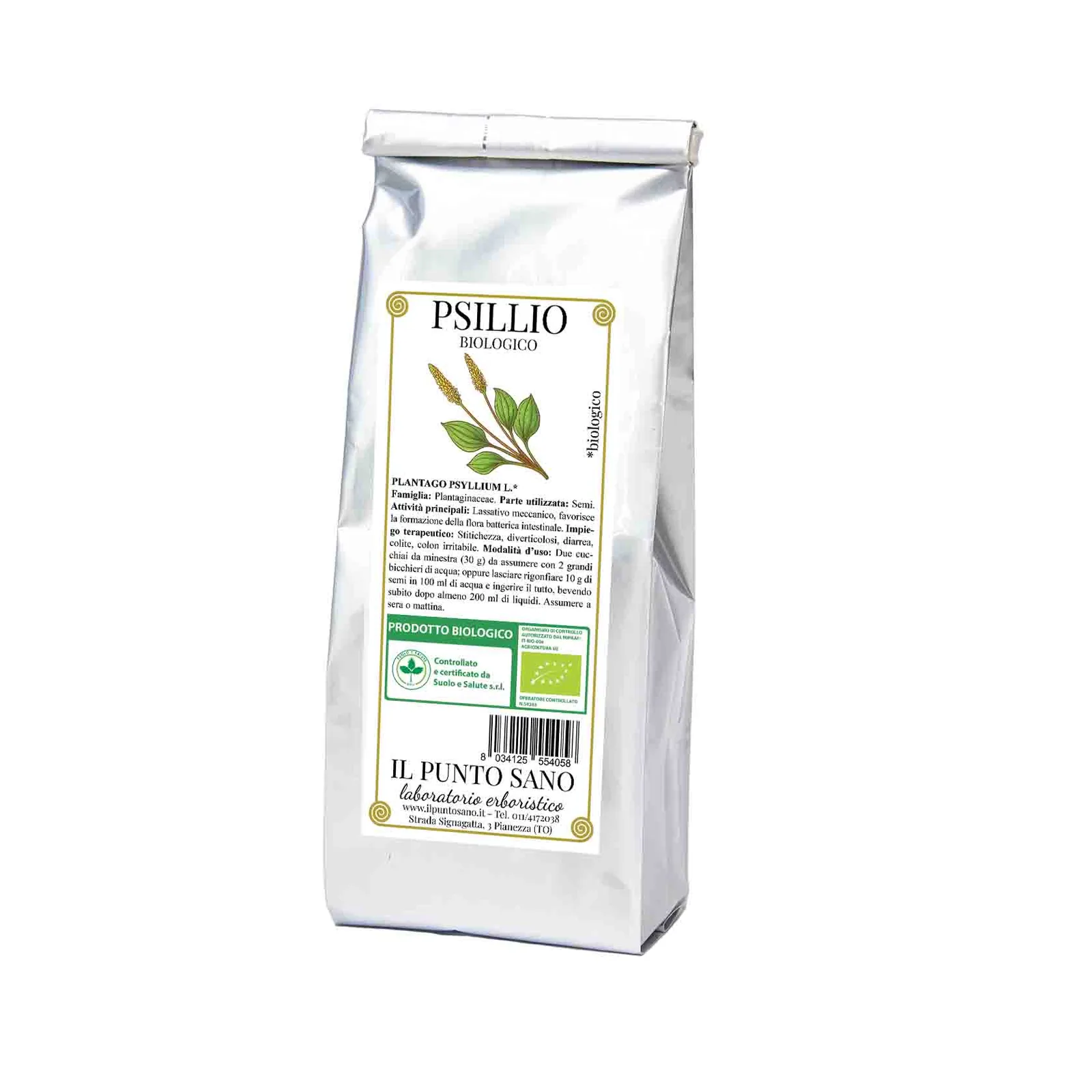



Organic Psyllium Seeds
11,80 €
150 g
Make regularity care part of your routine.
Psyllium by Il Punto Sano provides seeds naturally rich in mucilage. Follow the directions and always take with adequate water.
- ✓ Psyllium seeds.
- ✓ Naturally rich in mucilage: follow the directions and drink adequate water.
- ✓ Full preparation and directions always available.
- Free shipping in Italy on orders of €70 or more
- Prepared within 1 working day + GLS transit of 2–4 working days
- Buy directly from our laboratory
- Free product advice from our biologist and nutritionist
Full product information: features, ingredients and directions for use.


Organic Psyllium: mucilage-rich seeds for intestinal transit, softer stools and intestinal flora
Organic Psyllium by Il Punto Sano is a certified organic herbal product made with Psyllium seeds, traditionally identified as Plantago psyllium L. and now often classified in modern botanical and pharmacopoeial nomenclature as seeds of Plantago afra L. or Plantago indica L., plants in the Plantaginaceae.
Psyllium seeds are particularly valued for their high content of mucilage, plant fibres that absorb water and form a gel. This gel increases intestinal-content volume, helps soften stools and supports regular intestinal transit.
Traditional descriptions mention constipation, diverticulosis, diarrhoea, colitis and irritable bowel syndrome. The product’s role is physiological support for: regular intestinal transit, normal stool volume and consistency, mucilaginous fibre intake, bulking action and intestinal flora balance.
Why choose Organic Psyllium by Il Punto Sano
- Certified organic Psyllium seeds, plants in the Plantaginaceae family.
- Promotes bowel regularity, through naturally occurring mucilaginous fibre.
- Contributes to normal stool volume and consistency, increasing stool bulk through a mechanical action.
- Gentle bulking action, for routines addressing occasional sluggish bowels and hard stools.
- Mucilaginous fibre, which absorbs water and forms a plant-derived gel.
- Supports intestinal flora balance, as fibre of prebiotic interest.
- For bowel routines seeking a regulating fibre, always with adequate fluid intake.
- Selected, certified organic raw material, without artificial flavourings, colourings or preservatives.
Plantago psyllium: the botany of Psyllium
Psyllium is a trade and traditional name for mucilage-rich seeds from certain species of the genus Plantago. Older herbal profiles often use the name Plantago psyllium L., while modern nomenclature and European monographs mainly refer to Plantago afra L., Plantago indica L. and, for blond psyllium or ispaghula, Plantago ovata Forssk.
These annual herbs belong to the Plantaginaceae family and have small, mucilage-rich seeds. “Psyllium” comes from Greek and refers to the small seeds’ resemblance to fleas.
The part used in this preparation consists of mature, whole, dried seeds. In water, the seeds swell and form a gel, the essential characteristic underlying their herbal and food use.
At a glance
Organic Psyllium by Il Punto Sano is a certified organic product made with mucilage-rich Plantago seeds, traditionally used for regular intestinal transit, normal stool volume and consistency, bulking action and intestinal flora balance.
Psyllium and traditional use
Psyllium is among the best-known plant fibres in herbal and nutritional tradition. Its distinctive action is mechanical rather than irritating or stimulating, arising from the seeds’ ability to absorb water.
With plenty of fluid, the mucilage hydrates, forms a gel and increases intestinal-content volume. This supports transit and contributes to normal stool consistency.
Its role is physiological support for regularity, stool volume, softer stools, mucilaginous fibre intake and intestinal flora, rather than treatment of intestinal disease.
Psyllium and regular intestinal transit
Psyllium’s principal application is regular intestinal transit. Mucilaginous fibre absorbs water, increases stool bulk and promotes more regular progression of intestinal contents.
It is of particular interest when gentle mechanical bowel support is desired, without irritating herbs or anthraquinone laxatives.
Results depend greatly on water: without adequate fluid, Psyllium can be counterproductive, increasing the risk of bloating, discomfort or transit difficulties.
Psyllium and normal stool volume
Psyllium seeds contribute to normal stool volume. Hydrated mucilage provides bulk, increasing intestinal contents and supporting normal stimulation of motility.
This is not a drastic or immediate effect. Psyllium requires water, gradual introduction and consistent use.
Before using fibre or laxatives, seek medical advice for sudden constipation, abdominal pain, vomiting, weight loss, blood in stools or a recent, persistent change in bowel habits.
Psyllium and normal stool consistency
Psyllium may help support normal stool consistency. Depending on available water and individual circumstances, mucilage may help soften hard stools or give more structure to poorly formed stools.
Psyllium is therefore often considered a regulating fibre, distinct from stimulant laxatives: its main effects concern bulk, water and consistency.
With significant diarrhoea, fever, blood or mucus in stools, dehydration, abdominal pain or persistent diarrhoea, fibre does not replace diagnosis and treatment.
Psyllium and constipation
Constipation appears in traditional descriptions. Its relevance here is primarily regular intestinal transit and normal stool volume and consistency.
Psyllium particularly suits occasional sluggish bowels and routines aiming to increase plant-fibre intake.
Consult a doctor if constipation is chronic, recent and unexplained, associated with pain, blood or weight loss, or alternates with diarrhoea.
Psyllium and intestinal flora
Traditional descriptions mention formation of intestinal bacterial flora. A more accurate understanding is support for intestinal flora balance and fibre of prebiotic interest.
Psyllium fibre can complement a diet focused on intestinal wellbeing, with varied foods, vegetables, pulses, fruit, wholegrains, fermented foods when tolerated and adequate hydration.
It should not be expected to “rebuild bacterial flora” or “cure dysbiosis”: Psyllium contributes nutritionally but does not replace personalised assessment of significant bowel problems.
Psyllium, bulking action and water
Bulking is Psyllium’s central mechanism. Its mucilage absorbs water, swells and forms a gel that increases intestinal-content volume.
Always take Psyllium with plenty of fluids. Too little water can cause bloating, heaviness, worsening constipation or transit difficulties in susceptible people.
Drink additional water immediately afterwards and maintain good hydration throughout the day, unless a doctor advises otherwise.
Psyllium and diverticulosis
Diverticulosis appears in historical descriptions. Both diverticulosis and, especially, diverticulitis require personalised dietary and medical guidance.
Psyllium is not a treatment for diverticulosis. It is a mucilaginous fibre supporting regular intestinal transit and normal stool consistency.
Do not use without medical advice with diverticulitis, abdominal pain, fever, blood in stools, nausea, vomiting or medical instructions to restrict fibre.
Psyllium and diarrhoea
Diarrhoea appears in traditional descriptions. By absorbing water, Psyllium may contribute to normal stool consistency, but is not a therapeutic antidiarrhoeal.
Diarrhoea can have infectious, dietary, medicine-related, inflammatory or functional causes. Psyllium is therefore best understood as regulating fibre, rather than treatment.
Diarrhoea with fever, blood, mucus, dehydration, significant pain, lasting more than a few days, or affecting children, frail older people or those with chronic disease requires medical assessment.
Psyllium, colitis and irritable bowel syndrome
Colitis and irritable bowel syndrome appear in historical descriptions. These terms require care because they can involve different situations: functional disorders, inflammation, chronic intestinal disease or individual sensitivities.
Psyllium supports bowel regularity and stool consistency; it does not promise to “cure colitis” or “resolve irritable bowel syndrome”.
Introduce it gradually in sensitive bowels, as a rapid fibre increase may cause bloating, abdominal tension or gas.
Psyllium and bloating
Psyllium is a useful fibre, but may cause bloating in large amounts, if introduced too quickly or taken with little water. This is especially relevant with sensitive bowels, flatulence or a habitually low-fibre diet.
For better tolerability, start with smaller amounts, drink plenty of water and increase gradually, assessing your response.
If bloating, pain, cramps or abdominal distension worsen or persist, stop and seek professional advice.
Psyllium and medicines: why to leave a gap
Psyllium’s mucilage may slow or reduce absorption of some medicines, supplements or nutrients. Take it at least 2 hours apart from medicines.
This is particularly important with medicines for diabetes, the thyroid, cholesterol or blood pressure, anticoagulants, antiepileptics, antidepressants, iron or mineral supplements and ongoing treatments.
People taking daily medicines should consult a doctor or pharmacist before regular Psyllium use.
Psyllium and blood glucose
Psyllium may affect carbohydrate absorption within a meal, but blood glucose or diabetes management is not this product’s primary application.
With diabetes or treatment with insulin, metformin or other glucose-lowering medicines, regular fibre use requires care because it may alter blood glucose responses or medicine absorption.
Its role remains intestinal transit, stool consistency and mucilaginous fibre intake, without promises concerning diabetes, blood glucose or weight loss.
Psyllium and cholesterol: secondary context
Soluble fibres are often associated with lipid metabolism. For whole Psyllium seeds, however, cholesterol is not the primary focus without specific documentation and doses.
The principal message remains bowel support: transit, stool volume and consistency, and mucilaginous fibre.
If taking lipid-lowering medicines or managing diagnosed dyslipidaemia, discuss regular fibre use with a doctor or pharmacist, particularly the interval from medicines.
Psyllium in children
Traditional descriptions do not specify paediatric use. This product is intended for adults unless a paediatrician advises otherwise.
Do not independently manage childhood constipation or diarrhoea with highly swelling fibres without considering age, hydration, diet, medicines, associated symptoms and dehydration risk.
Particular care is required in children, frail older adults, people with swallowing difficulties or those who are bedbound.
Taking Psyllium correctly
Correct use is essential for safety and effectiveness. Always take seeds with plenty of water, allow them to swell where directed and drink additional fluid immediately afterwards.
Do not take Psyllium immediately before bed without sufficient water: the fibre must reach the stomach and hydrate properly.
Morning or evening use may be chosen to fit your routine, always with adequate hydration throughout the day.
Psyllium in intestinal blends
Psyllium may complement other herbs or fibres in bowel routines, but blends need thoughtful formulation because it swells substantially in water.
It may be combined with gentle plants such as Mallow, Marshmallow, Fennel, Chamomile or Lemon Balm for a smoother, better-tolerated blend.
Avoid overly aggressive combinations with multiple stimulant laxatives, particularly in sensitive people, older adults or those taking medicines.
Characteristic constituents of Psyllium seeds
Psyllium seeds contain a phytocomplex characterised mainly by mucilage, hydrophilic polysaccharides, arabinoxylans, soluble and insoluble fibres, small amounts of proteins, lipids, minerals and phenolic compounds.
Mucilage is the most important functional component: it forms a gel in water, explaining the characteristic bulking effect and contribution to normal stool consistency.
Quality depends on correct botanical identification, clean seeds, absence of impurities, good swelling capacity, protection from moisture and absence of unusual smells.
Psyllium seeds: sensory profile
Psyllium seeds have a very mild, neutral, lightly cereal-like taste with almost no aroma. Their defining feature is water-swelling capacity rather than flavour.
After hydration, the preparation thickens into a gel. This normal consistency reflects the mucilage content.
For easier intake, take in water or, with professional guidance, drinks that are not overly thick, always ensuring adequate fluid intake.
Il Punto Sano quality: certified organic Psyllium, selected seeds and high swelling capacity
Il Punto Sano herbs and plant fibres begin with carefully selected certified organic raw materials, with attention to botanical quality, cleanliness, freshness, safe use and performance in preparation.
Organic Psyllium seeds are selected for correct identification, absence of impurities, good swelling capacity and overall quality. A good batch has clean seeds, a neutral smell and no abnormal moisture.
We use no artificial flavourings, colourings or preservatives. Packaging protects the seeds from light, air and moisture, helping preserve quality, stability and swelling capacity over time.
Who are Organic Psyllium Seeds for?
Organic Psyllium by Il Punto Sano is intended for adults seeking a certified organic plant fibre for:
- bowel regularity;
- normal stool volume;
- normal stool consistency;
- occasional sluggish bowels;
- mucilaginous fibre intake;
- gentle bulking action;
- intestinal flora balance;
- bowel routines seeking a regulating fibre, always with plenty of water.
Herbal profile
Plantago psyllium L. – certified organic seeds
| Traditional botanical name | Plantago psyllium L. |
| Modern botanical classification | Psyllium as seeds of Plantago afra L. or Plantago indica L.; distinct from Plantago ovata Forssk., called ispaghula or blond psyllium |
| Common name | Psyllium, Psyllium seed, Flea seed, Black psyllium |
| Family | Plantaginaceae |
| Plant part used | Mature, whole, dried seeds; semen |
| Quality | Certified organic raw material |
| Characteristic constituents | Mucilage, hydrophilic polysaccharides, arabinoxylans, soluble and insoluble fibres, small amounts of proteins, lipids, minerals and phenolic compounds |
| Traditional profile | Regular intestinal transit, normal stool volume and consistency, bulking action, mucilaginous fibre and intestinal flora balance; constipation, diarrhoea, diverticulosis, colitis and irritable bowel syndrome are traditional references requiring careful interpretation |
| Sensory profile | Neutral, mild, lightly cereal-like; gel consistency after hydration |
Directions for use
Direct intake with water: take 2 tablespoons of Psyllium seeds, approximately 30 g, with 2 large glasses of water. Always drink plenty more immediately afterwards.
Intake after swelling: allow 10 g seeds to swell to 100 ml water, swallow the entire preparation and immediately drink at least 200 ml fluid.
When to take: in the morning or evening, as needed and following label directions. Start with lower amounts if unaccustomed to fibre. Leave a gap from medicines of at least 2 hours apart from medicines. Do not take dry, with little water or immediately before bed without adequate fluid.
Herbal advice
Psyllium is ideal when mucilaginous fibre is desired for bowel regularity and stool consistency. Water is essential: always take with plenty of fluid and introduce gradually. It may be combined with gentle plants such as Mallow, Marshmallow, Fennel, Chamomile or Lemon Balm, avoiding overly aggressive combinations with stimulant laxatives.
Warnings: Do not exceed recommended amounts. Keep out of reach of children. Intended for adults. Always take with plenty of water. Do not take dry, with little water or with swallowing difficulties. Do not use with allergy or hypersensitivity to Psyllium, Plantaginaceae or any constituent. Avoid with oesophageal or intestinal narrowing, bowel obstruction, ileus, faecal impaction, megacolon, swallowing difficulties, undiagnosed abdominal pain, nausea, vomiting, rectal bleeding, sudden bowel-habit changes or failure to pass stools after laxatives. Seek medical advice during pregnancy, breastfeeding or childhood, for frail older adults or bedbound people, or with gastrointestinal disease. Take at least 2 hours apart from medicines because mucilage may slow or reduce their absorption. Use carefully with diabetes, insulin or glucose-lowering medicines, thyroid treatment, anticoagulants, antiepileptics, heart or cholesterol medicines, iron or mineral supplements, diverticulosis, irritable bowel syndrome, colitis, persistent diarrhoea or ongoing treatments. Do not use to treat undiagnosed chronic constipation, significant diarrhoea, diverticulitis, colitis, irritable bowel syndrome, inflammatory bowel disease, obstruction, unexplained weight loss or diagnosed conditions. Stop use and consult a doctor for abdominal pain, significant bloating, breathing or swallowing difficulties, chest pain, vomiting, blood in stools, fever, persistent diarrhoea, constipation that does not improve, allergic reactions or worsening symptoms. Information on this website is provided for herbal and informational purposes and does not replace medical advice.
Frequently asked questions
Which part of the plant is used?
The plant part listed in the product information is: Mature, whole, dried seeds; semen.
Can I ask for advice before choosing?
Yes. Ask our laboratory for free product advice on WhatsApp at +39 334 883 6323.
Ask for advice on WhatsApp


 English (UK)
 Italiano
Reviews
There are no reviews yet.