
Free advice from our biologist and nutritionist. Learn More




Propolis Complex
20,00 €
60 Capsules
Prepare for colder days with a comprehensive formula.
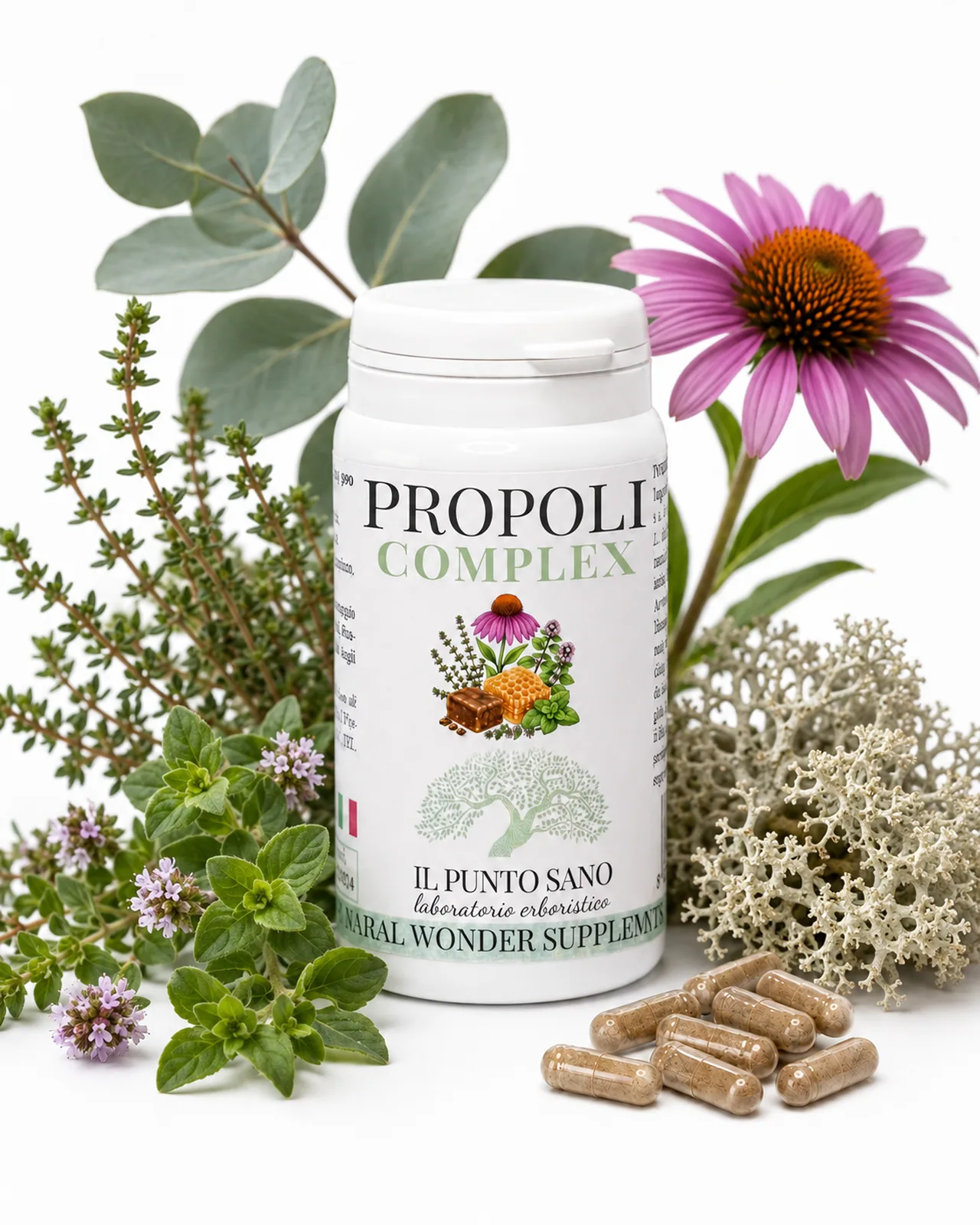
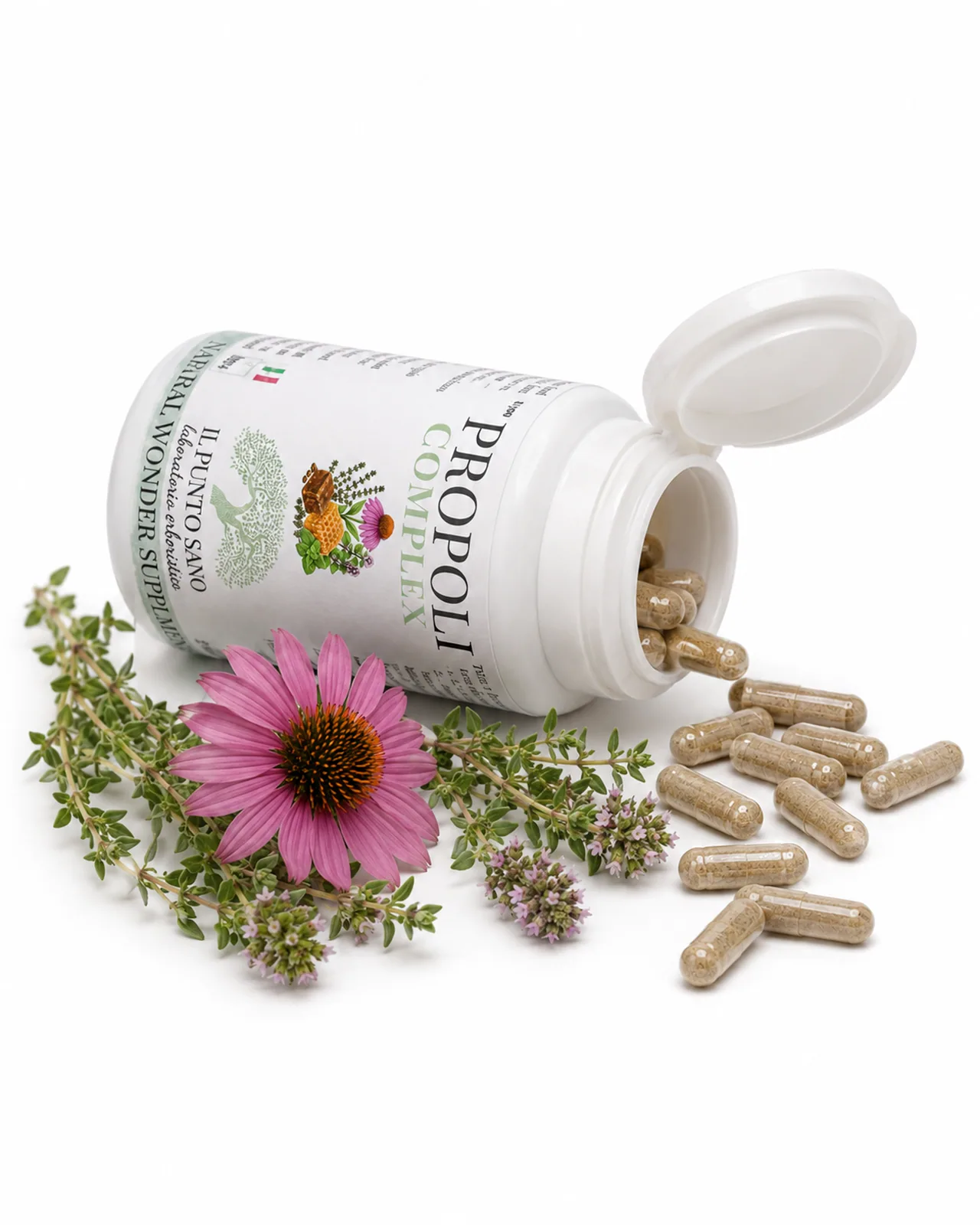
Propolis Complex combines propolis and traditional herbs including echinacea, thyme and eucalyptus. A combination dedicated to your seasonal routine and the body’s natural defences.
- ✓ With propolis and echinacea.
- ✓ With thyme, eucalyptus and other botanical ingredients.
- ✓ Discover every ingredient in the full product information.
- Free shipping in Italy on orders of €70 or more
- Prepared within 1 working day + GLS transit of 2–4 working days
- Buy directly from our laboratory
- Free product advice from our biologist and nutritionist
The complete product information: features, composition and directions for use.


Propolis Complex: a supplement with propolis, echinacea, thyme and eucalyptus for winter
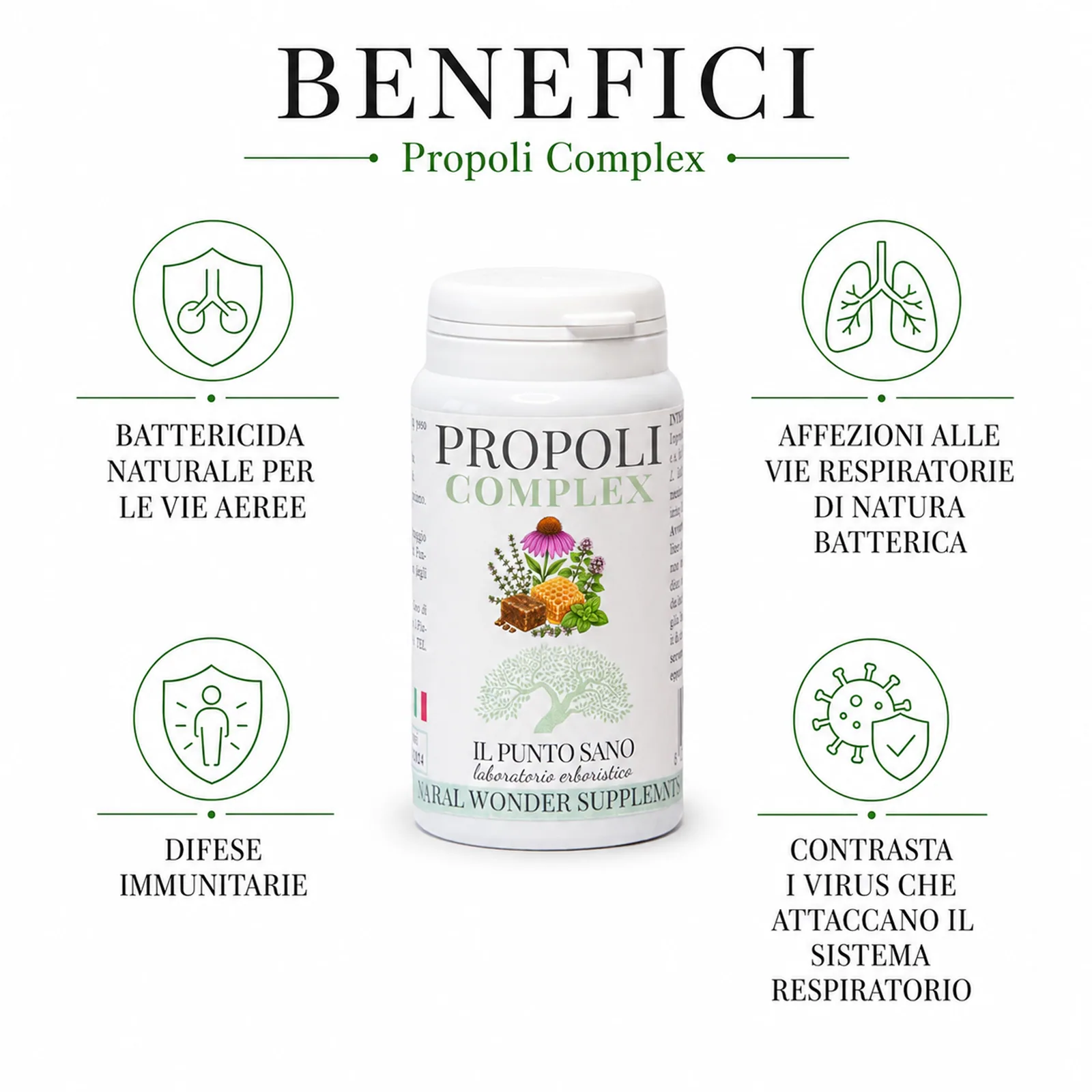
Propolis Complex is a comprehensive food supplement formulated for winter and support of the body’s natural defences. It combines propolis, herbs and plant extracts traditionally used for the wellbeing of the respiratory tract, throat and bronchial system.
The formula’s components, including eucalyptus, echinacea, thyme, oregano, sundew, marshmallow and Iceland moss, were selected to offer targeted nutritional support during colder months, when the body may be more exposed to cold-related illnesses, throat irritation and seasonal respiratory discomfort.
The formula is completed by propolis standardised for polyphenols, a natural bee-derived substance rich in bioactive compounds, long valued in herbal tradition for its protective role and herbal interest.
What is propolis?
The propolis is a resinous substance that bees collect from plant buds and bark. Predominantly plant-derived, it is subsequently processed by bees with added wax, pollen and enzymes they produce.
Propolis colour varies considerably, ranging from yellow to red, brown and black. It has a strongly aromatic smell, and its composition varies with source vegetation, season, geographical area and other environmental factors.
Numerous studies of propolis from different origins have identified more than 150 biochemical compounds, with others still being investigated. Standardisation, including polyphenol content, is therefore important to the quality of a propolis supplement.
Propolis’s natural composition
Broadly, the main propolis components can be divided into the following groups:
- resins, generally 45–55%;
- waxes and fatty acids, approximately 25–35%;
- essential oils and volatile substances, approximately 10%;
- pollen, approximately 5%;
- organic compounds and minerals, approximately 5%.
Within the hive, bees use propolis to strengthen honeycombs, coat cell interiors, seal small cracks, build defensive barriers and protect internal surfaces. It is used together with wax as a building material, insulation and protective coating.
Propolis and antimicrobial activity: herbal research interest
Herbal interest in propolis relates to its many bioactive compounds, including polyphenols, flavonoids, aromatic acids and volatile substances. Antimicrobial activity observed in the literature correlates with active-constituent concentrations, which can vary considerably according to origin.
For food-supplement products, it is therefore important to use propolis extracts that are standardised to provide a more controlled, reproducible composition.
The literature has also explored complementary effects between propolis and various antimicrobial compounds in bacterial cultures. These observations concern experimental studies and are not therapeutic indications for the product.
Propolis and respiratory wellbeing
Propolis Complex contains propolis alongside herbs traditionally used for respiratory wellbeing. The presence of thyme, eucalyptus, oregano, sundew, marshmallow and Iceland moss makes the formula particularly suited to winter.
Thyme and eucalyptus are known for traditional use in respiratory-function support. Marshmallow and Iceland moss are valued for mucilage and their emollient, soothing action on the oropharyngeal mucosa.
Sundew is traditionally used in throat and respiratory formulas, while echinacea is among the best-known plants for supporting the body’s natural defences.
Echinacea, thyme, oregano and eucalyptus: plants for winter
The echinacea is included as a dry extract standardised to 4% polyphenols. It is widely used in seasonal supplements for natural-defence support.
The thyme and the oregano are aromatic plants rich in characteristic compounds, traditionally valued in herbal formulas for colder seasons.
The eucalyptus, included as leaves, completes the product profile through its traditional respiratory use and well-known aromatic component.
Marshmallow, sundew and Iceland moss for the throat and mucous membranes
The marshmallow is rich in mucilage and traditionally used for an emollient, soothing action on mucous membranes. In a winter formula it contributes to throat and upper respiratory comfort.
The sundew is often included in herbal formulas for cold-season discomfort and respiratory wellbeing.
The Iceland moss is known for polysaccharides and mucilaginous substances, traditionally used for oropharyngeal mucous membrane wellbeing and the voice.
Ingredients and daily amounts
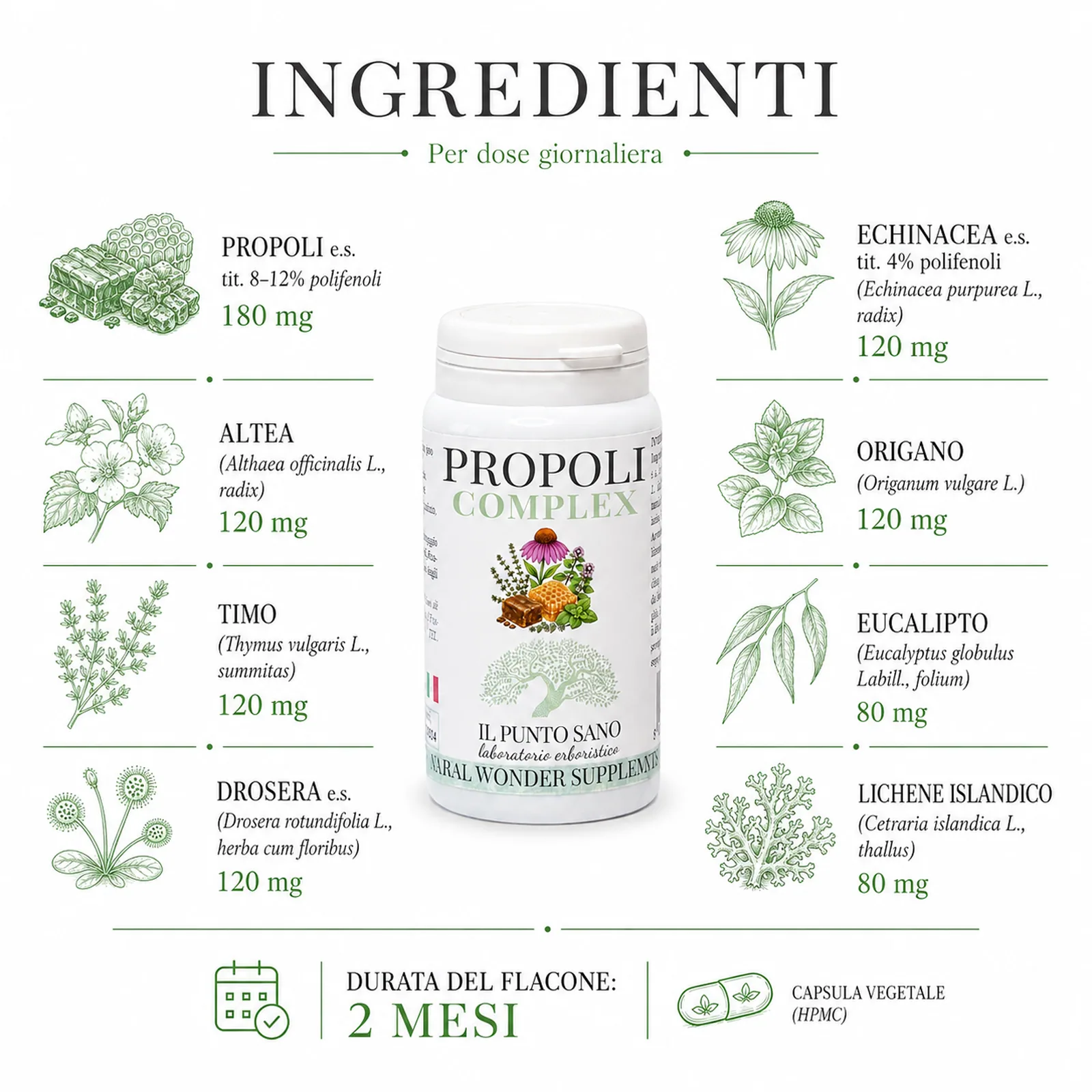
Propolis Complex composition with standardised propolis, echinacea, thyme, sundew, oregano, eucalyptus, marshmallow and Iceland moss
| Ingredient | Daily amount | Standardisation / Part used / Notes |
|---|---|---|
| Propolis dry extract | 90 mg | Dry extract standardised to 8–12% polyphenols |
| Marshmallow
(Althaea officinalis L., radix) |
60 mg | Root |
| Thyme
(Thymus vulgaris L., summitas) |
60 mg | Flowering tops |
| Sundew dry extract
(Drosera rotundifolia L., herba cum floribus) |
60 mg | Dry extract, herb with flowers |
| Echinacea dry extract
(Echinacea purpurea L., radix) |
60 mg | Dry extract standardised to 4% polyphenols |
| Oregano
(Origanum vulgare L.) |
60 mg | Aromatic plant |
| Eucalyptus
(Eucalyptus globulus Labill., folium) |
40 mg | Leaves |
| Iceland moss
(Cetraria islandica L., thallus) |
40 mg | Thallus |
| HPMC vegetable capsule | as required | Capsule shell |
Directions for use
1–2 capsules a day, according to your needs, during your main meals.
Formula characteristics
A formula with extracts.
The information on this website is provided solely for informational and educational purposes. It does not constitute therapeutic advice or replace medical advice. The only product claims intended for consumer communication are those expressly permitted by current legislation and stated on the label. References to scientific literature, historical use, ethnobotany and the biological plausibility of ingredients are descriptive and documentary in nature. They do not constitute, and must not be interpreted as, health or therapeutic claims beyond those permitted by applicable legislation. Relevant ministerial guidelines for botanicals continue to apply where appropriate.
Frequently asked questions
What pack size is available?
The pack contains 60 capsules.
How should I use the product?
Take 1–2 capsules a day, according to need, with main meals.


 English (UK)
 Italiano
Reviews
There are no reviews yet.