
Free advice from our biologist and nutritionist. Learn More

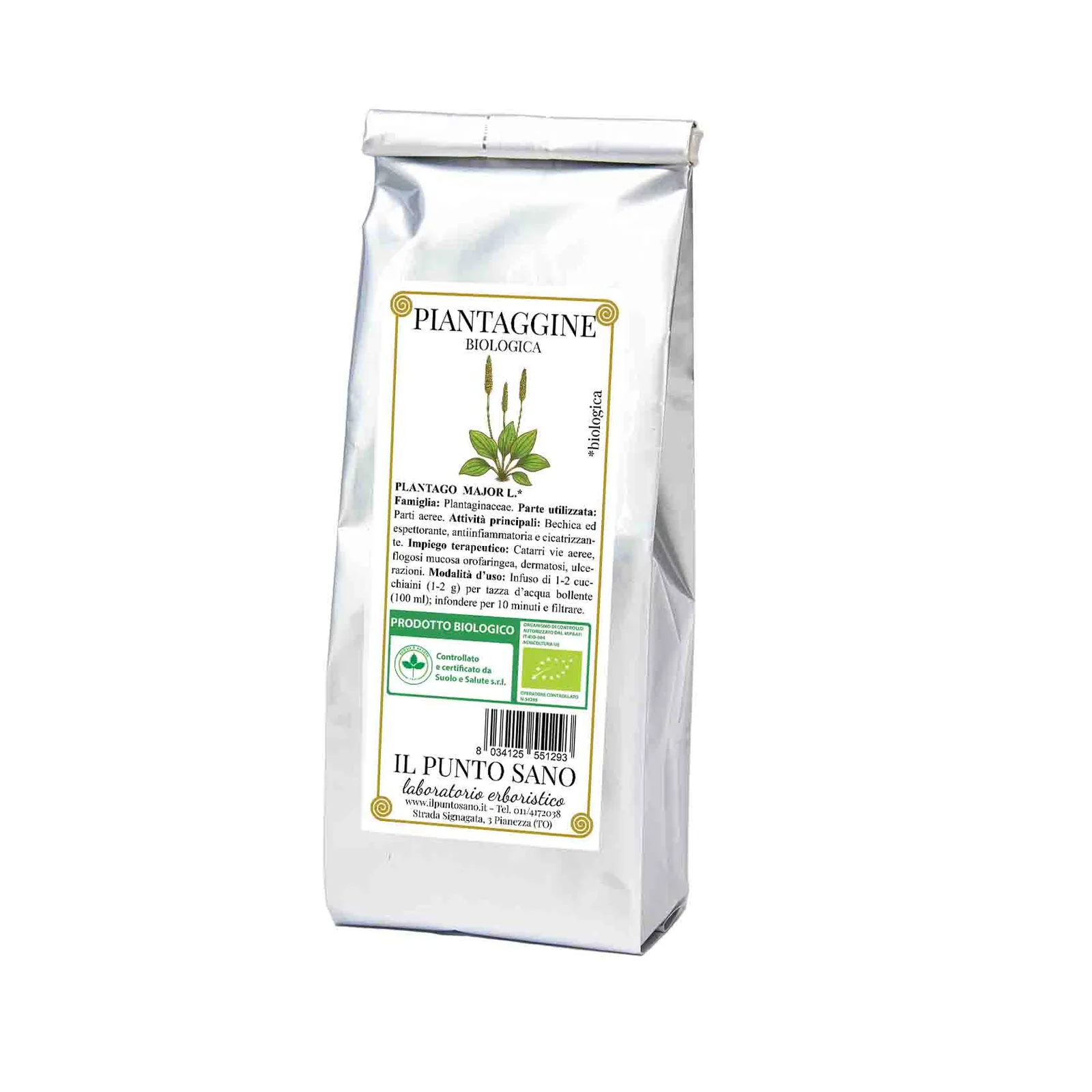


Organic Plantain Herbal Tea
8,20 €
50 g
An emollient plant for your throat-care routine.
Il Punto Sano Plantain offers plantain aerial parts, rooted in a herbal tradition of mucosal comfort.
- ✓ Plantain aerial parts.
- ✓ A herbal tradition of mucosal comfort.
- ✓ Full preparation directions and product information are always available below.
- Free shipping in Italy on orders of €70 or more
- Prepared within 1 working day + GLS transit of 2–4 working days
- Buy directly from our laboratory
- Free product advice from our biologist and nutritionist
Full product information: features, composition and directions for use.


Organic Plantain: an emollient tea for the throat, voice, respiratory mucous membranes and digestion
Il Punto Sano Organic Plantain is a certified organic medicinal herbal tea made with aerial parts of Plantago lanceolata L., a herbaceous plant in the Plantaginaceae family. It is highly valued in herbal tradition for its emollient, soothing and mucilaginous profile.
Plantain is traditionally used in herbal teas for the oropharyngeal mucosa, vocal tone, upper respiratory tract function, function of respiratory mucous membranes and digestive-system function. Its profile is particularly interesting when seeking a gentle, botanical, functional tea for the throat, voice and mucous membranes.
The aerial parts contain mucilage, iridoids such as aucubin and catalpol, flavonoids, tannins, phenolic acids, pectins and characteristic plant compounds. These underpin its emollient, soothing profile. The tea is not a treatment for cough, phlegm, bronchitis, inflammation, dermatoses, wounds or ulcers.
Why choose Il Punto Sano Organic Plantain
- Certified organic aerial parts of Plantago lanceolata, a medicinal plant in the Plantaginaceae family.
- Emollient and soothing activity on the oropharyngeal mucosa, for throat and voice teas.
- Supports vocal tone, ideal in routines for frequent voice use.
- Supports upper respiratory tract function, in a physiological rather than therapeutic context.
- Supports respiratory-mucosa function, reflecting its traditional mucilaginous profile.
- Contributes to digestive-system function, as a gentle, emollient plant.
- Contains mucilage, aucubin, catalpol, flavonoids and tannins, characteristic constituents of the plant material.
- Selected, certified organic raw material, without artificial flavourings, colours or preservatives.
Plantago lanceolata: the botany of Plantain
Plantago lanceolata L., known as Ribwort plantain, Narrowleaf plantain, Ribwort plantain or Narrowleaf plantain, is a perennial herbaceous plant in the Plantaginaceae.
It forms a basal rosette of narrow, lance-shaped leaves with prominent parallel veins. Slender flowering stalks carry compact, greenish-brown inflorescences with small, inconspicuous flowers.
The part used in this preparation is the dried, cut aerial parts, often known in herbal terminology as herba or herba cum floribus. These may include leaves and flowering portions harvested at peak herbal quality.
At a glance
Il Punto Sano Organic Plantain is a certified organic medicinal herbal tea made with aerial parts of Plantago lanceolata, traditionally used for the oropharyngeal mucosa, vocal tone, upper respiratory tract, respiratory mucous membranes and digestive-system function.
Plantain and traditional use
Plantain is common in meadows, along paths and in grassy ground. Despite its unassuming appearance, it is among the best-known herbal materials in throat, voice and respiratory-mucosa teas.
Tradition describes Plantain as emollient, soothing, cough-soothing and expectorant. In everyday wellbeing routines, its role concerns the oropharyngeal mucosa, vocal tone, upper respiratory function and respiratory-mucosa function.
These traditional properties explain its herbal value without making the tea a treatment for cough, bronchitis, pathological phlegm, infections or diagnosed inflammation.
Plantain for the oropharyngeal mucosa and vocal tone
Plantain particularly suits teas for oropharyngeal mucosa and vocal tone. Its mucilaginous, emollient profile suits a warm, gentle, enveloping drink.
It may be useful in routines for those who speak frequently, sing, work with the public or wish to support throat wellbeing during cold periods.
This tea is not a treatment for pharyngitis, tonsillitis, loss of voice, patches, infections, severe sore throat or oral-mucosal lesions.
Plantain and the upper respiratory tract
Plantain aerial parts support upper respiratory tract function. This is relevant in seasonal teas, particularly alongside emollient, balsamic or aromatic ingredients.
Plantain can be paired with Mallow, Marshmallow, Iceland moss, Thyme, Eucalyptus, Liquorice, Elderflower, Rosehip or Mint, according to the blend profile.
Seek medical advice for fever, breathing difficulty, chest pain, abundant or yellow-green phlegm, blood in phlegm or persistent symptoms.
Plantain and respiratory mucous membranes
Plantain is particularly consistent with support for function of respiratory mucous membranes. This mainly relates to the emollient, mucilaginous profile of its plant material.
Use it in teas when a gentler, more soothing plant than intense balsamic herbs is desired. It pairs well with Marshmallow, Mallow and Iceland moss.
Respiratory-mucosa and upper respiratory support are physiological roles, not treatment for asthma, bronchitis, sinusitis, respiratory allergies or infections.
Plantain and bronchial-secretion fluidity
Tradition describes Plantain as cough-soothing and expectorant. Its everyday physiological role is support for bronchial-secretion fluidity, particularly in seasonal blends.
Plantain is not an aggressive balsamic plant: its main value lies in balancing mucosal emollience and respiratory tradition.
This tea is not a medicinal mucolytic, cough suppressant, expectorant or treatment for a significant productive cough.
Plantain and cough: traditional background
Traditional herbal literature records airway-catarrh and cough-soothing uses. This tea is not a cough suppressant and does not dissolve pathological phlegm or treat bronchitis.
Plantain offers an emollient, soothing profile for the oropharyngeal mucosa, vocal tone, upper respiratory tract and respiratory mucous membranes.
Persistent, night-time or spasmodic cough, or cough with fever, chest pain, wheezing or abnormal phlegm, requires medical assessment.
Plantain and digestive-system function
Plantain may also be valued for digestive-system function. Its emollient profile suits gentle teas when a mildly flavoured, not overly aromatic plant is desired.
Combine it with Mallow, Marshmallow, Chamomile, Lemon balm, Fennel or Liquorice for gentle after-meal or mucosal-comfort blends.
This tea is not a treatment for gastritis, reflux, ulcers, colitis, diarrhoea, abdominal pain or diagnosed gastrointestinal disease.
Plantain and mucilage
Mucilage is among Plantain’s most important constituents. In water it helps create a softer, enveloping infusion, explaining its traditional emollient and soothing effect.
These substances make Plantain particularly suited to blends for the throat, voice, mucous membranes and respiratory function.
As with other mucilaginous plants, allow at least 1–2 hours between the tea and medicines, because mucilage could theoretically slow or reduce absorption of some substances.
Plantain and aucubin
Plantain contains iridoids such as aucubin and catalpol, alongside flavonoids, tannins and phenolic acids. These characteristic compounds define the plant material’s botanical profile.
Aucubin and catalpol are characteristic constituents, rather than evidence of an anti-inflammatory, antimicrobial, wound-healing or therapeutic effect from this tea.
Its everyday functions concern the oropharyngeal mucosa, vocal tone, respiratory tract, respiratory mucous membranes and digestive system.
Plantain and its traditional anti-inflammatory reputation
Traditional herbal literature records anti-inflammatory activity. This historical reference does not make the tea a treatment for inflammation.
Its everyday role is: emollient and soothing activity on the oropharyngeal mucosa and support for respiratory-mucosa function.
With significant inflammation, pain, fever, infection or persistent symptoms, the tea does not replace diagnosis and treatment.
Plantain and traditional external uses
Traditional herbal literature records wound-healing uses for Plantain. This food and infusion product is not intended as treatment for wounds or impaired tissue healing.
Traditional external use is limited to washes or brief compresses on intact skin, using a thoroughly filtered infusion allowed to cool to warm.
Do not apply to open wounds, ulcers, burns, sensitive mucous membranes, eyes, infected lesions or severely irritated skin. Seek medical or pharmacy advice for skin lesions.
Plantain, dermatoses and ulcers: traditional background
Traditional herbal literature records dermatoses and ulcers. These skin conditions can have widely differing causes and need specific assessment and treatment.
Plantain tea is not a remedy for dermatitis, eczema, psoriasis, fungal infections, infections, ulcers, sores or wounds.
Traditional external use is limited to intact skin, not damaged skin or mucous membranes, using only a thoroughly filtered plant preparation.
Plantain in throat and voice blends
Plantain is useful in throat and voice blends because it combines mucilage, respiratory tradition and a gentle taste. It can form the base of soft teas without an overly balsamic character.
It pairs well with Mallow, Marshmallow, Iceland moss, Liquorice, Rosehip, Hedge mustard, Elderflower and Chamomile.
For frequent voice users, a blend of Plantain, Hedge mustard, Mallow, Marshmallow and Liquorice may be interesting for vocal tone and oropharyngeal-mucosa wellbeing.
Plantain in seasonal respiratory blends
Plantain provides an emollient, soothing role in seasonal respiratory blends, balancing more aromatic and balsamic plants.
With Thyme, Eucalyptus, Hyssop and Oregano the blend becomes more aromatic. With Mallow, Marshmallow and Iceland moss it becomes softer. With Elderflower and Rosehip it gains a more seasonal profile.
These blends support the upper respiratory tract and respiratory mucous membranes; they are not treatment for bronchitis, infections, asthma, sinusitis or persistent cough.
Plantain in gentle digestive blends
Plantain can also join gentle digestive blends when a softer, less aromatic tea than Mint, Oregano or Ginger is desired.
It pairs well with Mallow, Marshmallow, Chamomile, Lemon balm, Fennel and Liquorice, creating a blend for digestive-system function.
Seek medical advice for stomach pain, marked reflux, persistent nausea, vomiting, blood in the stool or recurring symptoms.
Characteristic constituents of Plantain
The aerial parts of Plantago lanceolata contain a phytocomplex characterised by mucilage, iridoids such as aucubin and catalpol, flavonoids, luteolin, apigenin, tannins, phenolic acids, caffeic acid, chlorogenic acid, pectins, minerals and characteristic plant compounds.
Mucilage contributes to the emollient, soothing profile. Iridoids and flavonoids complete the botanical identity, while tannins and phenolic acids contribute a herbaceous, slightly astringent infusion taste.
Raw-material quality depends on correct botanical identification, harvest at peak herbal quality, gentle drying, natural colour, clean cut and storage away from light, air and moisture.
The aromatic profile of Plantain tea
Plantain tea has a herbaceous, green, gentle, slightly bitter, mildly astringent and mucilaginous taste. It is a gentle, functional plant rather than a strongly aromatic tea.
The scent recalls dried grass, light hay, green leaves and subtle botanical notes. In blends, Mallow, Liquorice, Rosehip, Chamomile, Sweet mint, Fennel or Lemon peel can make it more enjoyable.
Its gentle profile suits teas for the throat, voice, mucous membranes and respiratory system.
Il Punto Sano quality: certified organic Plantain, selected aerial parts and herbal cut
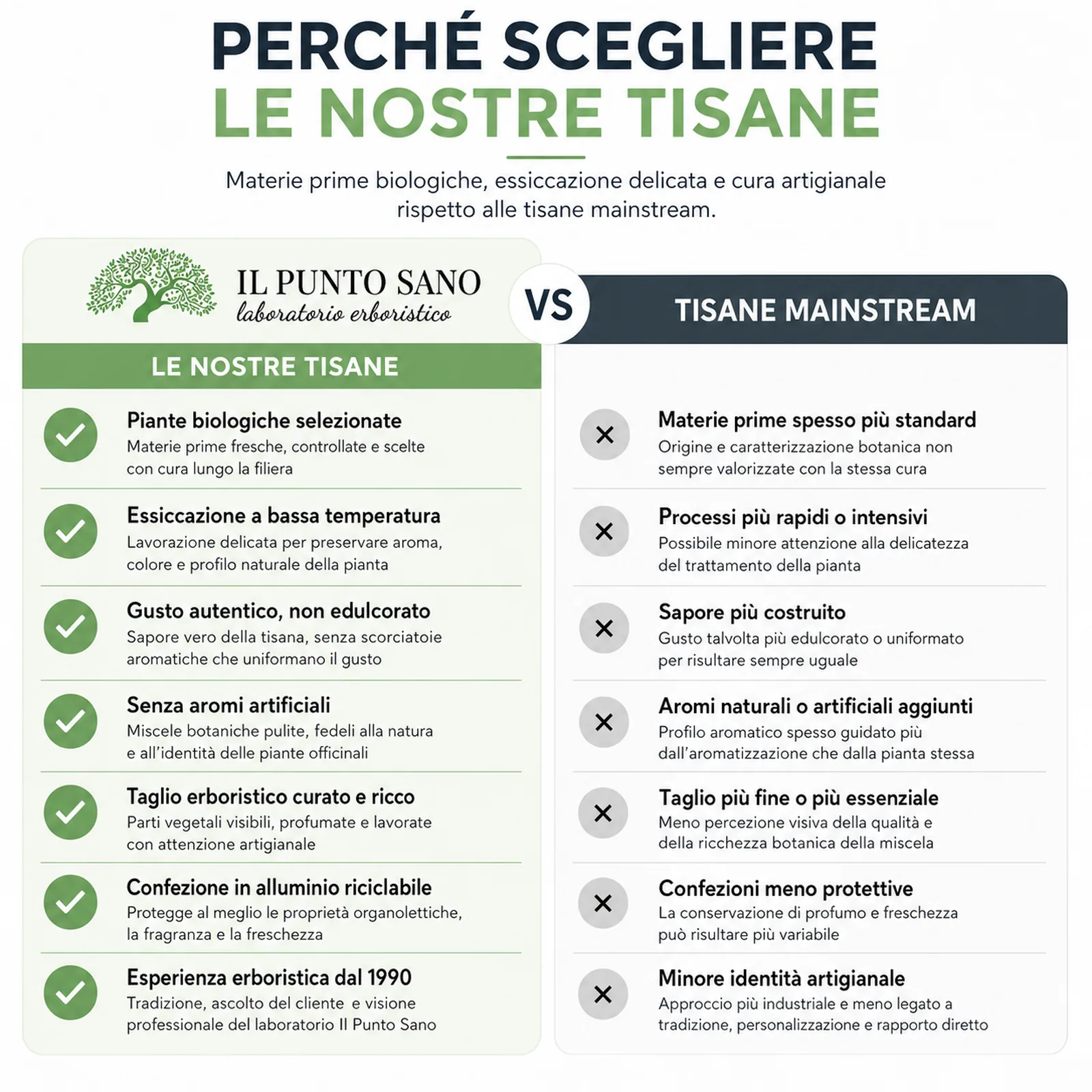
Il Punto Sano medicinal plants begin with careful selection of certified organic raw materials, focusing on botanical quality, freshness, natural colour, fragrance, herbal cut and infusion performance.
Organic Plantain aerial parts are selected for correct botanical identification, clean cut, natural colour and overall herbal quality. Good Plantain should have a clean herbaceous aroma, no mould or stale notes and appropriate drying.
We use no artificial flavourings, colours or preservatives. The taste comes from the organic aerial parts of Plantago lanceolata: herbaceous, gentle and naturally herbal. The pack protects the plant material from light, air and moisture, helping preserve its quality and characteristics over time.
Who may consider Organic Plantain aerial parts
Il Punto Sano Organic Plantain is intended for adults seeking a certified organic medicinal herbal tea for:
- the oropharyngeal mucosa;
- vocal tone;
- upper respiratory tract function;
- respiratory-mucosa function;
- normal bronchial-secretion fluidity;
- digestive-system function;
- emollient, soothing throat and voice blends;
- combinations with Mallow, Marshmallow, Iceland moss, Liquorice, Thyme, Elderflower, Rosehip or Chamomile.
Herbal profile
Plantago lanceolata L. – certified organic aerial parts
| Botanical name | Plantago lanceolata L. |
| Common name | Plantain, Ribwort plantain, Narrowleaf plantain |
| Family | Plantaginaceae |
| Part used | Dried, cut aerial parts; folium, herba, herba cum floribus |
| Quality | Certified organic raw material |
| Characteristic constituents | Mucilage, aucubin, catalpol, iridoids, flavonoids, luteolin, apigenin, tannins, phenolic acids, caffeic acid, chlorogenic acid, pectins and minerals |
| Traditional profile | Emollient and soothing for the oropharyngeal mucosa and vocal tone, upper respiratory tract, respiratory mucous membranes and digestive system; cough-soothing, expectorant, anti-inflammatory and wound-healing uses are historical references rather than therapeutic indications for this tea |
| Infusion flavour | Herbaceous, green, gentle, slightly bitter, mildly astringent and mucilaginous |
Directions for use
Infusion: prepare a herbal tea with 1–2 teaspoons of Plantain, approximately 1–2 g, for a cup containing 100 ml of boiling water. Steep for 10 minutes, preferably covered. Filter thoroughly and drink as needed and according to the label directions. Because of its mucilage, allow at least 1–2 hours between the tea and medicines.
Herbal tip
Plantain is ideal in emollient teas for the throat, voice and respiratory mucous membranes. It pairs well with Mallow, Marshmallow, Iceland moss, Liquorice, Hedge mustard, Elderflower, Rosehip and Chamomile. For a more aromatic blend, add Thyme, Eucalyptus or Mint, keeping Plantain as the soothing base.
Warnings: Do not exceed the recommended amounts. Keep out of reach of children. For adults. Do not use if allergic or hypersensitive to Plantain, Plantaginaceae or any component. Seek medical advice before use during pregnancy, breastfeeding or childhood. Because of mucilage, allow at least 1–2 hours between the tea and medicines. Use cautiously with dysphagia, swallowing difficulty, significant gastrointestinal disease, gastrointestinal obstruction or narrowing, persistent cough, asthma, respiratory disease, significant respiratory allergies, medication or particular clinical conditions. Do not use as treatment for persistent cough, pathological phlegm, bronchitis, respiratory infections, oropharyngeal inflammation, pharyngitis, tonsillitis, asthma, dermatoses, ulcers, wounds, burns, skin lesions, inflammation or diagnosed conditions. Traditional external applications should be limited to intact skin with a thoroughly filtered preparation cooled to warm; do not apply to open wounds, ulcers, mucous membranes, eyes or infected skin. Seek medical advice for fever, breathing difficulty, chest pain, persistent cough, blood in phlegm, yellow-green phlegm, severe sore throat, patches, skin lesions, worsening symptoms or allergic reactions. This website provides herbal information and does not replace medical advice.
Frequently asked questions
Which part of the plant is used?
The plant part listed in the product information is: Dried, cut aerial parts; folium, herba, herba cum floribus.
How should I prepare this herbal tea?
Infusion: prepare a herbal tea with 1–2 teaspoons of Plantain , approximately 1–2 g , for a cup containing 100 ml of boiling water. Steep for 10 minutes , preferably covered. Filter thoroughly and drink as needed and according to the label directions. Because of its mucilage, allow at least 1–2 hours between the tea and medicines.


 English (UK)
 Italiano
Reviews
There are no reviews yet.