
Free advice from our biologist and nutritionist. Learn More

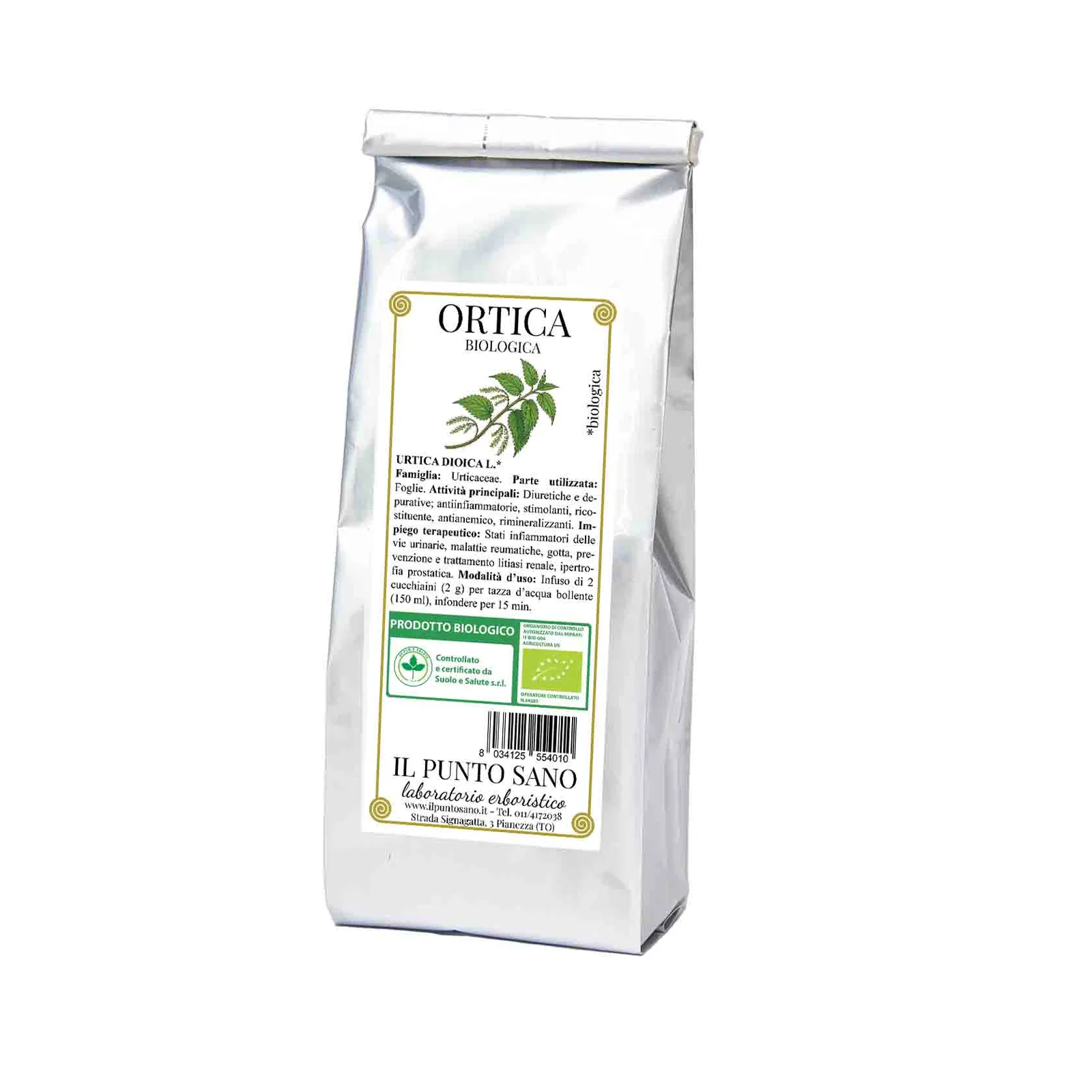



Organic Nettle Leaf Herbal Tea
7,20 €
40 g
Nettle leaves in your cleansing routine.
Il Punto Sano Nettle offers nettle leaves, traditionally used for fluid drainage and urinary tract function.
- ✓ Nettle leaves.
- ✓ Traditionally used for fluid drainage and urinary tract function.
- ✓ Full preparation directions and product information are always available below.
- Free shipping in Italy on orders of €70 or more
- Prepared within 1 working day + GLS transit of 2–4 working days
- Buy directly from our laboratory
- Free product advice from our biologist and nutritionist
Full product information: features, composition and directions for use.


Organic Nettle: drainage and cleansing leaves for urinary wellbeing, joints, hair and nails
Il Punto Sano Organic Nettle is a certified organic medicinal herbal tea made with leaves of Urtica dioica L., a perennial herbaceous plant in the Urticaceae family. Well known in European herbal tradition, it is valued for its drainage-supporting, cleansing, remineralising and green herbal profile.
Nettle leaves contain flavonoids, phenolic acids, chlorophyll, carotenoids, minerals, silica, tannins, vitamins, biogenic amines and characteristic plant compounds. This phytocomplex suits routines focused on drainage of body fluids, urinary tract function, the body’s normal cleansing functions, joint function, nail and hair wellbeing and upper respiratory tract function.
Traditional literature also records urinary inflammation, rheumatic disease, gout, kidney stones and prostate enlargement. These are historical references: Nettle leaves support physiological functions rather than treating urinary infections, stones, gout, rheumatism, prostatitis or prostate enlargement.
Important distinction: urinary wellbeing, drainage and the prostate
This information concerns Nettle leaves, not the root. The root is traditionally more associated with prostate function; leaves concern fluid drainage, urinary wellbeing, cleansing, joints, hair and nails. Do not use this tea as treatment for cystitis, urinary infections, kidney stones, gout, prostate enlargement, urinary retention or kidney disease. Seek medical advice for urinary burning, blood in urine, fever, lower-back pain, colic, difficulty urinating or prostate symptoms.
Why choose Il Punto Sano Organic Nettle
- Certified organic leaves of Urtica dioica, a medicinal plant in the Urticaceae family.
- Encourages body-fluid drainage, for cleansing and fluid-drainage routines.
- Supports urinary tract function, in a physiological rather than therapeutic context.
- Supports the body’s normal cleansing functions, particularly in seasonal teas.
- Contributes to joint function, as traditional support for mobility and joint wellbeing.
- Encourages nail and hair wellbeing, reflecting its traditional mineral and remineralising profile.
- Supports upper respiratory tract function, as a green cleansing plant in seasonal blends.
- Selected, certified organic raw material, without artificial flavourings, colours or preservatives.
Urtica dioica: the botany of Nettle
Urtica dioica L., known as Nettle, Common nettle, Stinging nettle or Common nettle, is a perennial herbaceous plant in the Urticaceae.
It has erect stems and opposite ovate or lance-shaped toothed leaves, with stinging hairs on stems and leaves. These contain irritants responsible for the fresh plant’s prickling sensation.
The part used in this preparation is the dried, cut leaves. Drying reduces the fresh plant’s stinging effect, making the material suitable for infusion.
At a glance
Il Punto Sano Organic Nettle is a certified organic medicinal herbal tea made with the leaves of Urtica dioica, traditionally used for body-fluid drainage, urinary tract function, cleansing, joint function, nail and hair wellbeing and upper respiratory support.
Nettle and traditional use
Nettle is widespread in European folk tradition, growing on organically rich soils, field edges, hedges and damp ground. Despite the fresh plant’s sting, it has long been used as a spring food, cleansing plant, tea ingredient and remineralising resource.
The leaves are historically valued in spring cleansing routines, drainage and urinary teas, joint blends and hair-and-nail preparations.
Its everyday role concerns fluid drainage, cleansing, urinary wellbeing, joints, hair and nails. It is not treatment for inflammation, rheumatism, gout, kidney stones, anaemia or prostate enlargement.
Nettle and body-fluid drainage
Nettle leaves are traditionally used to encourage drainage of body fluids. This suits cleansing and drainage teas, particularly during seasonal change or when a green functional drink is desired.
Drainage is physiological support, not treatment for pathological fluid retention, significant oedema or kidney disorders.
Seek medical advice before use with kidney or heart failure, significant oedema, diuretic or lithium treatment, or medically controlled fluid intake.
Nettle and urinary tract function
Nettle leaves particularly suit teas for urinary tract function. They support normal urinary flushing through fluids and drainage-supporting plants.
This urinary-function support is not treatment for cystitis, infections, urethritis, urinary burning, prostatitis or stones.
Fever, lower-back pain, persistent burning, blood in urine, significant urgency, difficulty urinating or recurrent infections require medical advice.
Nettle and the body’s cleansing functions
Nettle is a classic cleansing-tea plant. Its green, mineral and drainage-supporting character suits seasonal routines for a lighter feeling and general wellbeing.
Cleansing means support for normal body functions alongside hydration, a plant-rich diet, regular movement and reduced dietary excess.
This does not mean detoxifying blood, cleaning kidneys, eliminating accumulated toxins or treating inflammation.
Nettle and joint function
Nettle leaves are traditionally also associated with joint function. They suit mobility and joint-wellbeing teas, particularly with drainage or cleansing plants.
Traditional rheumatic-disease and gout references explain its history. The tea supports joint function and normal cleansing processes rather than treating rheumatic or metabolic disease.
Persistent joint pain, swelling, redness, diagnosed gout, high uric acid, fever or significant functional limitation require medical advice.
Nettle, gout and uric acid: traditional background
Tradition often links drainage and cleansing plants with uric-acid and gout routines. Gout is an inflammatory metabolic disease requiring diagnosis, a specific diet and medication where necessary.
Nettle leaf offers drainage, normal cleansing and joint-function support without promising lower uric acid or prevention of gout attacks.
Sudden severe joint pain, swelling, warmth, redness or suspected gout attack require medical assessment.
Nettle and the historical kidney-stone reference
Traditional literature records prevention and treatment of kidney stones. This is historical background: kidney stones may require diagnosis, imaging, urine tests, a specific diet and medical treatment.
Nettle is a drainage-supporting plant for urinary tract function and normal flushing, not treatment or prevention of stones.
Kidney colic, severe lower-back pain, blood in urine, nausea, vomiting, fever or difficulty urinating require prompt medical advice.
Nettle and the prostate: leaf versus root
Traditional prostate-enlargement references need a distinction between plant parts: the leaf principally concerns drainage, urinary wellbeing, cleansing and joints; the root is traditionally more associated with prostate function.
This leaf tea is not a prostate-enlargement product. The technical distinction explains why prostate-related traditional uses mainly concern the root.
Difficulty urinating, a weak stream, frequent night-time urination, blood in urine, pain, urinary retention or a suspected prostate problem require medical assessment.
Nettle, hair and nails
Nettle leaves are valued in routines for nail and hair wellbeing. Minerals, silica and remineralising tradition make them interesting in teas and seasonal blends.
This is hair-and-nail wellbeing support, not treatment for alopecia, pathological hair loss, anaemia, nutritional deficiency or endocrine disorders.
Investigate heavy shedding, sudden thinning, very fragile nails, suspected anaemia, iron deficiency, thyroid problems or hormonal changes with a professional.
Nettle and remineralising tradition
Nettle is traditionally a remineralising plant. Its minerals, silica, chlorophyll and other plant compounds contribute its green nutritional profile.
This suits seasonal teas when a herbaceous plant with a traditional restorative character is desired.
It is not an anti-anaemic treatment: anaemia requires tests, diagnosis and targeted treatment according to its cause.
Nettle and the upper respiratory tract
Traditional Nettle-leaf uses also include upper respiratory tract function. This suits seasonal blends, particularly with emollient or balsamic plants.
Combine with Mallow, Marshmallow, Plantain, Elderflower, Thyme, Eucalyptus, Liquorice or Rosehip for physiological support.
The tea is not treatment for colds, bronchitis, respiratory allergies, persistent cough, sinusitis, asthma or respiratory infections.
Nettle as a traditional food
Nettle is historically also a wild food after appropriate cooking. Young leaves feature in soups, fillings, omelettes and spring dishes.
This reinforces its green, mineral, spring character, but warnings still matter with concentrated or continuous tea use.
A tea differs from cooked fresh plant: it is a herbal preparation needing appropriate doses and attention to individual circumstances.
Nettle and vitamin K: anticoagulant precautions
Green Nettle leaves may contain vitamin K and other plant compounds. People taking anticoagulants, particularly those requiring INR monitoring, should avoid continuous self-directed use without medical advice.
Care also applies with antiplatelets, cardiovascular medicines, clotting disorders, recurrent bleeding or long-term treatment.
An occasional cup differs from prolonged daily intake, so assess frequency, amounts and individual circumstances.
Nettle in drainage and cleansing blends
Pair Nettle with Birch, Mouse-ear hawkweed, Horsetail, Orthosiphon, Couch grass, Dandelion, Corn silk and Goldenrod. Its green mineral character complements more specifically diuretic or cleansing plants.
These blends focus on a lighter feeling, body-fluid drainage and urinary tract function as physiological support.
Kidney or heart disease, diuretics or lithium require careful assessment of drainage blends.
Nettle in joint blends
For joint function, combine with Ash, Blackcurrant leaves, Horsetail, Meadowsweet, Devil’s Claw, Boswellia, Turmeric, Willow or Dandelion according to the formula’s purpose and each ingredient’s warnings.
Its role is drainage, cleansing and joint-function support rather than a natural anti-inflammatory or rheumatism treatment.
Assess blends carefully with anticoagulants, gastric disease, anti-inflammatory medicines or chronic disease.
Nettle in hair-and-nail blends
Pair Nettle with Horsetail, Millet, Bamboo, Alfalfa, Rosehip, Burdock or Nutritional yeast where appropriate to the formula.
This is hair-and-nail wellbeing support with a traditional remineralising profile, without promises of hair regrowth or correction of deficiency.
Significant shedding, fragility or persistent changes require nutritional, dermatological or medical assessment.
Characteristic constituents of Nettle
The leaves of Urtica dioica contain a phytocomplex characterised by flavonoids, rutin, quercetin, kaempferol, phenolic acids, caffeic acid, chlorogenic acid, chlorophyll, carotenoids, tannins, minerals, silica, potassium salts, calcium, magnesium, iron, vitamins, biogenic amines and small amounts of characteristic organic compounds.
Minerals and silica contribute the traditional remineralising profile. Flavonoids and phenolic acids complete the botanical profile, while chlorophyll gives the leaf its green herbal character.
Raw-material quality depends on correct botanical identification, timely leaf harvest, gentle drying, natural colour, absence of mould, clean cut and storage away from light, air and moisture.
The aromatic profile of Nettle tea
Nettle tea has a herbaceous, green, vegetal, mineral, slightly bitter and gently tannic taste. Its character is understated, spring-like and herbal rather than sweet or floral.
The infusion may be yellow-green or greenish-brown according to amounts, steeping time and leaf quality.
It pairs well with Birch, Horsetail, Mouse-ear hawkweed, Orthosiphon, Couch grass, Dandelion, Ash, Blackcurrant, Rosehip, Mint, Lemon peel, Mallow and Fennel.
Il Punto Sano quality: certified organic Nettle, selected leaves and herbal cut
Il Punto Sano medicinal plants begin with careful selection of certified organic raw materials, focusing on botanical quality, freshness, natural colour, fragrance, herbal cut and infusion performance.
Organic Nettle leaves are selected for correct botanical identification, clean cut, natural colour and overall herbal quality. Good material has a clean green aroma, no mould or stale notes and appropriate drying.
We use no artificial flavourings, colours or preservatives. The taste is that of the organic leaves of Urtica dioica: herbaceous, green and naturally herbal. The pack protects against light, air and moisture, preserving quality and characteristics.
Who may consider Organic Nettle leaves
Il Punto Sano Organic Nettle is intended for adults seeking a certified organic medicinal herbal tea for:
- body-fluid drainage;
- urinary tract function;
- the body’s normal cleansing functions;
- joint function;
- nail and hair wellbeing;
- a traditional remineralising profile;
- upper respiratory tract function;
- blends with Birch, Horsetail, Mouse-ear hawkweed, Orthosiphon, Dandelion, Ash, Blackcurrant or Rosehip.
Herbal profile
Urtica dioica L. – certified organic leaves
| Botanical name | Urtica dioica L. |
| Common name | Nettle, Common nettle, Stinging nettle, Nettle leaf |
| Family | Urticaceae |
| Part used | Dried, cut leaves; folium |
| Quality | Certified organic raw material |
| Characteristic constituents | Flavonoids, rutin, quercetin, kaempferol, phenolic acids, caffeic acid, chlorogenic acid, chlorophyll, carotenoids, tannins, minerals, silica, potassium salts, calcium, magnesium, iron, vitamins and biogenic amines |
| Traditional profile | Body-fluid drainage, urinary tract function, cleansing, joint function, nail and hair wellbeing and upper respiratory support; rheumatism, gout, kidney-stone and prostate uses are historical references rather than therapeutic indications for this leaf tea |
| Infusion flavour | Herbaceous, green, vegetal, mineral, slightly bitter and gently tannic |
Directions for use
Infusion: prepare a herbal tea with 2 teaspoons of Nettle, approximately 2 g, for a cup containing 150 ml of boiling water. Steep for 15 minutes, preferably covered. Filter thoroughly and drink as needed and according to the label directions. Maintain adequate fluids when using drainage teas unless medically advised otherwise.
Herbal tip
Nettle is ideal in drainage, cleansing and remineralising teas. Pair with Birch, Horsetail, Orthosiphon, Mouse-ear hawkweed, Dandelion and Couch grass for drainage; Ash and Blackcurrant for joint function; Horsetail and Millet for hair and nails.
Warnings: Do not exceed the recommended amounts. Keep out of reach of children. For adults. Do not use if allergic or hypersensitive to Nettle, Urticaceae or any component. Seek medical advice before use during pregnancy, breastfeeding or childhood. Use cautiously with kidney or heart disease, significant oedema, low blood pressure, diuretics, lithium, antihypertensives, antidiabetics, anticoagulants, antiplatelets, clotting disorders, warfarin or other monitored medicines, hyperuricaemia, gout, kidney stones, urinary infections, prostate complaints, anaemia, medication or particular clinical conditions. Do not use as treatment for cystitis, urinary infections or inflammation, rheumatic disease, gout, kidney stones, renal colic, prostate enlargement, prostatitis, anaemia, pathological hair loss or diagnosed conditions. Seek medical advice for fever, urinary burning, blood in urine, lower-back pain, kidney colic, difficulty urinating, urinary retention, significant joint pain, swelling, worsening symptoms, dizziness, palpitations or allergic reactions. This website provides herbal information and does not replace medical advice.
Frequently asked questions
Which part of the plant is used?
The plant part listed in the product information is: Dried, cut leaves; folium.
How should I prepare this herbal tea?
Infusion: prepare a herbal tea with 2 teaspoons of Nettle , approximately 2 g , for a cup containing 150 ml of boiling water. Steep for 15 minutes , preferably covered. Filter thoroughly and drink as needed and according to the label directions. Maintain adequate fluids when using drainage teas unless medically advised otherwise.


 English (UK)
 Italiano
Reviews
There are no reviews yet.