
Free advice from our biologist and nutritionist. Learn More

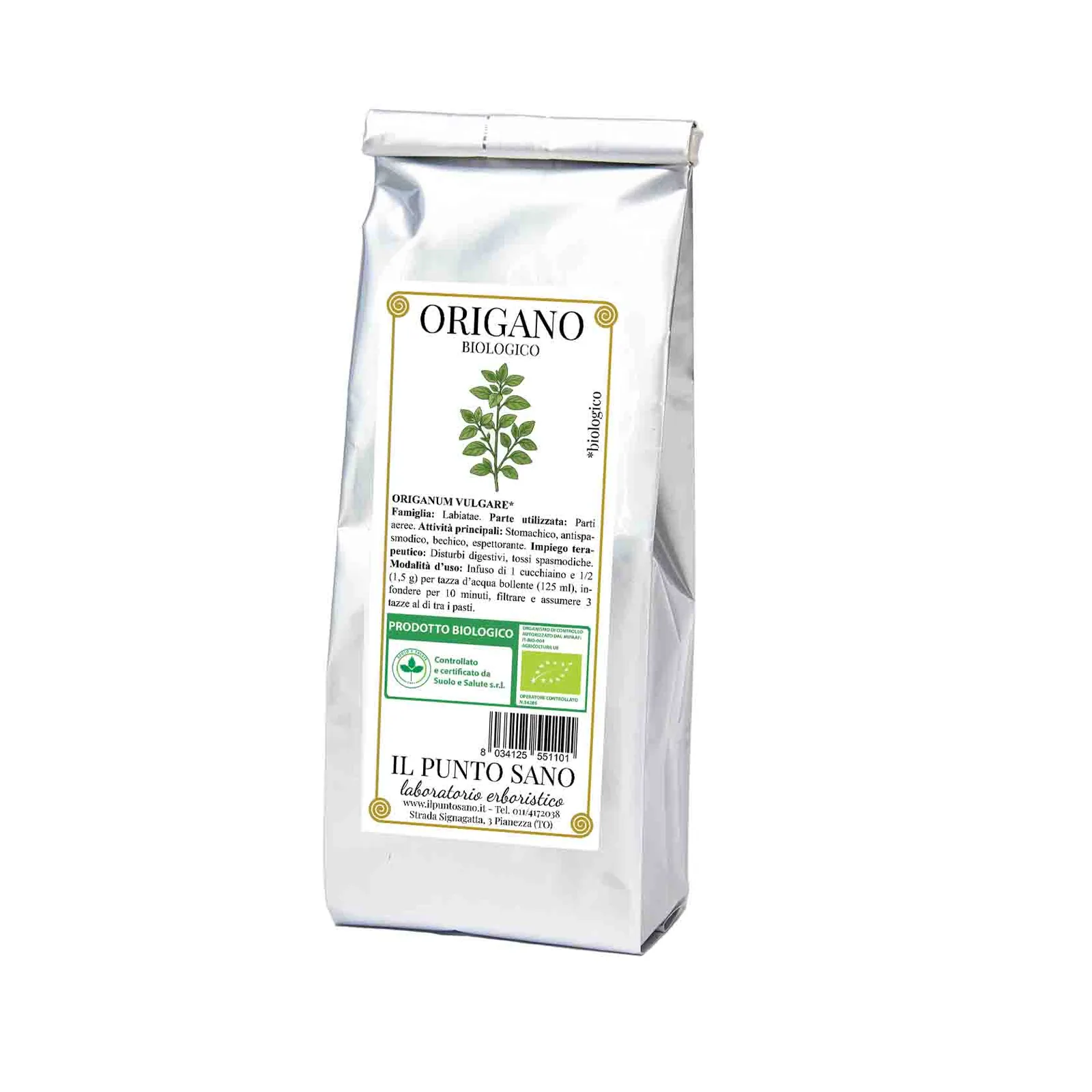



Organic Oregano Herbal Tea
8,60 €
60 g
Oregano’s Mediterranean character in a cup.
Il Punto Sano Oregano offers oregano aerial parts. An aromatic plant from digestive and balsamic herbal tradition.
- ✓ Oregano aerial parts.
- ✓ An aromatic plant from digestive and balsamic herbal tradition.
- ✓ Complete preparation and directions always available.
- Free shipping in Italy on orders of €70 or more
- Prepared within 1 working day + GLS transit of 2–4 working days
- Buy directly from our laboratory
- Free product advice from our biologist and nutritionist
The complete product information: features, composition and directions for use.


Organic Oregano: an aromatic tea for digestion, intestinal gas and bronchial secretion fluidity
Il Punto Sano Organic Oregano is a certified organic herbal tea made from the aerial parts of Origanum vulgare L., an aromatic plant belonging to the Lamiaceae, historically also called Labiatae.
Oregano is one of the most recognisable Mediterranean plants for aroma, taste and traditional use. Its aerial parts contain essential oil, aromatic compounds, flavonoids, rosmarinic acid, tannins and phenolic substances that characterise its aromatic, digestive, carminative and balsamic profile.
Oregano tea is suited to routines focused on digestive function, regular gastrointestinal motility,intestinal gas elimination and the fluidity of bronchial secretions. References to spasmodic coughs and antitussive, expectorant, antispasmodic or antiseptic activity are traditional background: this product supports physiological functions and does not replace diagnosis or treatment.
Why choose Il Punto Sano Organic Oregano
- Certified organic aerial parts of Origanum vulgare, an aromatic herb in the Lamiaceae family.
- Supports digestive function, particularly in after-meal teas.
- Promotes regular gastrointestinal motility as physiological support for digestive comfort.
- Helps intestinal gas elimination through its traditional aromatic, carminative profile.
- Promotes bronchial secretion fluidity in seasonal routines for the throat and respiratory tract.
- A Mediterranean aromatic plant, giving character to digestive and balsamic blends.
- Contains essential oil, carvacrol, thymol, flavonoids and rosmarinic acid, characteristic Oregano constituents.
- Selected, certified organic raw material, without artificial flavourings, colourings or preservatives.
Origanum vulgare: Oregano botany
Origanum vulgare L., known as Common Oregano, Wild Oregano, Oregano or Wild marjoram, is an aromatic herbaceous perennial belonging to the Lamiaceae.
It has upright or ascending stems, opposite oval fragrant leaves and terminal flower clusters with small pink, purple or whitish flowers. Its aroma is intense, warm, herbal and spicy, with characteristic Mediterranean notes.
The part used in this preparation consists of dried, cut aerial parts, often described in herbal practice as herba or flowering tops. These may include leaves, small tender stems and flowering sections gathered when aromatic constituents are at their peak.
At a glance
Il Punto Sano Organic Oregano is a certified organic herbal tea made from the aerial parts of Origanum vulgare, traditionally used for digestive function, gastrointestinal motility, intestinal gas elimination, bronchial secretion fluidity and natural Mediterranean aroma.
Oregano and traditional use
Oregano is deeply rooted in Mediterranean culture. Best known as a culinary herb, it also has a long herbal tradition in digestive teas and seasonal preparations for the throat and respiratory tract.
Its profile combines two interesting areas: digestive and carminative function, and a balsamic aromatic note useful in blends for bronchial secretion fluidity.
Its role here is aromatic, digestive and seasonal, rather than treatment for spasmodic coughs, bronchitis, infections, inflammation or diagnosed respiratory conditions.
Oregano for digestive function
One of Oregano’s most established uses relates to digestive function. Its warm, aromatic, slightly bitter note suits after-meal teas, especially when you want a drink with bold character.
Enjoy between or after meals, according to the label directions, when looking for an aromatic tea to accompany digestive comfort.
For a more comprehensive digestive blend, combine with Fennel, Green Anise, Lemon Balm, Chamomile, Mint, Coriander, Cumin, Ginger, Marjoram or Lemon peel.
Oregano, gastrointestinal motility and intestinal gas
Oregano is also traditionally used for regular gastrointestinal motility and the intestinal gas elimination. This makes it useful in teas for occasional bloating, swallowed air and flatulence.
Its aromatic profile contributes to traditional carminative action, particularly alongside Fennel, Anise, Coriander, Cumin, Lemon Balm or Mint.
Persistent bloating, significant abdominal pain, diarrhoea, severe constipation, vomiting, blood in stools or sudden bowel changes require medical advice.
Oregano’s traditional stomachic action
Traditional accounts describe Oregano as stomachic. This means support for digestive function, after-meal comfort and physiological gastrointestinal functions.
Oregano tea is particularly suited to those who appreciate intense, herbal Mediterranean flavours. Its distinctive aromatic character is stronger than a sweet or neutral infusion.
Use carefully and seek medical advice with significant gastritis, marked reflux, ulcers, persistent nausea or recurring digestive symptoms.
Oregano’s traditional antispasmodic action
Traditional accounts mention an antispasmodic action. Here its role is digestive comfort and support for regular gastrointestinal motility, without promising effects on spasms or colic.
Oregano may be included in blends with Lemon Balm, Chamomile, Fennel, Green Anise, Mint and Marjoram when slow digestion and mild abdominal tension occur together.
It is not a treatment for significant gastrointestinal spasms, colic, irritable bowel syndrome, persistent abdominal pain or diagnosed digestive conditions.
Oregano and bronchial secretion fluidity
Oregano is traditionally included in seasonal teas for the throat and respiratory tract. Its role here is the fluidity of bronchial secretions as physiological support rather than treatment for coughs or bronchitis.
Its warm aroma makes it interesting in blends with Thyme, Eucalyptus, Hyssop, Mallow, Marshmallow, Plantain, Elder or Liquorice.
Persistent cough, fever, breathing difficulties, chest pain, yellow-green sputum, blood in sputum or worsening symptoms require medical advice.
Oregano and traditional references to spasmodic coughs
Older herbal accounts mention spasmodic coughs. This is historical information rather than a therapeutic indication for the tea.
Oregano’s role is an aromatic plant traditionally used in teas for the upper airways and bronchial secretion fluidity.
Coughs that are spasmodic, persistent, nocturnal or accompanied by wheezing, fever or breathing difficulties require medical assessment. Tea should not be the sole intervention.
Oregano’s traditional antitussive profile
The term antitussive belongs to traditional herbal terminology and refers to preparations historically used in cough teas. It is not the principal role of this product.
Here the focus is support for respiratory function and bronchial secretion fluidity, rather than a promise to calm or cure coughs or act as a natural cough suppressant.
Oregano may be interesting as an aromatic ingredient in seasonal blends but does not replace medical advice for significant symptoms.
Oregano’s traditional expectorant profile
Traditional accounts also mention expectorant activity. For this infusion, the role is described as the fluidity of bronchial secretions, physiological support suited to a tea product.
In blends, Oregano gives a warm balsamic note to more emollient plants such as Mallow, Marshmallow and Iceland Moss, or aromatic plants such as Thyme, Eucalyptus and Hyssop.
It is not a treatment for bronchitis, pathological sputum, asthma, COPD, sinusitis, respiratory infections or chronic cough.
Oregano and traditional antiseptic references
Oregano is often associated with an intense aromatic profile and constituents such as carvacrol and thymol. The dried aerial-part tea should not, however, be understood as an antiseptic, antibacterial, antiviral or natural antibiotic product.
Such descriptions imply medicinal effects. Its role is a Mediterranean aromatic plant rich in characteristic constituents, useful in digestive and seasonal teas.
For respiratory, gastrointestinal, oral or skin infections, this tea does not replace medical diagnosis or treatment.
Oregano and essential oil: an important distinction
Oregano aerial parts naturally contain essential oil, but drinking the tea should not be confused with taking pure essential oil.
Oregano essential oil is a concentrated preparation rich in aromatic constituents, requiring expertise, controlled amounts and assessment of contraindications. This product information concerns only the dried plant for infusion.
Do not ingest pure Oregano essential oil or use it internally without professional supervision, particularly during pregnancy, breastfeeding or childhood, or with gastritis, epilepsy, asthma, liver disease or medication.
Oregano and a sensitive stomach
Oregano has an intense aromatic profile. It may be unsuitable for people sensitive to essential oils, aromatic plants or pungent flavours, particularly when concentrated or taken on an empty stomach.
Those with gastritis, reflux, ulcers, recurring nausea or frequent burning should begin with moderate amounts and assess individual tolerance.
In these cases, Chamomile, Mallow, Marshmallow, Fennel or Lemon Balm may be preferred for a gentler digestive tea.
Oregano in digestive blends
In digestive blends, Oregano gives a warm, aromatic Mediterranean note. It is particularly suited to a bold after-meal tea that is not too sweet.
With Fennel, Green Anise and Coriander it supports the carminative profile. With Lemon Balm and Chamomile it becomes more balanced. With Mint, Ginger and Lemon peel it takes on a fresher, livelier character.
Balance the amount carefully: Oregano is intense and can easily dominate a blend when used generously.
Oregano in seasonal blends
In seasonal throat and respiratory blends, Oregano offers a warm, balsamic, spicy note. Combine it with emollient or aromatic plants according to the desired profile.
With Mallow, Marshmallow and Iceland Moss it creates a softer blend. With Thyme, Eucalyptus, Hyssop and Liquorice it develops a more balsamic, aromatic profile.
Here too, its role remains support for bronchial secretion fluidity rather than treatment for coughs, colds, bronchitis or infections.
Oregano as a natural flavouring
Oregano is also an excellent natural flavouring. Its warm Mediterranean aroma can enhance digestive, balsamic, cleansing and bitter teas without artificial flavourings.
Use small amounts to give character to otherwise mild blends, especially when seeking a more herbal, bold, culinary taste.
As a single-herb tea, its flavour can be intense: expect a distinctive aromatic profile.
Characteristic Oregano constituents
The aerial parts of Origanum vulgare contain a phytocomplex characterised by essential oil, carvacrol, thymol, p-cymene, gamma-terpinene, linalool, borneol, beta-caryophyllene, flavonoids, rosmarinic acid, caffeic acid, tannins, triterpenes and phenolic compounds.
Carvacrol and thymol are among oregano’s best-known aromatic components, particularly in its essential oil. In the tea, they contribute to the plant’s scent and traditional profile; their presence does not establish antimicrobial or therapeutic effects.
Raw material quality depends on correct botanical identification, harvesting at peak aromatic maturity, gentle drying, aromatic intensity, natural colour, a clean cut and storage away from light, air and moisture.
Oregano tea’s aromatic profile
Oregano tea tastes herbal, warm, aromatic, spicy, slightly bitter, balsamic and Mediterranean. It has a bold character, more intense than Lemon Balm, Marjoram or Chamomile.
Its aroma recalls Mediterranean herbs, resinous notes, aromatic hay, green spices and a balsamic nuance. This infusion particularly suits those who appreciate intense aromatic herbal flavours.
It pairs well with Fennel, Green Anise, Coriander, Lemon Balm, Mint, Chamomile, Marjoram, Thyme, Eucalyptus, Mallow, Marshmallow, Liquorice, Ginger, Lemon peel and Sweet Orange peel.
Il Punto Sano quality: certified organic Oregano, selected aerial parts and authentic aroma
Il Punto Sano herbs start with carefully selected certified organic raw materials, with attention to botanical quality, freshness, natural aroma, herbal cut and infusion performance.
Organic Oregano aerial parts are selected for correct botanical identification, a clean cut, natural colour and aromatic intensity. Good material should have a warm, clean herbal fragrance, without stale, dusty or excessively oxidised notes.
We use no artificial flavourings, colourings or preservatives. The taste comes from the organic aerial parts of Origanum vulgare: aromatic, warm and naturally Mediterranean. The packaging protects the herbal material against light, air and moisture, helping preserve aroma, freshness and quality over time.
Who are Organic Oregano aerial parts for?
Il Punto Sano Organic Oregano is intended for adults seeking a certified organic herbal tea for:
- digestive function;
- regular gastrointestinal motility;
- intestinal gas elimination;
- occasional bloating, swallowed air and flatulence;
- bronchial secretion fluidity;
- seasonal blends for the upper airways;
- naturally flavouring digestive and balsamic teas;
- blends with Fennel, Green Anise, Lemon Balm, Mint, Thyme, Mallow, Marshmallow or Liquorice.
Herbal information
Origanum vulgare L. – certified organic aerial parts
| Botanical name | Origanum vulgare L. |
| Common name | Oregano, Common Oregano, Wild Oregano, Wild Marjoram |
| Family | Lamiaceae, historically also Labiatae |
| Part used | Dried, cut aerial parts; herba/flowering tops |
| Quality | Certified organic raw material |
| Characteristic constituents | Essential oil, carvacrol, thymol, p-cymene, gamma-terpinene, linalool, borneol, beta-caryophyllene, flavonoids, rosmarinic acid, caffeic acid, tannins, triterpenes and phenolic compounds |
| Traditional profile | Digestive function, gastrointestinal motility, gas elimination, bronchial secretion fluidity and Mediterranean aroma; antitussive, expectorant and antispasmodic actions as traditional references requiring careful interpretation |
| Infusion taste | Herbal, warm, aromatic, spicy, slightly bitter, balsamic and Mediterranean |
Directions for use
Infusion: prepare a tea with 1 and a half teaspoons of Oregano, approximately 1.5 g, for a cup of boiling water measuring 125 ml. Leave to infuse for 10 minutes, preferably covering the cup. Strain thoroughly and enjoy 3 cups a day between meals according to your needs and the label directions. With its intense aromatic profile, begin with moderate amounts if you have a sensitive stomach.
Herbal tip
Oregano is ideal in bold digestive teas and seasonal blends for bronchial secretion fluidity. For digestion, pair with Fennel, Anise, Mint, Lemon Balm and Chamomile; for respiratory routines, with Thyme, Eucalyptus, Mallow, Marshmallow and Liquorice. Do not confuse the tea with pure essential oil.
Warnings: Do not exceed the recommended amounts. Keep out of the reach of children. Intended for adults. Do not use if allergic or hypersensitive to Oregano, Lamiaceae/Labiatae, essential oils, thymol, carvacrol or any component. During pregnancy, breastfeeding or childhood, seek medical advice before use. Use carefully with significant gastritis, marked reflux, ulcers, irritable bowel, strong essential-oil sensitivity, significant respiratory allergies, asthma, bronchospasm, epilepsy, seizures, neurological, liver or kidney disease, medication or particular medical conditions. Do not ingest pure Oregano essential oil. Do not use this tea to treat spasmodic coughs, bronchitis, asthma, respiratory or gastrointestinal infections, colds, fever, pathological sputum, significant gastrointestinal spasms, colic, irritable bowel syndrome, abdominal pain, inflammation or diagnosed conditions. For persistent cough, fever, breathing difficulties, chest pain, yellow-green sputum, blood in sputum, significant abdominal pain, vomiting, blood in stools, worsening reflux, allergic reactions or persistent symptoms, consult a doctor. This website’s information is provided for informational and herbal purposes and does not replace medical advice.
Frequently asked questions
Which part of the plant is used?
The plant part listed in the product information is: Dried, cut aerial parts; herba/flowering tops.
How should I prepare this herbal tea?
Infusion: prepare a tea with 1 and a half teaspoons of Oregano , approximately 1.5 g , for a cup of boiling water measuring 125 ml . Leave to infuse for 10 minutes , preferably covering the cup. Strain thoroughly and enjoy 3 cups a day between meals according to your needs and the label directions. With its intense aromatic profile, begin with moderate amounts if you have a sensitive stomach.


 English (UK)
 Italiano
Reviews
There are no reviews yet.