
Free advice from our biologist and nutritionist. Learn More

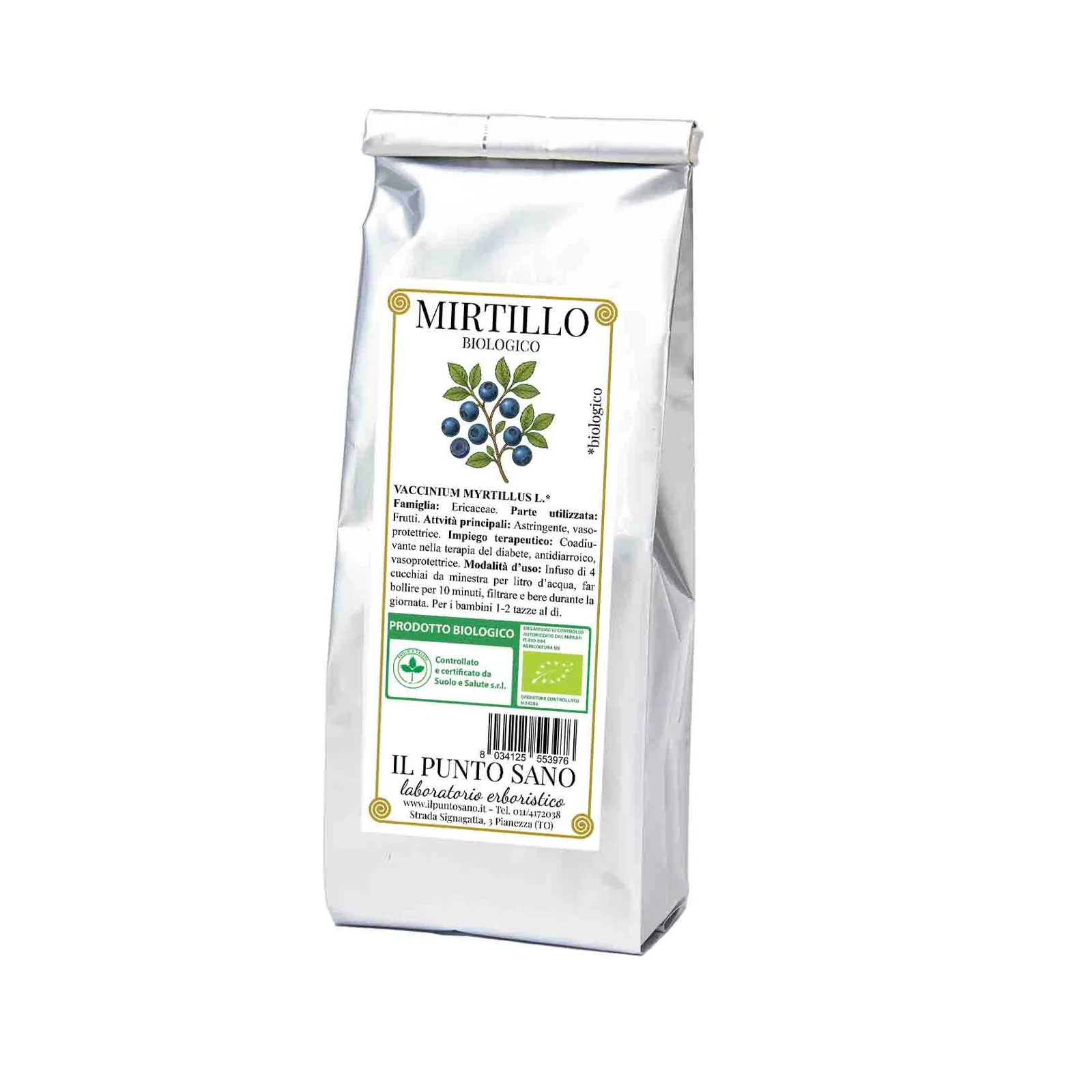



Organic Bilberry Herbal Tea
11,70 €
60 g
Bilberry: a pause with fruity character.
Bilberry by Il Punto Sano provides bilberry fruits, traditionally valued for visual wellbeing and microcirculation.
- ✓ Bilberry fruits.
- ✓ Traditionally valued for visual wellbeing and microcirculation.
- ✓ Full preparation and directions always available.
- Free shipping in Italy on orders of €70 or more
- Prepared within 1 working day + GLS transit of 2–4 working days
- Buy directly from our laboratory
- Free product advice from our biologist and nutritionist
Full product information: features, ingredients and directions for use.


Organic Bilberry: fruit for microcirculation, visual wellbeing, antioxidants and intestinal transit
Organic Bilberry by Il Punto Sano is a certified organic herbal tea made with the fruits of Vaccinium myrtillus L., a small shrub in the Ericaceae family, traditionally valued for dark fruits rich in natural pigments and polyphenolic compounds.
Bilberry fruit is well known in herbal practice for its traditional astringent, antioxidant and vasoprotective profile. Its relevant physiological applications are support for microcirculatory function, visual wellbeing, antioxidant protection and regular intestinal transit.
Bilberry tea suits routines for heavy legs, microcirculation, tired eyes, normal bowel function and traditionally poorly formed stools. References to diabetes, diabetes treatment, diarrhoea, therapeutic vascular protection or circulatory disorders need care: it supports normal functions rather than replacing medical assessment or treatment.
Why choose Organic Bilberry by Il Punto Sano
- Certified organic fruits of Vaccinium myrtillus, a herb in the Ericaceae family.
- Supports microcirculatory function, for heavy-leg and circulatory wellbeing routines.
- Supports visual wellbeing, reflecting traditional use of fruits rich in natural pigments.
- Antioxidant action, helping counter free radicals within a varied, balanced diet.
- Supports regular intestinal transit, particularly when a gentle, astringent tea is desired.
- Traditionally astringent, supporting normal stool consistency rather than treating diarrhoea.
- Contains anthocyanins, tannins, flavonoids and phenolic acids, characteristic Bilberry fruit compounds.
- Selected, certified organic raw material, without artificial flavourings, colourings or preservatives.
Vaccinium myrtillus: the botany of Bilberry
Vaccinium myrtillus L., known as Bilberry, Bilberry or European bilberry, is a small wild shrub in the Ericaceae family. It mainly grows in mountain and sub-mountain habitats, open woodland, heathland and acidic soils.
It has small angular green branches, oval toothed leaves, hanging flowers and round, intensely blue-black fruits. Unlike many cultivated blueberries, European Bilberry has strongly coloured flesh rich in anthocyanin pigments.
The part used in this preparation consists of dried fruits, traditionally prepared as a decoction or prolonged infusion. Quality depends on correct botanical identification, fruit ripeness, gentle drying, natural colour, integrity of the cut and protection from light, air and moisture.
At a glance
Organic Bilberry by Il Punto Sano is a certified organic herbal tea made from the fruits of Vaccinium myrtillus, traditionally used for microcirculation, visual wellbeing, antioxidant activity, regular intestinal transit and normal stool consistency.
Bilberry and traditional use
Bilberry is among European herbal tradition’s best-known berries. Used both as food and herbal material, its fruit is valued for intense colour, a lightly tart-astringent taste and abundant polyphenolic substances.
Dried fruit is traditionally associated particularly with intestinal astringency and microcirculatory wellbeing. Antioxidant activity and visual wellbeing are also relevant herbal applications.
Distinguishing fruits from leaves is important: this preparation uses the fruit. Blood glucose and diabetes are therefore not the product’s principal applications.
Bilberry and microcirculation
Bilberry is traditionally valued for microcirculatory function. This suits teas for heavy legs, a sense of venous fatigue and peripheral circulatory wellbeing.
Microcirculatory support is physiological, rather than treatment of venous insufficiency, significant capillary fragility, varicose veins or diagnosed vascular disorders.
For a broader blend, combine with Red Vine, Centella, Butcher’s Broom, Witch Hazel, Sweet Clover, Horse Chestnut or Rosehip, assessing each ingredient’s warnings.
Bilberry and heavy legs
Bilberry can feature in routines for heavy legs, particularly when a tea rich in fruity notes, anthocyanins and antioxidant compounds is desired.
The tea can accompany regular activity, appropriate hydration, active breaks, less sedentary time and attention to excessive heat.
Sudden or one-sided swelling, pain, redness, local warmth, very painful veins, suspected thrombosis or significant circulatory problems require medical advice.
Bilberry and visual wellbeing
Bilberry is also well known for visual wellbeing. Its fruits contain anthocyanins and natural pigments that define the berry’s profile and its traditional visual-wellbeing use.
Its role is visual wellbeing and antioxidant support, without promising improved eyesight, correction of short-sightedness, treatment of retinopathy or prevention of eye disease.
Sudden vision loss, retinal disorders, diabetes, glaucoma, eye pain, persistent blurred vision or diagnosed eye disease require an ophthalmologist’s assessment.
Bilberry and antioxidant activity
Bilberry fruits are naturally rich in anthocyanins, flavonoids and phenolic compounds. These contribute to the herbal material’s antioxidant profile and explain its interest in teas for microcirculation and visual wellbeing.
Antioxidant support helps counter free radicals within a varied diet rich in plant foods and colourful fruit and a balanced lifestyle.
The product does not promise cardiovascular disease prevention, anti-ageing effects, retinal protection, treatment of capillary fragility or specific therapeutic effects.
Bilberry and regular intestinal transit
Bilberry fruit is also described for regular intestinal transit. Its astringent profile, particularly associated with tannins, is traditionally relevant when normal stool consistency support is desired.
Traditional descriptions mention antidiarrhoeal activity. Here, the role is better understood as bowel-regularity support, normal stool consistency and a traditional astringent profile.
With persistent diarrhoea, fever, blood in stools, dehydration, significant abdominal pain or diarrhoea in young children, the tea does not replace medical assessment.
Dried Bilberry fruit: traditional astringent use
Dried Bilberry fruit has historically featured in astringent teas and decoctions. Hot-water preparation extracts tannins, polyphenols and characteristic fruit constituents.
Within its traditional use, the product can support normal intestinal function. It is not a treatment for diarrhoea and should not replace rehydration, an appropriate diet or medical assessment when necessary.
If intestinal symptoms persist beyond a few days or warning signs occur, seek medical advice.
Bilberry and diabetes
Some historical descriptions mention an “adjunct in diabetes treatment”. This is not an appropriate indication for Bilberry fruit tea.
Diabetes requires diagnosis, monitoring, personalised nutrition, medicines where needed and regular checks. Bilberry tea is not therapeutic support for diabetes or a product promising to lower blood glucose.
With diabetes, hypoglycaemia, insulin, metformin or other glucose-lowering medicines, seek medical advice before regularly using herbs for metabolic purposes.
Bilberry and vascular protection
Traditional literature mentions vasoprotective activity. This is better understood through physiological applications such as: microcirculatory function, peripheral circulatory wellbeing and antioxidant support.
This recognises Bilberry’s herbal value without implying treatment for veins, capillaries or vascular disease.
Vascular support remains physiological, particularly for an infusion rather than an extract standardised for anthocyanins.
Bilberry and oral mucosa
Dried Bilberry fruit also has traditional oral-mucosal uses, particularly because of its tannin-related astringency. A thoroughly strained infusion, cooled to lukewarm, has traditionally been used as a mouth rinse.
This is traditional support for oral-mucosal wellbeing, not treatment for mouth ulcers, gingivitis, infections or lesions.
Pain, bleeding gums, oral ulcers, plaques, infections or persistent lesions require medical or dental advice.
Bilberry in microcirculation blends
Bilberry is a recognisable, valued ingredient in microcirculation blends, contributing colour, flavour, anthocyanins and a strong herbal identity.
It may be combined with Red vine, Centella, Butcher’s Broom, Witch Hazel, Sweet clover, Horse Chestnut, Rosehip or Ginkgo, always as support for normal microcirculatory function.
Bilberry also contributes sensory appeal, making the tea fruitier and more pleasant.
Bilberry in intestinal blends
Bilberry may feature in intestinal blends when a gentle, astringent tea for normal stool consistency is desired.
Combine with Agrimony, Tormentil, Raspberry leaves, Chamomile, Mallow or Fennel according to the intended profile: more astringent, soothing or digestive.
Significant or recurrent diarrhoea, use in children or frail older people, or existing intestinal disease require professional advice before use.
Characteristic constituents of Bilberry
The fruits of Vaccinium myrtillus contain a phytocomplex characterised by anthocyanins, anthocyanidins, flavonoids, tannins, proanthocyanidins, phenolic acids, chlorogenic acid, organic acids, pectins, natural sugars, vitamins, minerals and aromatic compounds.
Anthocyanins provide the intense blue-purple colour and contribute antioxidant qualities. Tannins underpin traditional astringency; pectins, organic acids and polyphenols complete the berry’s identity.
Quality depends on correct identification, ripeness, gentle drying, natural colour, absence of fermented or stale notes, a clean cut and storage away from light, air and moisture.
Bilberry tea: aromatic profile
Bilberry tea has a fruity, tart, lightly sweet, astringent, woodland and gently tannic taste. Its scent recalls woodland fruits, ripe berries, botanical notes and a faint wine-like character.
The infusion takes on an intense colour, ranging from purple-red to dark brown according to quantity, extraction time and raw-material quality.
It combines well with Rosehip, Hibiscus, Red Vine, Witch Hazel, Raspberry leaves, Mallow, Chamomile, Fennel, Lemon peel, Sweet Orange peel and Cinnamon.
Il Punto Sano quality: certified organic Bilberry, selected fruit and authentic flavour
Il Punto Sano herbs and infusion fruits start with carefully selected certified organic raw materials, with attention to botanical quality, freshness, natural colour, aroma, herbal cut and infusion performance.
Organic Bilberry fruits are selected for correct identification, intense colour, a clean aromatic profile and overall quality. Good material has a fruity aroma, natural colour and no stale notes, mould or abnormal fermentation.
We use no artificial flavourings, colourings or preservatives. The taste comes from the organic fruits of Vaccinium myrtillus: fruity, tart, tannic and naturally herbal. Packaging protects the material from light, air and moisture, helping preserve colour, aroma and quality over time.
Who is Organic Bilberry Fruit for?
Organic Bilberry by Il Punto Sano is intended for adults seeking a certified organic herbal tea for:
- microcirculatory function;
- physiological heavy-leg support;
- visual wellbeing;
- antioxidant action;
- bowel regularity;
- normal stool consistency;
- a traditional astringent profile;
- blends with Red Vine, Centella, Butcher’s Broom, Witch Hazel, Rosehip, Raspberry leaves or Mallow.
Herbal profile
Vaccinium myrtillus L. – certified organic fruits
| Botanical name | Vaccinium myrtillus L. |
| Common name | Bilberry, European bilberry, Dried bilberry fruit |
| Family | Ericaceae |
| Plant part used | Dried fruits; fructus |
| Quality | Certified organic raw material |
| Characteristic constituents | Anthocyanins, anthocyanidins, flavonoids, tannins, proanthocyanidins, phenolic acids, chlorogenic acid, organic acids, pectins, natural sugars, vitamins, minerals and aromatic compounds |
| Traditional profile | Astringency, microcirculation, heavy legs, antioxidants, visual wellbeing, intestinal transit, normal stool consistency and traditional oral-mucosal use requiring care |
| Infusion taste | Fruity, tart, lightly sweet, astringent, woodland and gently tannic |
Directions for use
Decoction/prolonged infusion: use 4 tablespoons of Bilberry fruits per 1 litre of water. Bring to the boil and simmer gently for approximately 10 minutes, strain thoroughly and drink throughout the day as needed, following label directions.
Note on use in children: Use in children must be assessed by a paediatrician, particularly with diarrhoea, fever, dehydration or persistent intestinal symptoms. This product is intended for adults unless a professional advises otherwise.
Herbal advice
Bilberry suits teas for microcirculation, visual wellbeing and antioxidant support. Combine with Red Vine, Centella, Butcher’s Broom, Witch Hazel and Rosehip. In intestinal blends, combine with Agrimony, Raspberry leaves, Chamomile or Mallow, understanding these as physiological supportive uses.
Warnings: Do not exceed recommended amounts. Keep out of reach of children. Intended for adults. Do not use with allergy or hypersensitivity to Bilberry, Ericaceae, berries or any constituent. Seek medical advice before use during pregnancy, breastfeeding or childhood. Use carefully with diabetes, glucose-lowering medicines, anticoagulants, antiplatelets, clotting disorders, significant gastrointestinal disease, severe constipation, persistent diarrhoea, eye or vascular conditions, medicines or particular medical circumstances. Do not use the tea to treat diabetes, significant diarrhoea, intestinal infections, venous insufficiency, pathological capillary fragility, retinopathy, eye disorders, cardiovascular disease or diagnosed conditions. Consult a doctor for diarrhoea lasting more than 3 days, fever, blood in stools, significant abdominal pain, dehydration, vomiting, sudden vision loss, persistent eye symptoms, significant leg swelling, pain, redness, unusual bleeding or worsening symptoms. Information on this website is provided for herbal and informational purposes and does not replace medical advice.
Frequently asked questions
Which part of the plant is used?
The plant part listed in the product information is: Dried fruits; fructus.
How should I prepare this herbal tea?
Decoction/prolonged infusion: use 4 tablespoons of Bilberry fruits per 1 litre of water . Bring to the boil and simmer gently for approximately 10 minutes , strain thoroughly and drink throughout the day as needed, following label directions. Note on use in children: Use in children must be assessed by a paediatrician, particularly with diarrhoea, fever, dehydration or persistent intestinal symptoms. This product is intended for adults unless a professional advises otherwise.




 English (UK)
 Italiano
Reviews
There are no reviews yet.