
Free advice from our biologist and nutritionist. Learn More

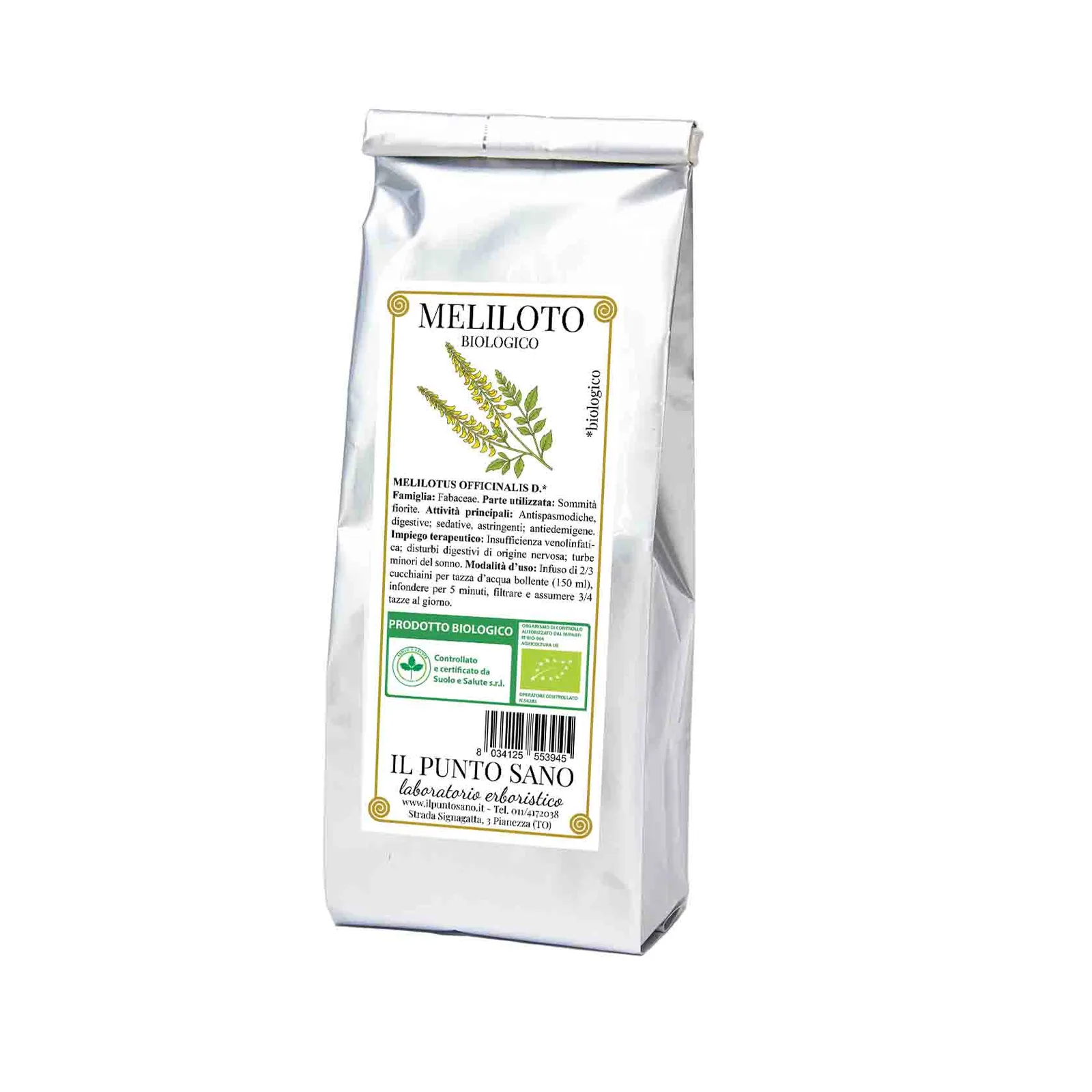



Organic Sweet Clover Herbal Tea
7,40 €
60 g
A Sweet Clover pause for your leg-care routine.
Il Punto Sano Sweet Clover offers sweet clover flowering tops, a traditional plant for microcirculation and venous circulation.
- ✓ Sweet clover flowering tops.
- ✓ A traditional plant for microcirculation and venous circulation.
- ✓ Complete preparation and directions always available.
- Free shipping in Italy on orders of €70 or more
- Prepared within 1 working day + GLS transit of 2–4 working days
- Buy directly from our laboratory
- Free product advice from our biologist and nutritionist
The complete product information: features, composition and directions for use.


Organic Sweet Clover: a tea for venous circulation, microcirculation, fluid drainage and heavy legs
Il Punto Sano Organic Sweet Clover is a certified organic herbal tea made from the flowering tops of Melilotus officinalis, a plant belonging to the Fabaceae. Modern botanical sources give the name as Melilotus officinalis (L.) Lam., while the Italian ministerial list may also use Melilotus officinalis Pallas.
Sweet Clover is traditionally used in preparations focused on venous circulatory function, microcirculatory function, drainage of body fluids and leg wellbeing. It is interesting in routines for heavy legs, occasional swelling and a stagnant feeling, within physiological rather than disease-related support.
Its flowering tops contain natural coumarins, flavonoids, phenolic acids, saponins, tannins and characteristic aromatic compounds. Coumarins require particular care, with clear warnings for anticoagulants, antiplatelets, clotting disorders, surgery or particular medical conditions alongside its venous and fluid-drainage profile.
Why choose Il Punto Sano Organic Sweet Clover
- Certified organic flowering tops of Melilotus officinalis, a herb in the Fabaceae family.
- Supports venous circulatory function, including the haemorrhoidal plexus.
- Promotes microcirculatory function, relevant to heavy-leg and swelling-sensation routines.
- Contributes to drainage of body fluids within venous and lymphatic wellbeing.
- Traditionally anti-oedematous, understood as fluid-drainage support rather than treatment for pathological oedema.
- Contains natural coumarins, flavonoids and phenolic compounds, characteristic herbal-material constituents.
- Interesting in heavy-leg blends with Red Vine, Centella, Butcher’s Broom, Witch Hazel, Bilberry or Hawkweed.
- Selected, certified organic raw material, without artificial flavourings, colourings or preservatives.
Melilotus officinalis: Sweet Clover botany
Melilotus officinalis, known as Sweet Clover, Yellow Sweet Clover, Melilot, Sweet clover or Yellow sweet clover, is an annual or biennial herbaceous plant belonging to the Fabaceae, historically also called Leguminosae.
It has upright stems, trifoliate leaves and small yellow flowers in elongated racemes, with a distinctive sweet-hay fragrance, particularly after drying. This aroma relates to coumarin formation, a characteristic herbal-material constituent.
The part used in this preparation consists of dried flowering tops, also described as herba cum floribus. These may include flowers, leaves and upper plant parts harvested at peak aromatic maturity.
At a glance
Il Punto Sano Organic Sweet Clover is a certified organic herbal tea made from the flowering tops of Melilotus officinalis, traditionally used for venous circulation, microcirculation, drainage of body fluids, heavy legs and haemorrhoidal-plexus wellbeing.
Sweet Clover and traditional use
Sweet Clover is traditionally associated with venous and lymphatic wellbeing. Its name recalls honey and clover, both for dried-plant sweetness and the nectar value of its small yellow flowers.
Herbal practice mainly uses it for venous circulation, microcirculation, fluid drainage and heavy-leg sensations. Its principal identity is therefore circulatory and fluid-drainage rather than digestive or sedative.
Its role concerns heavy legs, microcirculation, fluid drainage and venous function, not treatment for venous insufficiency, lymphoedema, thrombosis, significant varicose veins, pathological haemorrhoids or clinically significant oedema.
Sweet Clover and venous circulation
Sweet Clover’s principal use concerns venous circulatory function. Include in routines for heavy legs, venous tiredness or physiological peripheral-circulation support.
This is physiological support from a herbal tea rather than a medicinal effect.
Significant varicose veins, pain, asymmetric swelling, redness, local heat, suspected thrombosis, venous ulcers or diagnosed circulatory disorders require medical advice.
Sweet Clover and microcirculation
Sweet Clover is also associated with microcirculatory function. This makes it interesting in teas for heavy legs, occasional swelling and a stagnant feeling, particularly with complementary plants.
Combine with Red Vine, Bilberry, Witch Hazel, Centella, Butcher’s Broom, Horse Chestnut, Ginkgo, Hawkweed or Birch according to purpose.
It is not a treatment for severe capillary fragility, chronic venous insufficiency, pathological cellulite, significant haemorrhoids or diagnosed vascular changes.
Sweet Clover and drainage of body fluids
Sweet Clover contributes to drainage of body fluids, relevant to seasonal routines for lightness, swollen legs and venous-lymphatic wellbeing.
Include this tea in a broader programme of regular movement, adequate hydration, reduced sedentary time, balanced nutrition and professionally recommended compression stockings where needed.
Persistent oedema, heart failure, kidney disease, diuretics, rapidly increasing or one-sided swelling require medical assessment.
Sweet Clover and heavy legs
Heavy-leg sensations are a common reason to choose Sweet Clover. It suits routines for long hours standing or sitting, hot weather or legs that feel tired at the end of the day.
Combine with venotonic and fluid-drainage plants for more comprehensive leg-wellbeing teas.
Very swollen, painful, hot, red or asymmetric legs require medical assessment rather than management with tea.
Sweet Clover and the haemorrhoidal plexus
The Italian ministerial list associates Sweet Clover with venous function, including the haemorrhoidal plexus. This is physiological support for venous tone and local microcirculation.
It is not a haemorrhoid cure or means to stop bleeding. Its role is physiological venous support, potentially with Butcher’s Broom, Witch Hazel, Red Vine, Horse Chestnut or Bilberry.
Pain, bleeding, lumps, persistent haemorrhoids or worsening symptoms require medical advice.
Sweet Clover and traditional venous-lymphatic insufficiency references
Older accounts mention venous-lymphatic insufficiency. Here its role concerns venous circulatory function, microcirculatory function, drainage of body fluids and heavy legs.
This retains its herbal meaning without presenting the tea as treatment for a diagnosed medical condition.
Established venous or lymphatic insufficiency requires clinical assessment, potentially Doppler ultrasound, compression measures, movement and individualised strategies.
Sweet Clover and anti-oedematous activity
Traditional accounts attribute anti-oedematous activity. Here this means support for drainage of body fluids and venous-lymphatic wellbeing.
Include in seasonal lightness and occasional-swelling routines, particularly in summer or during increased sedentary periods.
It is not a treatment for significant oedema, lymphoedema, medicine-related swelling, heart failure, kidney failure or diagnosed circulatory changes.
Sweet Clover and natural coumarins
Coumarins are characteristic Sweet Clover compounds, responsible for dried material’s sweet hay scent and contributing to its herbal identity.
Natural coumarins differ from coumarin anticoagulant medicines. Nevertheless, avoid use with anticoagulants, antiplatelets or clotting disorders without medical advice.
Well-dried, properly stored material is essential: dampness and poor storage can alter quality.
Sweet Clover, dicoumarol and raw-material quality
Quality control matters. Poor storage, mould and unwanted fermentation may convert certain coumarin substances into problematic derivatives historically associated with dicoumarol.
Choose selected, well-dried, clean material without unusual odours, stored away from moisture, air and light.
Il Punto Sano selects certified organic materials for botanical quality, herbal cut, freshness, natural fragrance and proper storage.
Sweet Clover and traditional nervous-digestion references
Older accounts mention digestive problems of nervous origin. This is secondary background on digestive comfort when tension, mild stress and slow digestion occur together.
Sweet Clover is not a principal digestive plant like Fennel, Lemon Balm, Chamomile, Mint or Yarrow, so digestion is not its main role.
For nervous-digestion blends, it may accompany Lemon Balm, Chamomile, Fennel or Mint, with microcirculation and fluid drainage remaining central.
Sweet Clover and traditional minor sleep-disturbance references
Traditional accounts mention minor sleep disturbances. This is not its main role: Valerian, Passionflower, California Poppy, Linden, Lemon Balm or Hops are more specifically associated with rest.
Its traditionally calming profile remains secondary context; the principal focus is venous circulation, microcirculation and fluid drainage.
Persistent insomnia, anxiety, agitation, depression or significant sleep problems require medical advice.
Sweet Clover’s traditional sedative references
Traditional sedative references require care. Its history in calming preparations does not make this tea a natural sedative or insomnia treatment.
For relaxing blends, prefer more specific plants, leaving Sweet Clover as a possible secondary ingredient.
For single-herb Sweet Clover, the principal role remains heavy legs, microcirculation, venous circulation and fluid drainage.
Sweet Clover’s traditional antispasmodic activity
Older accounts mention antispasmodic activity. Here this is functional comfort and historical use rather than a remedy for spasms, colic or abdominal pain.
It may feature where circulation, fluid drainage and functional tension overlap, but should not be the principal ingredient of an antispasmodic tea.
Abdominal pain, significant cramps, bowel changes or persistent digestive problems require medical advice.
Sweet Clover’s traditional astringent activity
Astringency is part of traditional use rather than the main role of this tea.
Tannins and phenolic compounds contribute its botanical profile, with venous circulation, microcirculation and fluid drainage remaining central.
Agrimony, Tormentil, Raspberry leaves or Witch Hazel are more specifically associated with astringent teas.
Sweet Clover in heavy-leg blends
Sweet Clover suits heavy-leg blends with venotonic, fluid-drainage and antioxidant plants for a comprehensive everyday routine.
With Red Vine and Bilberry it supports the microcirculatory profile. With Centella and Butcher’s Broom it focuses more on venous wellbeing. With Birch, Hawkweed, Orthosiphon or Horsetail it strengthens the fluid-drainage profile.
Consider individual plant warnings, particularly strong venotonic or fluid-drainage herbs and potential medicine interactions.
Sweet Clover in microcirculation and haemorrhoidal-plexus blends
In blends for microcirculation and haemorrhoidal-plexus function, combine with Butcher’s Broom, Witch Hazel, Horse Chestnut, Red Vine, Bilberry or Centella.
The aim is physiological venous and microcirculatory support, without promises concerning haemorrhoids, bleeding, varicose veins or venous insufficiency.
Rectal bleeding, pain, persistent lumps or recurring symptoms always warrant medical assessment.
Sweet Clover and medicines
Natural coumarins require particular care with anticoagulants, antiplatelets, frequent anti-inflammatory medicines, heparins, clotting medicines and supplements affecting bleeding.
Avoid near surgery or invasive dental procedures, or with frequent bruising, nosebleeds, gum bleeding or known clotting abnormalities.
Anyone taking medication should ask a doctor or pharmacist before regular Sweet Clover tea use.
Sweet Clover during pregnancy and breastfeeding
Avoid independent use during pregnancy and breastfeeding. Its coumarin profile and circulatory role make professional assessment preferable before taking it.
During pregnancy, swelling, heavy legs, prominent veins or haemorrhoidal problems should be managed with a doctor, gynaecologist or midwife.
During breastfeeding, avoid repeated use without medical advice, particularly with medication or medical conditions.
Characteristic Sweet Clover constituents
The flowering tops of Melilotus officinalis contain a phytocomplex characterised by natural coumarins, coumarin, melilotoside, coumaric acid, flavonoids, phenolic acids, saponins, tannins, small amounts of mucilage, aromatic compounds and minerals.
Coumarins contribute the distinctive sweet-hay fragrance and herbal identity. Flavonoids and phenolics complete the botanical profile, while tannins and aromatics contribute the infusion’s lightly herbal, hay-like taste.
Quality depends on correct identification, peak aromatic flowering-top harvest, controlled drying, natural fragrance, no mould, clean cut and storage away from moisture, light and air.
Sweet Clover tea’s aromatic profile
Sweet Clover tea tastes herbal, sweet-hay-like, slightly bitter, aromatic and delicately astringent. Its scent recalls newly dried hay, dried clover and the sweet note typical of natural coumarins.
Its character is green and meadow-like rather than floral or fruity, suiting venous-circulation, fluid-drainage and heavy-leg blends.
It pairs well with Red Vine, Centella, Butcher’s Broom, Witch Hazel, Bilberry, Birch, Hawkweed, Orthosiphon, Horsetail, Fennel, Lemon Balm, Mint and Lemon peel.
Il Punto Sano quality: certified organic Sweet Clover, selected flowering tops
Il Punto Sano herbs start with carefully selected certified organic raw materials, with attention to botanical quality, freshness, natural aroma, herbal cut and infusion performance.
Organic Sweet Clover flowering tops are selected for correct identification, clean cut, characteristic fragrance and overall quality. Good material is well dried, free from unusual odours, not damp and without mouldy notes.
We use no artificial flavourings, colourings or preservatives. The fragrance comes from the organic flowering tops of Melilotus officinalis: herbal, hay-like and naturally botanical. The packaging protects against light, air and moisture, helping preserve quality and characteristics over time.
Who are Organic Sweet Clover flowering tops for?
Il Punto Sano Organic Sweet Clover is intended for adults not taking anticoagulants or antiplatelets who seek a certified organic tea for:
- venous circulatory function;
- microcirculatory function;
- heavy, tired legs;
- drainage of body fluids;
- physiological venous-lymphatic wellbeing;
- haemorrhoidal-plexus function;
- blends with Red Vine, Centella, Butcher’s Broom, Witch Hazel, Bilberry, Birch or Hawkweed;
- a certified organic plant with a traditional venous and fluid-drainage profile.
Herbal information
Melilotus officinalis – certified organic flowering tops
| Reference botanical name | Melilotus officinalis (L.) Lam. |
| Alternative name appearing in the Italian ministerial list | Melilotus officinalis Pallas |
| Common name | Sweet Clover, Yellow Sweet Clover, Melilot |
| Family | Fabaceae, traditionally also Leguminosae |
| Part used | Dried, cut flowering tops; herba cum floribus |
| Quality | Certified organic raw material |
| Characteristic constituents | Natural coumarins, coumarin, melilotoside, coumaric acid, flavonoids, phenolic acids, saponins, tannins, aromatic compounds and minerals |
| Traditional profile | Venous circulatory function, microcirculation, fluid drainage, heavy legs, haemorrhoidal plexus, with secondary traditional digestive and sedative references requiring care |
| Infusion taste | Herbal, sweet-hay-like, slightly bitter, aromatic and delicately astringent |
Directions for use
Infusion: prepare a tea with 2–3 teaspoons of Sweet Clover per cup of boiling water measuring 150 ml. Leave to infuse for 5 minutes, preferably covering the cup. Strain thoroughly and enjoy 3–4 cups a day according to your needs and the label directions. Avoid prolonged continuous use without professional advice, particularly with medication or medical conditions.
Herbal tip
Sweet Clover is ideal in heavy-leg, microcirculation and fluid-drainage teas, pairing with Red Vine, Centella, Butcher’s Broom, Witch Hazel, Bilberry, Birch, Hawkweed, Horsetail and Orthosiphon. Avoid with anticoagulants or antiplatelets because of natural coumarins.
Warnings: Do not exceed the recommended amounts. Keep out of the reach of children. Intended for adults. Do not use if allergic or hypersensitive to Sweet Clover, Fabaceae/Leguminosae or any component. Do not use during pregnancy, breastfeeding, childhood or adolescence without medical advice. Avoid with anticoagulants, antiplatelets, clotting disorders, recurring bleeding, frequent nosebleeds, spontaneous bruising, low platelets, significant liver disease, heparin, warfarin, acenocoumarol, DOACs, aspirin, clopidogrel, frequent NSAIDs or other medicines increasing bleeding risk without medical advice. Stop before surgery or invasive dental procedures as medically directed. Use carefully with kidney or cardiovascular disease, significant oedema, diuretics, lithium, gastrointestinal disorders, medication or particular medical conditions. Do not use the tea to treat venous or lymphatic insufficiency, thrombosis, phlebitis, significant varicose veins, lymphoedema, pathological haemorrhoids, significant oedema, insomnia, anxiety, persistent dyspepsia or diagnosed conditions. Sudden or one-sided swelling, leg pain, warmth, redness, breathing difficulties, chest pain, bleeding, blood in stools or urine, unusual bruising, abdominal pain, worsening or persistent symptoms require medical advice. This website’s information is provided for informational and herbal purposes and does not replace medical advice.
Frequently asked questions
Which part of the plant is used?
The plant part listed in the product information is: Dried, cut flowering tops; herba cum floribus.
How should I prepare this herbal tea?
Infusion: prepare a tea with 2–3 teaspoons of Sweet Clover per cup of boiling water measuring 150 ml . Leave to infuse for 5 minutes , preferably covering the cup. Strain thoroughly and enjoy 3–4 cups a day according to your needs and the label directions. Avoid prolonged continuous use without professional advice, particularly with medication or medical conditions.




 English (UK)
 Italiano
Reviews
There are no reviews yet.