
Free advice from our biologist and nutritionist. Learn More

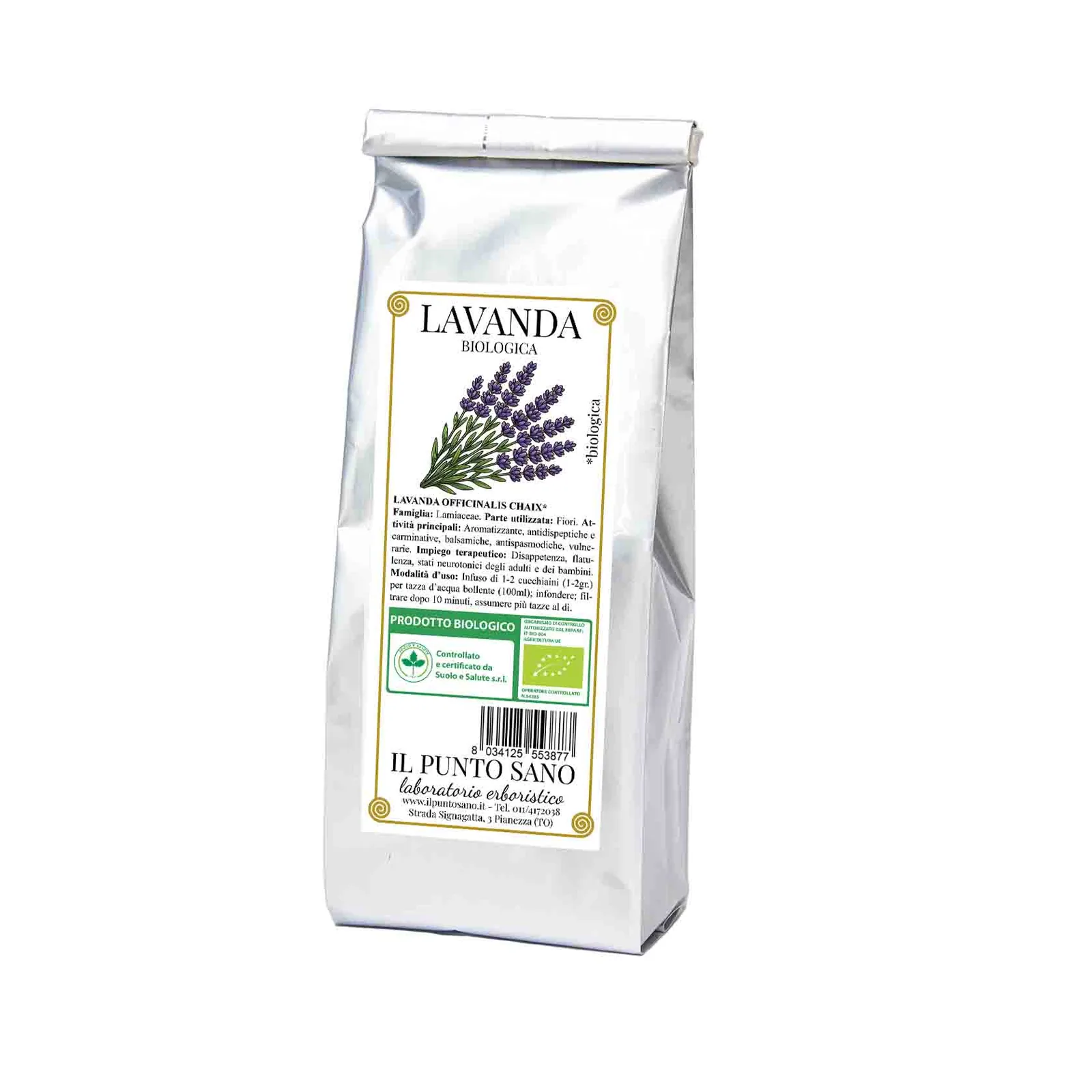


Organic Lavender Herbal Tea
10,20 €
60 g
Lavender’s fragrance invites you to slow down.
Il Punto Sano Lavender offers lavender flowers, an aromatic plant from relaxation and digestive-wellbeing tradition.
- ✓ Lavender flowers.
- ✓ An aromatic plant from relaxation and digestive-wellbeing tradition.
- ✓ Complete preparation and directions always available.
- Free shipping in Italy on orders of €70 or more
- Prepared within 1 working day + GLS transit of 2–4 working days
- Buy directly from our laboratory
- Free product advice from our biologist and nutritionist
The complete product information: features, composition and directions for use.


Organic Lavender: an aromatic tea for relaxation, mental wellbeing, digestion and intestinal gas
Il Punto Sano Organic Lavender is a certified organic herbal tea made from the flowers of Lavandula angustifolia Mill., an aromatic plant belonging to the Lamiaceae. Traditional herbal accounts may also call it Lavandula officinalis Chaix, now considered a botanical synonym.
Lavender is one of Mediterranean herbal practice’s best-loved plants, valued for its clean, floral aromatic fragrance. Its flowers are traditionally used to promote relaxation, support mental wellbeing, accompany digestive function and promote intestinal gas elimination.
Lavender tea suits evening routines, mild tension, mental fatigue and aromatic digestive blends. References to neurotonic states, vulnerary, antispasmodic or balsamic actions are traditional background: this product supports physiological functions and does not replace diagnosis or specific treatment.
Why choose Il Punto Sano Organic Lavender
- Certified organic flowers of Lavandula angustifolia, an aromatic herb in the Lamiaceae family.
- Promotes relaxation and mental wellbeing, ideal during mild tension and everyday overload.
- Supports normal mood within a natural emotional-balance routine.
- Useful in evening teas, particularly with Lemon Balm, Linden, Chamomile or Passionflower.
- Promotes digestive function, particularly when slow digestion accompanies tension and bloating.
- Helps intestinal gas elimination through its traditional aromatic, carminative profile.
- A natural aromatic flavouring plant, adding fragrance, elegance and a floral note to blends.
- Selected, certified organic raw material, without artificial flavourings, colourings or preservatives.
Lavandula angustifolia: True Lavender botany
Lavandula angustifolia Mill., also known as True Lavender, Common Lavender or English Lavender, is a perennial subshrub belonging to the Lamiaceae, the same botanical family as Lemon Balm, Mint, Sage, Rosemary, Thyme, Oregano and Hyssop.
It has woody stem bases, narrow grey-green leaves and terminal clusters of small, intensely fragrant violet or lilac flowers. It thrives in sunny, dry, calcareous, well-drained settings typical of Mediterranean hillsides.
The part used in this preparation consists of dried flowers, gathered at peak aromatic maturity and carefully stored to retain fragrance, colour and aromatic quality. The flowers are the most valued part for teas and aromatic blends.
At a glance
Il Punto Sano Organic Lavender is a certified organic herbal tea made from the flowers of Lavandula angustifolia, traditionally used for relaxation, mental wellbeing, normal mood, digestive function, intestinal gas elimination and naturally flavouring blends.
Lavender and traditional use
Lavender is deeply rooted in Mediterranean tradition. Its fragrance has long symbolised cleanliness, calm, home wellbeing and harmony. Its name derives from the Latin lavare, meaning to wash, recalling ancient use to scent water, rooms and fabrics.
Herbal practice uses Lavender flowers mainly for relaxation and mental wellbeing, as well as digestive, carminative and aromatic preparations.
Its role centres on relaxation, mood, digestion and intestinal gas, not treatment for anxiety, chronic insomnia, neurological disorders, gastritis, colic, bronchitis, wounds or skin disease.
Lavender for relaxation and mental wellbeing
A characteristic Lavender use is relaxation and mental wellbeing. Its floral aroma is traditionally associated with unwinding, evening pauses and a calmer balance during the day.
Lavender tea may be useful during mild tension, mental overload, occasional irritability or a need for a moment of calm.
Intense anxiety, panic attacks, persistent insomnia, depression, mood disorders, palpitations or significant psychological symptoms require a doctor or specialist.
Lavender and normal mood
Lavender can also feature in routines focused on normal mood. Its aroma creates an enjoyable, sensorially calming tea, particularly during mild emotional fatigue.
Enjoy alone or with Lemon Balm, Linden, Passionflower, Chamomile, Lemon Verbena, California Poppy or Hawthorn, considering individual sensitivity and ongoing treatment.
Lavender is physiological aromatic support for mental wellbeing, not a pharmaceutical antidepressant, anxiolytic or sedative.
Lavender in evening teas
Lavender flowers suit evening teas. Their floral fragrance and aromatic taste combine with softer relaxing herbs for a pleasant drink after dinner or before rest.
Balance quantities carefully: elegant but intense, Lavender can easily dominate. Small amounts often give a tea its distinctive character.
For a rounder evening tea, combine with Lemon Balm, Linden, Chamomile, Passionflower, California Poppy, Hops, Lemon Verbena or Sweet Orange peel.
Lavender and digestive function
Lavender is also traditionally used for digestive function. Its aromatic profile suits slow digestion accompanied by tension, nervousness, bloating or a contracted-stomach feeling.
Enjoy after meals as an aromatic digestive tea, particularly with carminative and stomach-focused herbs.
For a more comprehensive blend, combine with Fennel, Green Anise, Lemon Balm, Mint, Coriander, Chamomile, Ginger, Yarrow or Orange peel.
Lavender and intestinal gas
The Italian Ministry of Health also lists Lavender for intestinal gas elimination. This is consistent with its aromatic, carminative and traditionally anti-dyspeptic profile.
This tea may be useful when bloating relates to slow digestion, abdominal tension or large meals. Lavender adds a valuable aromatic note alongside Fennel, Green Anise, Cumin, Coriander, Mint or Lemon Balm.
Persistent bloating, significant abdominal pain, bowel changes, diarrhoea, severe constipation, blood in stools or unexplained weight loss require medical advice.
Lavender and traditional appetite-loss references
Traditional accounts mention poor appetite. Here Lavender is an aromatic plant supporting digestive function and an enjoyable tea, rather than a therapeutic appetite stimulant.
Its aroma accompanies digestion and improves bitter or digestive blends, but is not a treatment for significant or persistent appetite loss.
Prolonged appetite loss, weight loss, nausea, marked tiredness, fever or associated symptoms require medical advice.
Lavender’s traditional antispasmodic action
Lavender is often traditionally described as antispasmodic action. Here this means digestive comfort, relaxation and support during minor functional discomfort.
Include it when emotional and digestive tension seem connected, particularly with Lemon Balm, Chamomile, Fennel or Mint.
It is not a treatment for colic, significant intestinal spasms, irritable bowel syndrome, persistent abdominal pain or diagnosed gastrointestinal disease.
Lavender’s balsamic profile
Traditional accounts also mention balsamic activity. Lavender has a fresh floral, slightly camphoraceous note interesting in seasonal teas for the nose, throat and breathing.
Combine with Thyme, Eucalyptus, Hyssop, Pine, Elder, Mallow, Marshmallow or Plantain for a more fragrant, harmonious blend.
It is not a treatment for bronchitis, cough, colds, asthma, sinusitis or respiratory infections. Fever, breathing difficulties, persistent cough or significant symptoms require medical advice.
Lavender’s vulnerary tradition: distinct from drinking the infusion
Traditional accounts mention vulnerary action. This mainly concerns external Lavender use, rather than tea as a drink.
Vulnerary use is not the main role of these infusion flowers. Skin references remain traditional background or relate to dedicated external products such as oil macerates, aromatic waters or cosmetics.
The infusion is not a treatment for wounds, burns, ulceration, dermatitis, skin infections or lesions.
Lavender and children: suitability matters
Traditional accounts mention neurotonic states in adults and children. Lavender naturally contains aromatic compounds and essential oil, so this tea is not directly recommended for children.
Intended for adults; use in children only following medical or paediatric advice.
This is still more important for Lavender essential oil, which is much more concentrated than flower infusion and must not be confused with tea.
Lavender and essential oil: an important distinction
Lavender flowers naturally contain essential oil, but drinking the tea is not equivalent to taking pure oil. Essential oil is much more concentrated and requires expertise.
This product information concerns dried flowers for infusion. Do not ingest Lavender essential oil except under qualified professional supervision, or use it inappropriately, particularly in children, pregnancy, breastfeeding or sensitive individuals.
Use the tea moderately, avoiding excessive amounts or unnecessary prolonged use.
Lavender in relaxing blends
Lavender is ideal in relaxation and mental-wellbeing blends. It adds fragrance, elegance and a floral note for a more enjoyable sensory experience.
With Lemon Balm and Linden creates a soft evening tea. With Passionflower and California Poppy it develops a profile more focused on rest. With Chamomile it becomes gentler, suited to a simple calming tea.
Add Sweet Orange peel, Lemon Verbena or Rose for a more fragrant, harmonious blend.
Lavender in digestive blends
In digestive blends, Lavender is aromatic and carminative, particularly when slow digestion accompanies tension, nervousness or bloating.
With Fennel, Green Anise and Coriander it supports intestinal gas elimination. With Lemon Balm and Chamomile it becomes more suited to abdominal tension and nervous digestion. With Mint and Ginger it develops a fresher, more tonic profile.
Balance the amount: Lavender’s intense aroma can make an excessive blend overly perfumed or soapy.
Characteristic Lavender constituents
The flowers of Lavandula angustifolia contain a phytocomplex characterised by essential oil, linalool, linalyl acetate, lavandulol, lavandulyl acetate, 1,8-cineole, variable traces of camphor, terpinen-4-ol, borneol, flavonoids, tannins, coumarins, rosmarinic acid and other phenolic acids.
The linalool and the linalyl acetate are characteristic of True Lavender’s fragrance. Flavonoids, tannins and phenolic acids complete its botanical profile.
Quality depends on correct identification, harvest at peak aromatic maturity, gentle drying, flower colour, aromatic intensity and storage away from light, air and moisture.
Lavender tea’s aromatic profile
Lavender tea tastes floral, aromatic, herbal, slightly bitter, balsamic and delicately sweet. Its fragrance is intense, clean and recognisable, with dried-flower, honey, Mediterranean-herb and lightly camphoraceous freshness notes.
An elegant tea requiring careful measurement: moderate quantities give an enjoyable fragrance, while excess can be too intense.
It pairs well with Lemon Balm, Linden, Chamomile, Passionflower, California Poppy, Lemon Verbena, Rose, Mint, Fennel, Green Anise, Orange peel, Lemon peel and Liquorice.
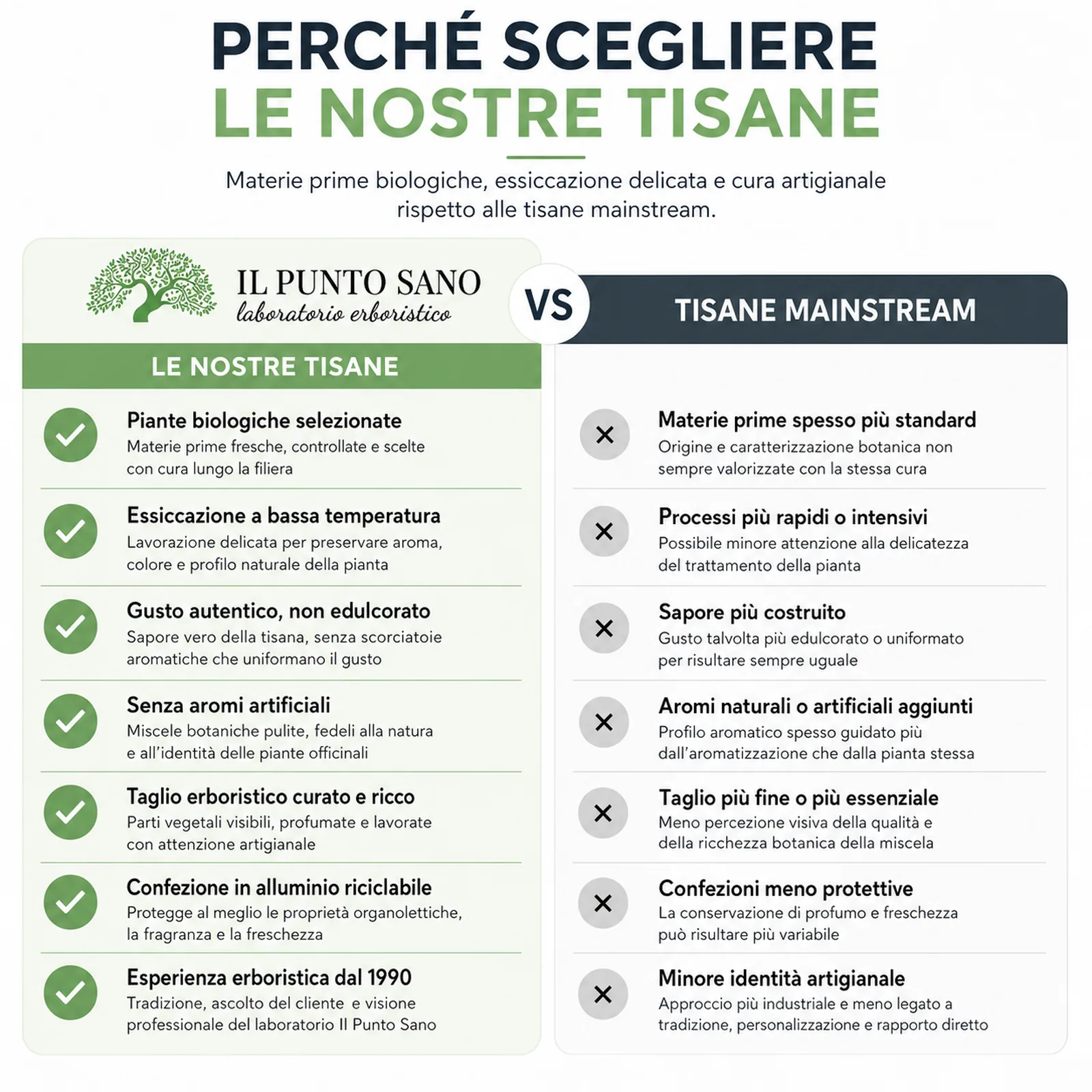
Il Punto Sano quality: certified organic Lavender, selected flowers and authentic fragrance
Il Punto Sano herbs start with carefully selected certified organic materials, with attention to botanical quality, freshness, colour, natural aroma, herbal cut and infusion performance.
Organic Lavender flowers are selected for correct identification, clean cut, natural colour and aromatic intensity. Good material has a clean, genuine floral fragrance without stale or dusty notes.
We use no artificial flavourings, colourings or preservatives. The fragrance comes from the organic flowers of Lavandula angustifolia: floral, aromatic and naturally herbal. The packaging protects against light, air and moisture, helping preserve fragrance, freshness and quality over time.
Who are Organic Lavender flowers for?
Il Punto Sano Organic Lavender is intended for adults seeking a certified organic tea for:
- relaxation and mental wellbeing;
- normal mood;
- evening routines and quiet pauses;
- mild tension and occasional mental fatigue;
- digestive function;
- intestinal gas elimination;
- naturally flavouring relaxing, digestive and floral blends;
- combinations with Lemon Balm, Linden, Chamomile, Passionflower, Fennel, Green Anise or Orange peel.
Herbal information
Lavandula angustifolia Mill. – certified organic flowers
| Correct botanical name | Lavandula angustifolia Mill. |
| Traditional synonym | Lavandula officinalis Chaix |
| Common name | Lavender, True Lavender, Common Lavender, English Lavender |
| Family | Lamiaceae |
| Part used | Dried flowers |
| Quality | Certified organic raw material |
| Characteristic constituents | Essential oil, linalool, linalyl acetate, lavandulol, lavandulyl acetate, 1,8-cineole, terpinen-4-ol, borneol, flavonoids, tannins, coumarins, rosmarinic acid and phenolic acids |
| Traditional profile | Aromatic, relaxing, mental wellbeing, normal mood, digestive, carminative and traditional balsamic profile; traditional external use considered separately |
| Infusion taste | Floral, aromatic, herbal, slightly bitter, balsamic and delicately sweet |
Directions for use
Infusion: prepare a tea with 1–2 teaspoons of Lavender flowers, approximately 1–2 g, for a cup of boiling water measuring 100 ml. Leave to infuse for 10 minutes, preferably covering the cup. Strain thoroughly and enjoy several cups a day according to your needs and the label directions. Begin with moderate amounts because of Lavender’s intense aroma.
Herbal tip
Lavender is ideal in relaxing evening teas, particularly with Lemon Balm, Linden, Chamomile, Passionflower or Lemon Verbena. In digestive blends, pair with Fennel, Green Anise, Lemon Balm, Mint, Coriander and Orange peel. Use small quantities to enhance fragrance without making the tea too intense.
Warnings: Do not exceed the recommended amounts. Keep out of the reach of children. Intended for adults. Do not use if allergic or hypersensitive to Lavender, Lamiaceae, essential oils or any component. During pregnancy, breastfeeding or childhood, seek medical advice before use. Use carefully with sedatives, anxiolytics, antidepressants, antiepileptics, neurological medicines, sleep medicines, alcohol, medication or particular medical conditions. Avoid with strong essential-oil sensitivity, significant respiratory allergies, severe asthma, epilepsy, seizures, neurological disease or significant mood disorders without medical advice. Do not ingest pure Lavender essential oil. Do not use the tea to treat anxiety, chronic insomnia, depression, neurological disorders, neurotonic states, colic, gastritis, bronchitis, cough, wounds, ulceration, dermatitis, skin infections or diagnosed conditions. If tension, insomnia, digestive difficulty, bloating or respiratory symptoms persist, worsen or accompany fever, pain, breathing difficulties, vomiting, significant diarrhoea, blood in stools or unusual symptoms, consult a doctor. This website’s information is provided for informational and herbal purposes and does not replace medical advice.
Frequently asked questions
Which part of the plant is used?
The plant part listed in the product information is: Dried flowers.
How should I prepare this herbal tea?
Infusion: prepare a tea with 1–2 teaspoons of Lavender flowers , approximately 1–2 g , for a cup of boiling water measuring 100 ml . Leave to infuse for 10 minutes , preferably covering the cup. Strain thoroughly and enjoy several cups a day according to your needs and the label directions. Begin with moderate amounts because of Lavender’s intense aroma.


 English (UK)
 Italiano
Reviews
There are no reviews yet.