
Free advice from our biologist and nutritionist. Learn More




L-Arginine
13,00 €
50 Capsules
A simple formula, a practical addition to your active routine.
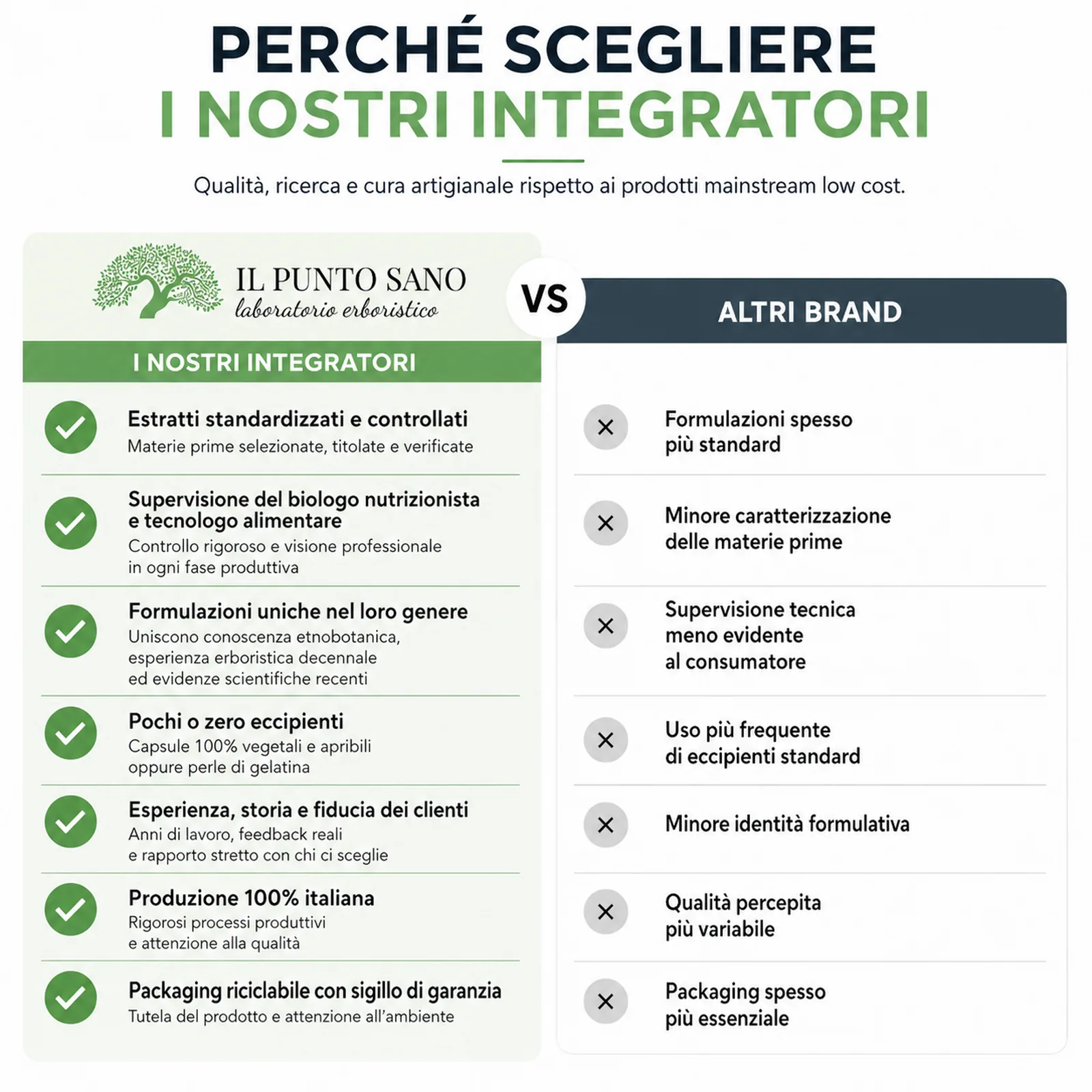
Il Punto Sano L-Arginine provides pure L-arginine in capsules. A straightforward choice for those wishing to include this amino acid in their nutrition, sport and wellbeing routine.
- ✓ 400 mg of L-arginine per capsule.
- ✓ No added excipients in the capsule contents.
- ✓ Explore the composition and directions before choosing.
- Free shipping in Italy on orders of €70 or more
- Prepared within 1 working day + GLS transit of 2–4 working days
- Buy directly from our laboratory
- Free product advice from our biologist and nutritionist
Full product information: features, composition and directions for use.


For capsules and softgels, this refers to the contents, excluding the shell.
Arginine: a pure L-arginine supplement for nitric oxide, circulation, performance and male fertility
Arginine is a food supplement based on pure L-arginine, with no excipients in the capsule contents, designed to provide nutritional support within routines focused on nitric oxide, vasodilation, circulation, sports activity, creatine synthesis, metabolism and male fertility.
L-arginine is a polar, basic amino acid with a hydrophilic side chain, present in many proteins and in free form in various plants, including buckwheat, cucurbits and conifers. It takes part in numerous metabolic processes in the body and is particularly interesting as a precursor of nitric oxide, a molecule involved in regulating vascular tone and blood flow.
The formula is simple and direct: one capsule provides 400 mg of L-arginine, offering a pure amino acid that can easily fit into nutritional strategies focused on cardiovascular wellbeing, physical activity, muscle support and male sexual function.
Why choose Arginine
- Pure L-arginine, with no excipients in the capsule contents.
- Support for nitric oxide synthesis, a molecule involved in vasodilation and blood flow.
- Of interest for circulation and physical performance, particularly in routines involving sports activity and muscle tone.
- Involved in endogenous creatine synthesis, which is important for energy metabolism and muscle function.
- Nutritional support in male fertility, particularly within approaches focused on sperm quality and oligoasthenospermia.
- An insulinogenic amino acid, studied for its role in insulin secretion and carbohydrate metabolism.
- Involved in the urea cycle, ammonia detoxification and nitrogen metabolism.
- A simple, targeted formula, ideal for those seeking straightforward L-arginine supplementation.
Arginine: pure L-arginine supplementation without excipients
The L-arginine is found in almost all proteins and in free form in many plants. It is involved in numerous metabolic processes and plays an important role in several areas of the body.
Nutritionally, arginine is considered conditionally essential: the adult body can generally synthesise it, particularly through the urea cycle, but additional intake may be useful at certain stages of life or when requirements increase.
Arginine is particularly interesting because it links protein metabolism, nitric oxide production, vascular function, creatine synthesis, the insulin response, immune function and nitrogen metabolism.
Nitric oxide synthesis and vasodilation
One of L-arginine’s best-known roles is its conversion into citrulline by the enzyme nitric oxide synthase. This process also produces nitric oxide, a key molecule in the regulation of vascular tone.
Nitric oxide acts as a vasodilator, helping the smooth muscle in blood vessels relax and contributing to improved blood flow. This is why arginine is widely used in routines focused on circulation, sports performance, muscle pump and male sexual function.
Improved blood flow can be relevant both during exercise, when muscles need oxygen and nutrients, and in peripheral tissues, where microcirculation and vasodilation play an important role in overall wellbeing.
Arginine and endogenous creatine synthesis
Arginine also donates a guanidino group to the amino acid glycine for endogenous creatine synthesis. Creatine is essential for energy metabolism, particularly in tissues with high energy demands, such as skeletal muscle, the heart and the brain.
This connection also makes arginine interesting in sports routines, muscle-support programmes and nutritional strategies aimed at strength, endurance and recovery.
Although it does not replace a dedicated creatine supplement, L-arginine participates in the biological mechanisms that allow endogenous creatine production, contributing to the formula’s metabolic rationale.
Arginine and male fertility
L-arginine is known as an adjunct in approaches focused on male fertility, particularly in oligoasthenospermia, meaning reduced sperm count and motility.
The rationale relates both to arginine’s role in cellular metabolism and to its connection with nitric oxide and blood flow. The vascular and metabolic microenvironment is important for male reproductive function.
In these circumstances, supplementation should form part of a broader approach assessing diet, lifestyle, oxidative stress, inflammation, possible nutritional deficiencies and semen parameters. Diagnosed male infertility always requires medical or andrological assessment.
Arginine, growth hormone and physical activity
Arginine is also known as an endogenous stimulus for the release of growth hormone. This has contributed to its popularity in sport and supplementation for performance, recovery and body composition.
Its use in sport relates to several mechanisms: support for vasodilation through nitric oxide, its role in nitrogen metabolism, participation in creatine synthesis and a possible influence on endocrine signals involved in adaptation to exercise.
The practical effect can vary considerably according to dose, nutritional status, training, diet, age and individual circumstances. Arginine should therefore be viewed as nutritional support within a complete sports strategy.
Arginine: an amino acid involved in insulin release
Arginine is one of the amino acids of greatest interest for its insulinogenic activity, meaning its ability to stimulate insulin secretion by the pancreas.
This is relevant because insulin itself stimulates vasodilation and blood flow by increasing nitric oxide synthesis. In other words, arginine can support insulin release, and insulin can in turn encourage nitric oxide production.
Taken together with the published literature, this suggests that part of arginine’s vasodilating effect may also be linked to its influence on insulin secretion and nitric oxide availability.
For blood glucose management, see also our food supplement
Diabesano, formulated to support carbohydrate metabolism and liver function.
Arginine and Herpes simplex: an individual consideration
The relationship between arginine and Herpes simplex is a sensitive subject that requires careful explanation. Experimental work has investigated arginine’s role in viral replication and its interaction with lysine, suggesting that the balance between these two amino acids can affect HSV replication in cell models.
In nutritional practice, excess arginine and its balance with lysine intake are often assessed carefully in people prone to recurrent cold sores. Anyone with frequent herpes recurrences should therefore seek advice from a doctor or healthcare professional before using high-dose L-arginine supplements or taking them for prolonged periods.
This does not diminish arginine’s metabolic interest, but highlights the importance of individual assessment in susceptible people. The reference to Herpes simplex is documentary and is not an indication to use the product for viral infections.
Chemical properties of arginine
Arginine owes its basic character to the guanidino group. It was first isolated in 1886 from a lupin sprout extract by the Swiss chemist Ernst Schultze.
The molecule is chiral, and its L-enantiomer is one of the 20 standard amino acids. Its guanidino side group gives it basic behaviour. Arginine can undergo methylation through its terminal amino group and is particularly abundant in histone proteins.
Arginine’s ability to undergo methylation gives it an important role in regulating gene expression. In addition to DNA methylation, protein methylation also occurs on arginine residues and is mediated by a specific class of enzymes.
Arginine is considered essential in children because the body cannot always synthesise sufficient amounts. In adults it is synthesised through the urea cycle. In addition to this metabolic pathway, arginine can be decarboxylated to form agmatine, one of the biogenic amines found in products of intestinal bacterial fermentation.
Who may consider Arginine
Arginine is intended for adults seeking nutritional support for:
- nitric oxide production and vasodilation;
- circulation and blood flow;
- sports activity, muscle pump and physical performance;
- endogenous creatine synthesis;
- male fertility and sperm quality as part of a professionally supervised approach;
- male sexual function and vascular support;
- carbohydrate metabolism and the insulin response;
- nitrogen metabolism and the urea cycle;
- periods of increased physical or metabolic demand.
Ingredients and daily amounts
A simple formula with pure L-arginine
| Ingredient | Daily amount | Function / Rationale for use |
|---|---|---|
| L-Arginine | 400 mg | An amino acid involved in nitric oxide production, vasodilation, creatine synthesis and nitrogen metabolism |
| Capsule shell | as required | HPMC plant-based capsule |
Directions for use
1 capsule a day, with meals and water.
0% excipients, 100% product
This supplement is made without excipients: the capsule contents consist of pure L-arginine.
The information on this website is provided solely for information and educational purposes. It does not constitute therapeutic advice or replace medical advice. Food supplements are not medicines and are not intended to diagnose, prevent, treat or cure human disease. References to nitric oxide, vasodilation, creatine, oligoasthenospermia, male infertility, growth hormone, insulin, Herpes simplex, influenza A, methylation, gene expression, agmatine and intestinal bacterial fermentation describe and document the biological plausibility and observed activities of the constituents. They do not replace medical assessment, diagnosis or treatment.
Frequently asked questions
What pack size is available?
The pack contains 50 capsules.
How should I use the product?
Take 1 capsule a day with a meal, with water.



 English (UK)
 Italiano
Reviews
There are no reviews yet.