
Free advice from our biologist and nutritionist. Learn More

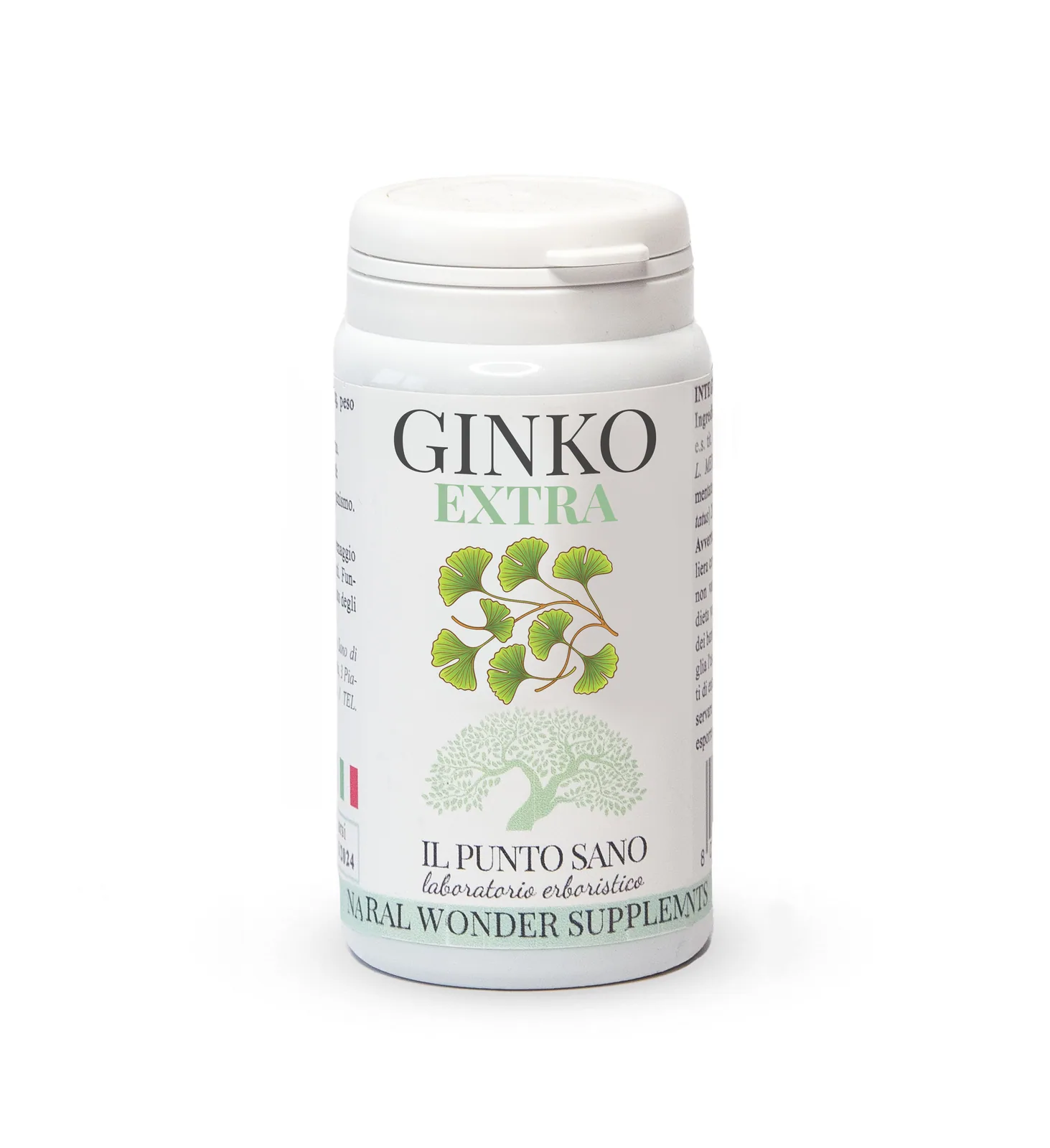
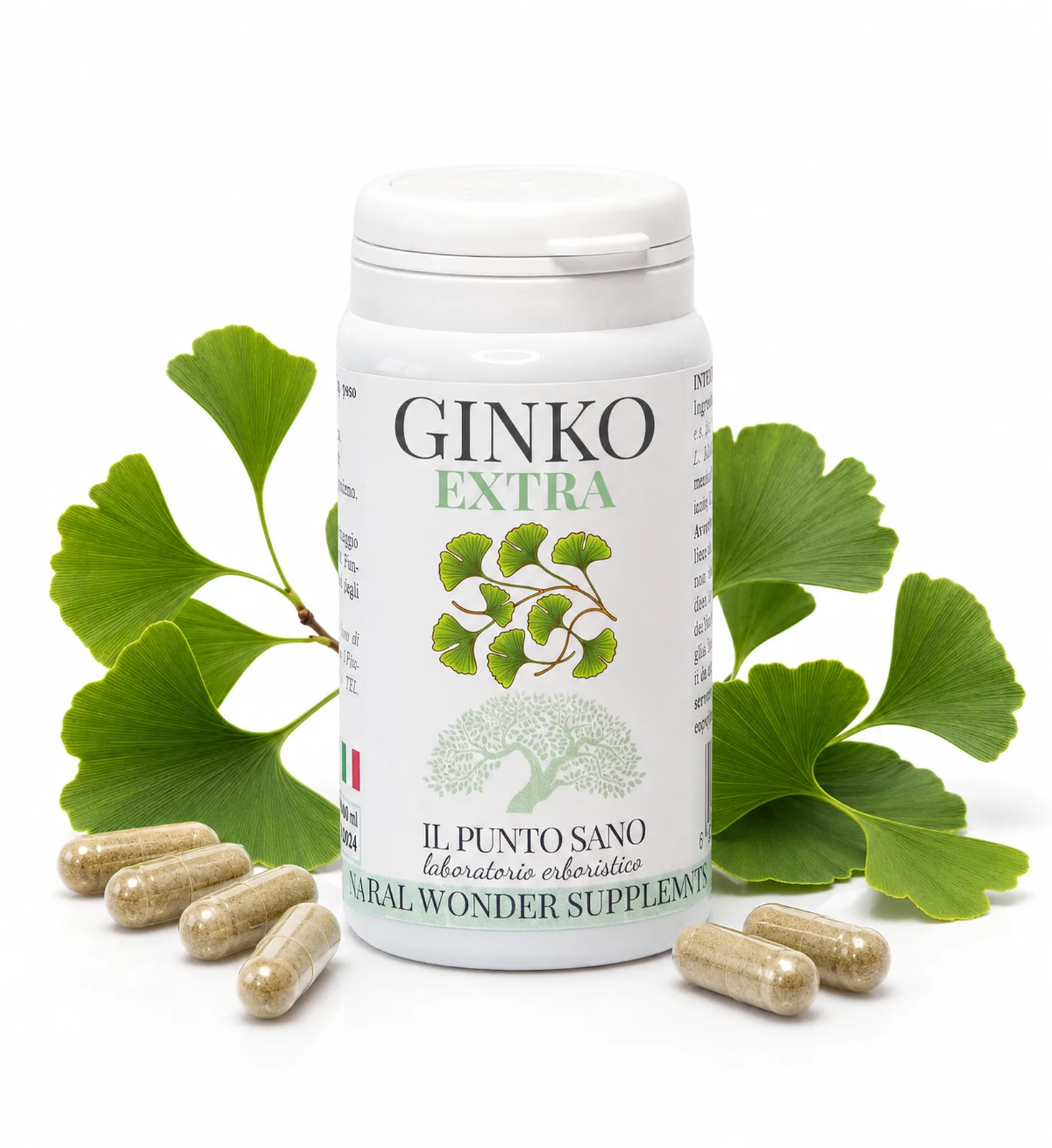
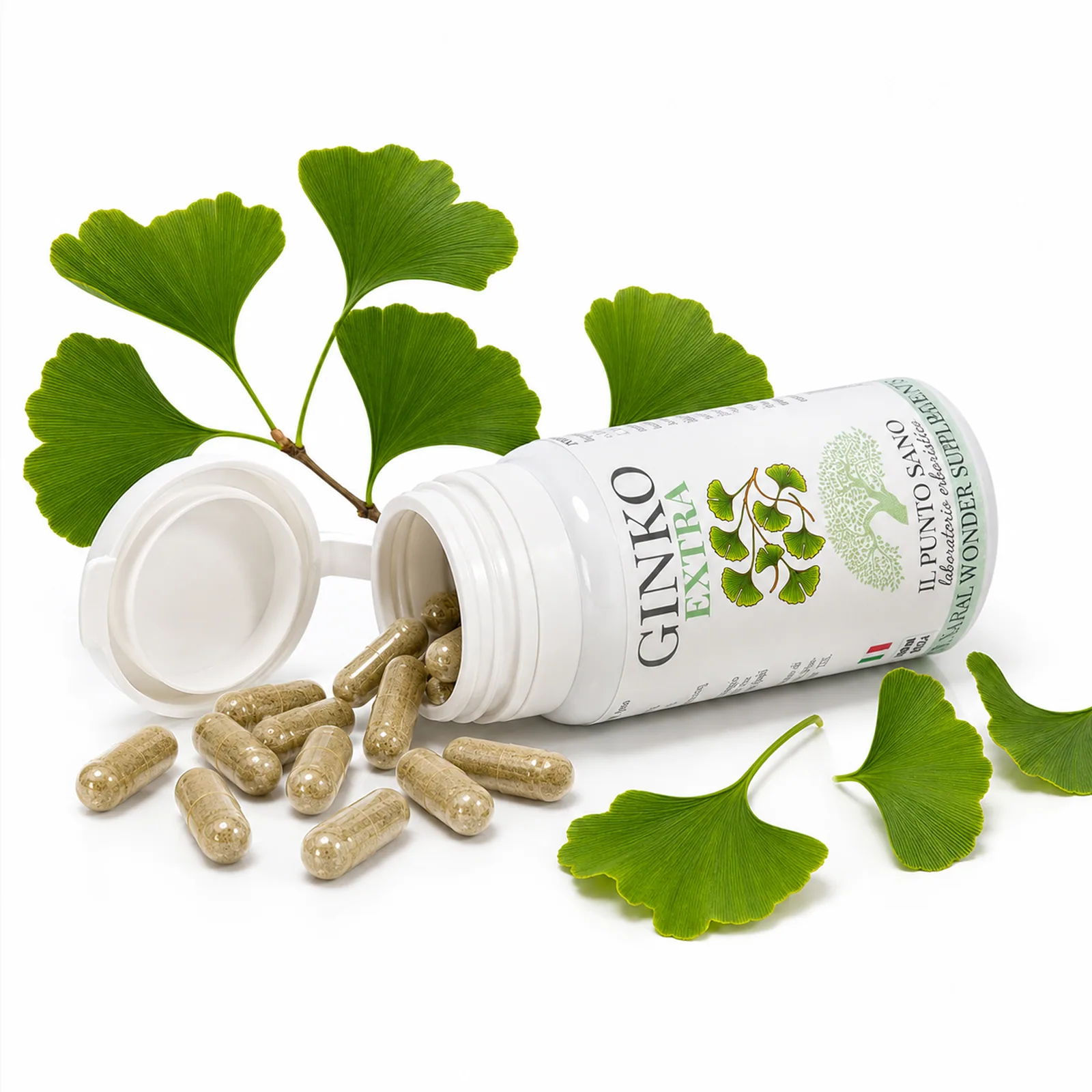


Ginko Extra
16,00 €
60 Capsules
Put memory and microcirculation at the centre of your routine.
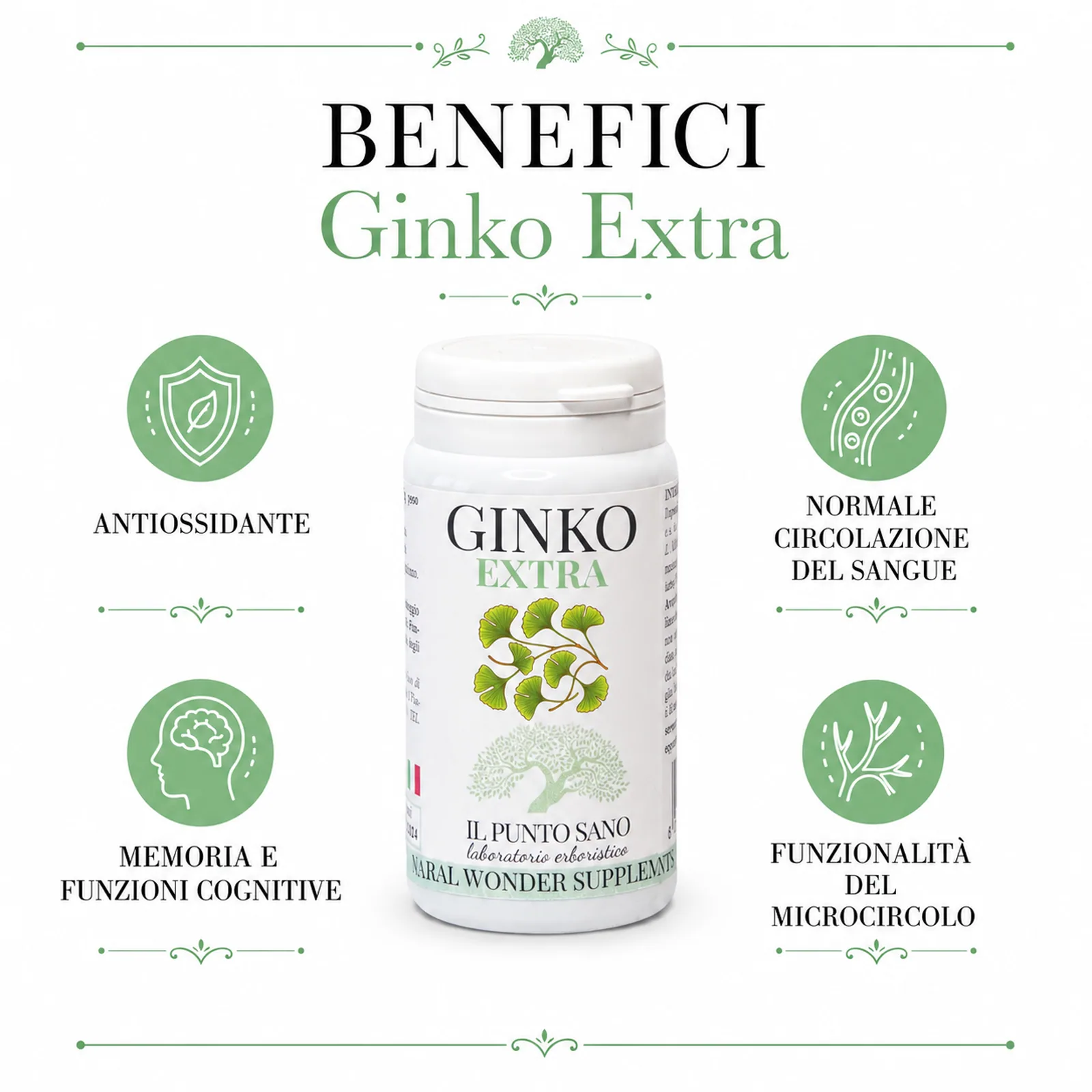
Ginko Extra combines Ginkgo biloba leaf with standardised dry extract. A plant from Eastern tradition, dedicated to memory, cognitive function and microcirculation.
- ✓ With Ginkgo biloba and a stated standardisation.
- ✓ A botanical formula dedicated to mental wellbeing.
- ✓ If you take anticoagulants or antiplatelet medicines, discuss use with your doctor.
- Free shipping in Italy on orders of €70 or more
- Prepared within 1 working day + GLS transit of 2–4 working days
- Buy directly from our laboratory
- Free product advice from our biologist and nutritionist
Full product information: features, ingredients and directions for use.


Ginkgo Biloba: a supplement for memory, cognitive function, microcirculation and cerebral circulation
Ginkgo Biloba is a food supplement made with leaves of Ginkgo biloba, as a dry extract standardised for ginkgoflavonoids alongside plant powder. The formula is designed to offer natural support for memory, cognitive function, cerebral circulation, microcirculation and antioxidant protection.
Ginkgo biloba is one of the oldest and most highly regarded plants in Eastern tradition. For centuries it has been used as a natural remedy for circulatory problems, cold-related complaints, chilblains and asthma, and associated with longevity and mental vitality.
Current interest focuses particularly on its flavonoids, terpenes, ginkgolides, vitamin C and carotenoids, compounds studied for antioxidant, vascular and neurological activity.
Why choose Ginkgo Biloba
- With Ginkgo biloba dry extract standardised to 6% ginkgoflavonoids, combined with plant powder.
- Natural support for memory and cognitive function, for periods of greater mental demand.
- Support for cerebral and peripheral microcirculation, based on the plant’s vascular rationale.
- Contains flavonoids and terpenes, compounds of interest for circulation, antioxidant activity and cellular protection.
- Of interest in routines focused on mental ageing, clarity and concentration.
- Antioxidant support against free-radical damage, oxidative stress and photoageing.
- Vegetable capsule, also suitable for a vegan diet.
- A formula with extracts.
Ginkgo in traditional Eastern medicine
The Ginkgo biloba was used by early Eastern herbal practitioners as an infusion for asthma, chilblains and circulatory problems. In India, accounts of “soma”, or an elixir of longevity containing large amounts of Ginkgo biloba leaves, also date back centuries.
Although Ginkgo biloba has long been among the most important and respected plants in Eastern healing traditions, it has attracted substantial scientific attention in Western herbal medicine only in recent decades.
Extracts of its leaves, rich in flavonoids, terpenes, vitamin C and carotenoids similar to beta-carotene, have shown antioxidant activity against free radicals. These compounds have avasodilating action, improving cerebral blood circulation and promoting greater delivery of blood and oxygen.
This rationale explains the interest in Ginkgo for mental function, memory, clarity and peripheral capillary circulation.
A plant for memory and cognitive function
The discovery of Ginkgo’s principal active constituents, referred to as ginkgolides and comprising flavonoids and diterpenes, led to numerous studies in neurological, vascular and cognitive conditions.
In a double-blind study, Hofferberth found that a Ginkgo biloba leaf extract standardised to 24% flavone glycosides and 6% terpenoids produced findings of interest for many symptoms associated with ageing and neurological deterioration, including those described in early Alzheimer’s disease.
Prof. Med, at Germany’s University of Nürnberg, assessed changes in short-term memory and reported statistically significant improvement with Ginkgo biloba extract compared with placebo from the first weeks of treatment.
These are documentary references to studies of specific Ginkgo extracts. They should not be interpreted as direct therapeutic indications for this product in Alzheimer’s disease, dementia, cognitive deterioration or diagnosed neurological conditions.
For other supplements dedicated to memory, concentration and cognitive function, see also
Ginkgo, cerebral microcirculation and tissue oxygenation
One of Ginkgo’s most interesting aspects is its microcirculatory activity. Because of its flavonoids and terpenes, the plant is traditionally used to support blood circulation, particularly in the brain and peripheral tissues.
Improved delivery of blood and oxygen to the brain may support mental performance, clarity, memory and concentration. Support for peripheral capillary circulation also makes Ginkgo of interest in approaches to sensitivity to cold, chilblains, cold extremities and reduced microcirculatory efficiency.
Microcirculatory support is particularly relevant for people experiencing mental fatigue, reduced cognitive sharpness, difficulty concentrating, a “foggy” mind or mental slowing associated with stress, age or a demanding lifestyle.
Ginkgolides, PAF and inflammatory processes
In 1983, researchers at the Henri Beaufour Institute demonstrated that ginkgolides are potent, specific receptor antagonists of PAF, or Platelet-Activating Factor.
PAF is an important phospholipid mediator of inflammatory processes, produced by cells including neutrophils, eosinophils, monocytes, macrophages, platelets and endothelial cells. It is implicated in conditions including shock, allergy, ischaemia, asthma, immune and nervous system disorders, and altered blood and lymph microcirculation.
Interest in Ginkgo in this context therefore reflects the biological rationale for ginkgolide activity on PAF, inflammatory-process modulation and vascular support. This is documentary information on plant constituents, rather than therapeutic indications for the product.
Ginkgo, free radicals, ageing and photoageing
Ginkgo biloba’s free-radical-scavenging activity is well known. Flavonoids, terpenes and other antioxidant compounds in the leaves help counter oxidative stress damage.
This makes Ginkgo of interest in approaches to cellular ageing, tissue protection and support against damage typical of photoageing, meaning skin and tissue ageing promoted by light exposure and oxidative stress.
In a memory and microcirculation formula, antioxidant activity adds value: the nervous and vascular systems are particularly sensitive to oxidative damage, especially with advancing age.
Ginkgo biloba: history and botany
Ginkgo biloba is an exceptionally ancient medicinal tree. Fossil evidence indicates that it has existed on Earth for over one hundred million years. It is the sole surviving species of a family widespread in the Jurassic period, in the age of the great dinosaurs.
Little is known about prehistoric flora, but the first seed-bearing plants, the gymnosperms, are known to have appeared on Earth more than 350 million years ago.
Three major groups of these plants remain today: conifers, including pines, firs, larches, junipers, cypresses and sequoias; cycads, tropical and subtropical plants; and ginkgophytes, now represented by Ginkgo biloba.
This botanical history makes Ginkgo unique: a true “living fossil” that survived extreme geological periods and remains part of modern herbal practice for vascular, antioxidant and cognitive properties.
Who is Ginkgo Biloba for?
Ginkgo Biloba is intended for adults looking for natural support for:
- memory and cognitive function;
- concentration and mental clarity;
- cerebral and peripheral microcirculation;
- blood circulation and oxygen delivery to tissues;
- cold extremities, chilblains and reduced microcirculatory efficiency;
- oxidative stress, free radicals and cellular ageing;
- periods of greater mental fatigue;
- maintaining cognition in the context of age, stress and reduced tissue oxygenation.
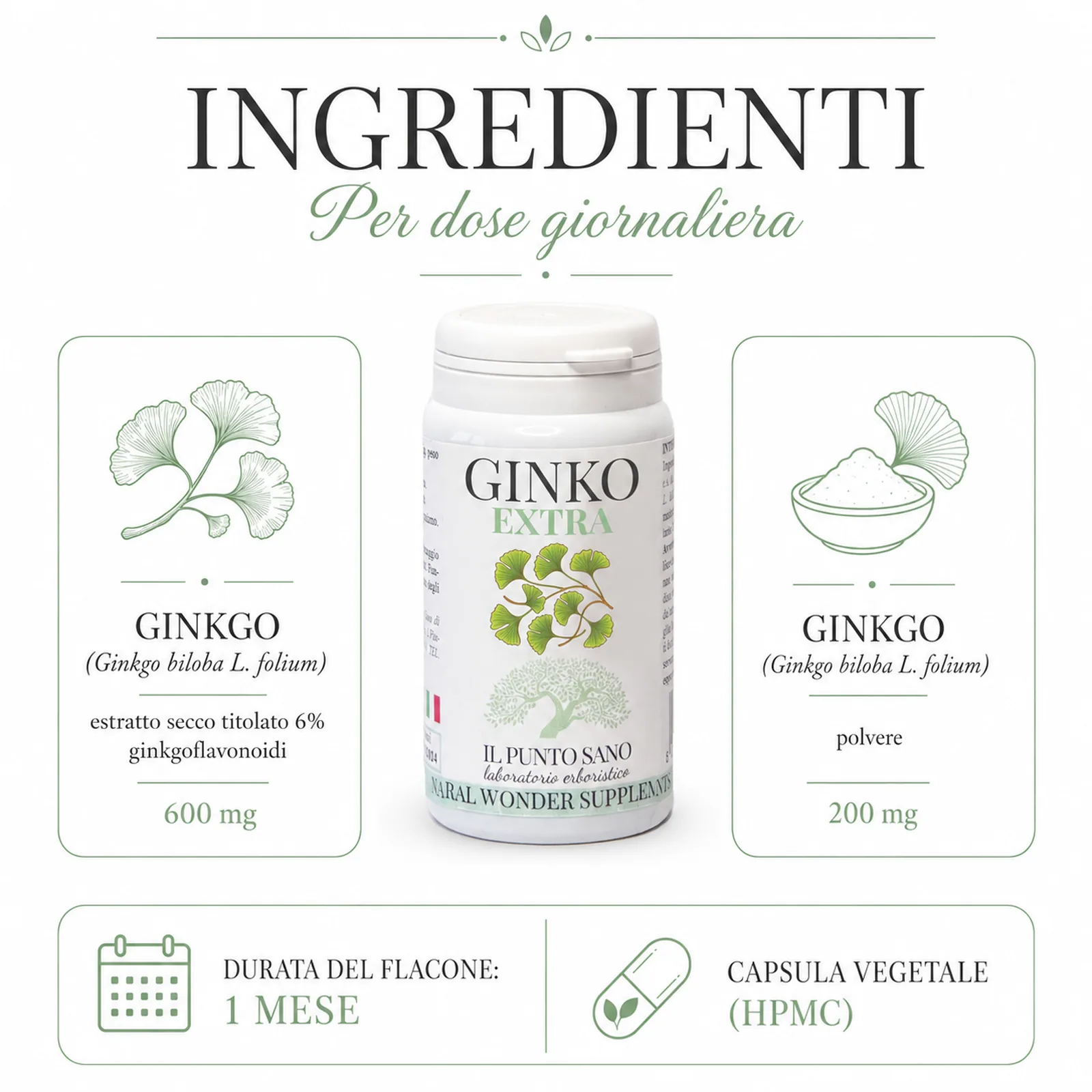
Ingredients and daily amounts
A formula with standardised Ginkgo biloba dry extract and plant powder
| Ingredient | Daily amount | Standardisation / Function |
|---|---|---|
| Ginkgo dry extract
Ginkgo biloba L., folium |
400 mg | Standardised to 6% ginkgoflavonoids; memory, microcirculation and antioxidant support |
| Ginkgo powder
Ginkgo biloba L., folium |
200 mg | Leaf powder; complements the natural phytocomplex |
| Vegetable capsule | as required | HPMC vegetable capsule shell |
Directions for use
2 capsules a day, preferably with the main meals and water.
Formula characteristics
A formula with extracts.
The information on this website is provided solely for information and education. It does not constitute therapeutic advice or replace medical advice. Food supplements are not medicines and are not intended to diagnose, prevent, treat or cure human disease. References to asthma, chilblains, circulatory problems, Alzheimer’s disease, neurological deterioration, short-term memory, PAF, inflammatory processes, shock, allergy, ischaemia, immune and nervous system disorders, blood and lymph microcirculation, ageing and photoageing are descriptive, documentary and informational accounts of traditional use, biological plausibility and observed plant-constituent activity; they do not replace medical assessment, diagnosis or treatment.
Frequently asked questions
What pack size is available?
The pack contains 60 capsules.
How should I use the product?
Take 2 capsules a day, preferably with main meals, with water.



 English (UK)
 Italiano
Reviews
There are no reviews yet.