
Free advice from our biologist and nutritionist. Learn More

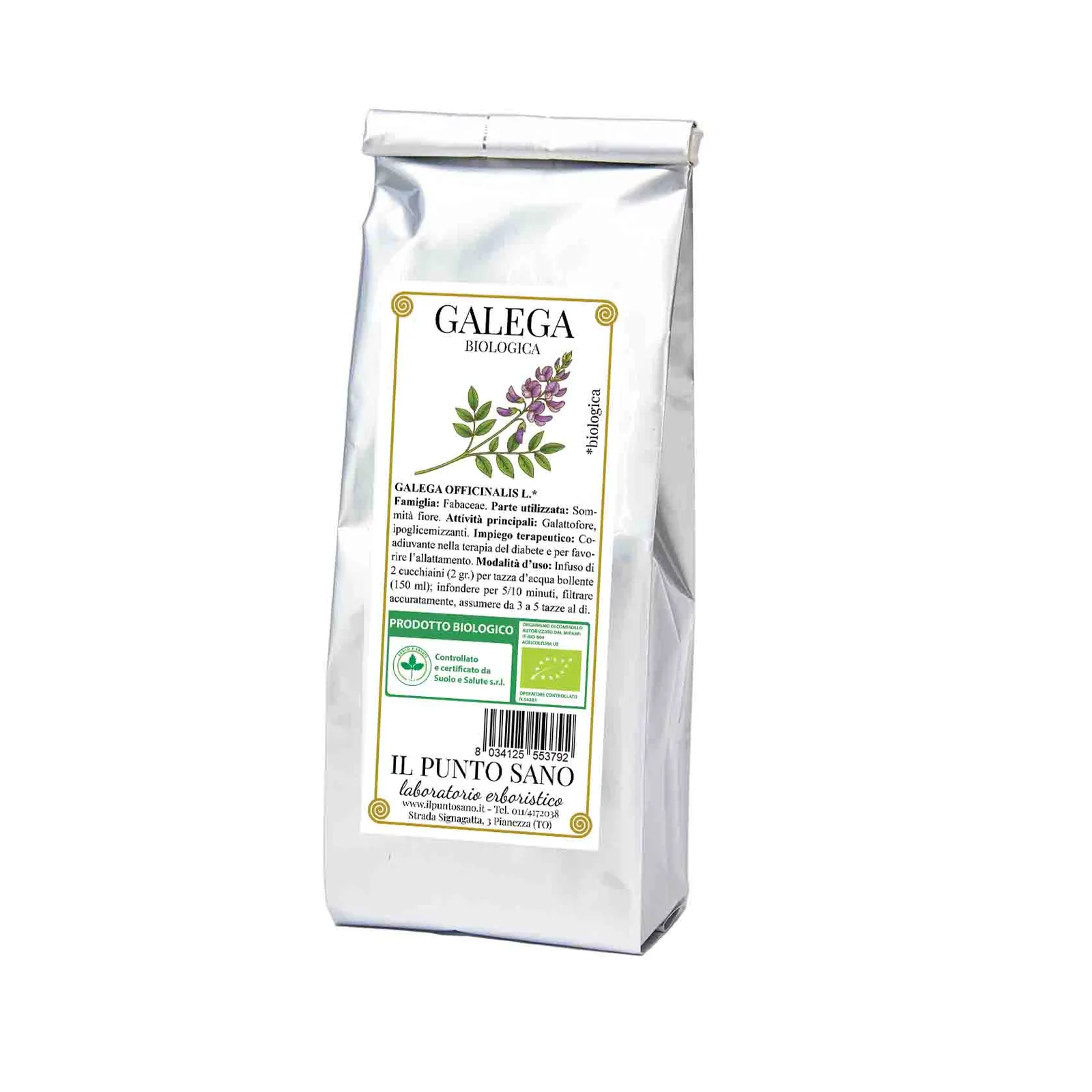



Organic Goat’s Rue Herbal Tea
7,30 €
50 g
Discover Goat’s Rue and its herbal tradition.
Il Punto Sano Goat’s Rue offers flowering galega tops. During breastfeeding or when taking blood-glucose medicines, check suitability with your doctor.
- ✓ Goat’s Rue flowering tops.
- ✓ During breastfeeding or when taking blood-glucose medicines, check suitability with your doctor.
- ✓ Full preparation directions and product information are always available below.
- Free shipping in Italy on orders of €70 or more
- Prepared within 1 working day + GLS transit of 2–4 working days
- Buy directly from our laboratory
- Free product advice from our biologist and nutritionist
Full product information: features, composition and directions for use.


Organic Goat’s Rue: a tea traditionally used for lactation and carbohydrate metabolism
Il Punto Sano Organic Goat’s Rue is a certified organic medicinal herbal tea made with flowering tops of Galega officinalis L., a plant in the Fabaceae family, traditionally used to support normal galactagogue function and normal carbohydrate metabolism.
Also known as Goat’s Rue, Galega, Goat’s Rue or French Lilac, is a perennial herbaceous plant historically established in European herbal practice, particularly preparations for breastfeeding and metabolic routines.
Goat’s Rue requires care: traditionally recognised for galactagogue function, it also contains characteristic constituents such as galegine, requiring caution with diabetes, hypoglycaemia, medication and breastfeeding without professional supervision. This tea provides physiological support, not diabetes treatment or a self-directed solution for milk-production problems.
Why choose Il Punto Sano Organic Goat’s Rue
- Certified organic flowering tops of Galega officinalis, a medicinal plant in the Fabaceae family.
- Supports normal galactagogue function, according to herbal tradition and recognised botanical use.
- Traditionally used during breastfeeding, always with medical, midwifery or qualified professional advice.
- Supports carbohydrate metabolism, as physiological support rather than diabetes treatment.
- Contains galegine, flavonoids, saponins and tannins, characteristic constituents of the flowering aerial parts.
- A historic European herbal plant, also known as Galega or Goat’s Rue.
- Selected, certified organic raw material, without artificial flavourings, colours or preservatives.
- Suited to targeted blends with Fennel, Anise, Fenugreek, Lemon balm or Lemon verbena, always assessing individual circumstances.
Galega officinalis: the botany of Goat’s Rue
Galega officinalis L. is a perennial herbaceous plant in the Fabaceae family, alongside Fenugreek, Soya, Lupin, Chickpeas, Peas, Lentils, Beans and Peanut.
It has erect stems, compound leaves and clustered flowers, generally white-lilac, bluish or purple. It grows in cool, moist places, beside ditches, in meadows, margins and water-rich areas.
The part used in this preparation is the flowering tops, the aerial parts harvested during flowering. Botanical information may also call them herba cum floribus, tops or flowering aerial parts.
At a glance
Il Punto Sano Organic Goat’s Rue is a certified organic medicinal herbal tea made with flowering tops of Galega officinalis, traditionally used for galactagogue function, milk-secretion support and carbohydrate metabolism. It needs care, particularly during breastfeeding, with diabetes or medicines.
Goat’s Rue and traditional use
Goat’s Rue has been known in European herbal tradition for centuries. Its Italian folk name “Capraggine” recalls rural and livestock uses, as does its English name.
It became known particularly for galactagogue tradition, supporting normal milk secretion. Alongside this use, researchers studied its guanidine derivatives, particularly galegine, in relation to carbohydrate metabolism.
Its value lies in traditional physiological support. It is not a self-directed remedy for diabetes, hypoglycaemia, breastfeeding problems or clinical conditions.
Goat’s Rue and galactagogue function
The main traditional use of Goat’s Rue concerns galactagogue function. In herbal terminology, this means supporting normal breast-milk production and secretion during breastfeeding.
Goat’s Rue tea can join a breastfeeding routine only in an appropriate context: assessment of latch, feed frequency, hydration, nutrition, rest and advice from a midwife, IBCLC lactation consultant, paediatrician or doctor.
It cannot guarantee increased milk or serve as the sole solution to low supply. Seek professional help if an infant gains little weight, wets few nappies or appears unusually sleepy, or the mother experiences pain, engorgement, nipple fissures, mastitis or breastfeeding concerns.
Goat’s Rue during breastfeeding: appropriate support
Traditional breastfeeding use requires particular care. Breastfeeding involves both mother and infant and should not be managed through teas or supplements alone.
Use Goat’s Rue for traditional support for normal galactagogue function during breastfeeding only after advice from a doctor, midwife, paediatrician or qualified professional.
The tea does not guarantee milk production or resolve a lack of milk, and it cannot replace breastfeeding support. It may accompany a routine but does not replace assessment of the causes of low supply.
Goat’s Rue and carbohydrate metabolism
Goat’s Rue also has a historical relationship with carbohydrate metabolism. It contains galegine, a guanidine derivative studied for its connection with carbohydrate metabolism and the development of modern antidiabetic medicines.
The tea is not a pharmacological glucose-lowering product or treatment for diabetes, insulin resistance or high blood glucose.
People with diabetes or hypoglycaemia, or taking insulin, metformin, sulphonylureas or other glucose-lowering medicines, should use Goat’s Rue only after medical advice to avoid possible interference with glucose control.
Goat’s Rue, galegine and the history of metformin
An interesting feature of Goat’s Rue is its galegine, a natural guanidine derivative. Research on related compounds historically contributed to development of biguanides, the medicine family including metformin.
This is botanical and historical background and does not make Goat’s Rue tea a medicine. Plant composition varies and is not standardised like a medicinal product.
Goat’s Rue is therefore a traditional plant of metabolic interest, not a natural alternative to diabetes treatment.
Goat’s Rue and maternal vitality during breastfeeding
Breastfeeding often brings tiredness, high energy demands, fragmented sleep and a need for greater care in daily routines. Where appropriate, Goat’s Rue can join a blend intended to support this stage.
Combine with pleasant aromatic plants such as Fennel and Anise, or digestive and relaxing plants such as Lemon balm, Chamomile or Lemon verbena.
Practical and nutritional support remains central: effective feeds, hydration, adequate food, stress management, rest where possible and access to breastfeeding professionals.
Goat’s Rue in galactagogue blends
Use it alone or with other plants traditionally used during breastfeeding. Common combinations include Fennel, Anise, Fenugreek, Cumin, Lemon balm, Lemon verbena and Nettle.
With Fennel and Anise makes the tea more aromatic, digestive and pleasant. With Fenugreek it gains a more restorative, tonic-nutritional profile. With Lemon balm and Lemon verbena it can be gentler and suited to an evening routine.
Every breastfeeding blend needs careful assessment, particularly with maternal medication, current or previous gestational diabetes, allergies, thyroid problems, mastitis, premature infants or particular paediatric conditions.
Goat’s Rue and careful use
Goat’s Rue is traditional but not neutral. Galegine and other characteristic compounds require care, particularly with frequent use, high doses or medicines.
Keep use targeted and follow the recommended amounts. Do not increase doses or cups independently to seek faster effects on milk secretion or metabolism.
Stop taking it and seek medical advice for dizziness, cold sweats, tremor, weakness, sudden hunger, palpitations, nausea, diarrhoea, allergic reactions or unusual symptoms.
Goat’s Rue and pregnancy
Do not use Goat’s Rue during pregnancy. Galactagogue function concerns the postnatal period and should not be confused with prenatal preventive use.
During pregnancy, avoid plants with metabolic or galactagogue activities or limited documentation unless specifically medically advised. This particularly applies with gestational diabetes, hypoglycaemia risk, medicines or a high-risk pregnancy.
Do not use during pregnancy; during breastfeeding, use only after qualified professional advice.
Goat’s Rue and diabetes: traditional background
Traditional herbal literature records adjunctive uses in diabetes. This historical reference is not a therapeutic indication for the tea.
Goat’s Rue is traditionally associated with carbohydrate metabolism. With diabetes, hypoglycaemia or blood-glucose treatment, use it carefully and only after medical advice.
It does not replace diet, medicines, metformin, insulin or diabetes checks. Diabetes management must remain medically supervised and personalised.
Characteristic constituents of Goat’s Rue
The flowering tops of Galega officinalis contain a phytocomplex characterised by guanidine derivatives, including galegine and hydroxygalegine, alongside alkaloids, flavonoids, rutin, quercetin, saponins, tannins, bitter compounds, minerals and phenolic substances.
The galegine is the plant’s best-known constituent, contributing to its historical metabolic interest. Flavonoids and saponins complete the herbal profile, while the taste remains herbaceous and slightly bitter.
Raw-material quality depends on correct botanical identification, harvesting flowering tops at peak herbal quality, gentle drying, clean cut and storage away from light, air and moisture.
The aromatic profile of Goat’s Rue tea
Goat’s Rue tea has a herbaceous, vegetal, slightly bitter, hay-like and gently leguminous taste. A simple, traditional herbal preparation rather than a sweet or floral tea.
Fennel, Anise, Lemon balm, Lemon verbena, Mint, Orange peel or Lemon peel can improve its taste.
Breastfeeding blends often use sweet, anise-like plants to soften its herbaceous character.
Il Punto Sano quality: certified organic Goat’s Rue, selected flowering tops and herbal cut
Il Punto Sano medicinal plants begin with careful selection of certified organic raw materials, focusing on botanical quality, freshness, colour, natural fragrance, herbal cut and infusion performance.
Organic Goat’s Rue flowering tops are selected for correct botanical identification, clean cut and overall herbal quality. Good material retains natural colour, a clean vegetal scent and balanced cut.
We use no artificial flavourings, colours or preservatives. The taste comes from the organic flowering tops of Galega officinalis: herbaceous, hay-like and naturally herbal. The pack protects against light, air and moisture, helping preserve freshness and quality.
Who may consider Organic Goat’s Rue flowering tops
Il Punto Sano Organic Goat’s Rue is intended for adults seeking a certified organic medicinal herbal tea for:
- normal galactagogue function;
- traditional milk-secretion support during breastfeeding, only after professional advice;
- herbal blends for the breastfeeding period;
- normal carbohydrate metabolism, without therapeutic effects;
- targeted women’s routines, always assessing individual circumstances;
- combinations with Fennel, Anise, Fenugreek, Lemon balm or Lemon verbena;
- a certified organic, traditional, unflavoured medicinal plant;
- thoughtful use of a plant rich in characteristic compounds such as galegine.
Herbal profile
Galega officinalis L. – certified organic flowering tops
| Botanical name | Galega officinalis L. |
| Common name | Galega, Goat’s Rue, French Lilac |
| Family | Fabaceae, historically Leguminosae |
| Part used | Flowering tops, flowering aerial parts, herba cum floribus |
| Quality | Certified organic raw material |
| Characteristic constituents | Galegine, hydroxygalegine, guanidine derivatives, alkaloids, flavonoids, rutin, quercetin, saponins, tannins, bitter compounds, minerals and phenolic substances |
| Traditional profile | Traditional galactagogue, normal milk-secretion support, carbohydrate metabolism and historical metabolic uses requiring individual care |
| Infusion flavour | Herbaceous, vegetal, slightly bitter, hay-like and gently leguminous |
Directions for use
Prepare an infusion with 2 teaspoons of Goat’s Rue, approximately 2 g, for a cup containing 150 ml of boiling water. Steep for 5–10 minutes, preferably covered. Filter thoroughly and drink 3–5 cups a day, as needed and according to the label directions. During breastfeeding, use only after advice from a doctor, midwife, paediatrician or qualified professional.
Herbal tip
Goat’s Rue is traditionally used in galactagogue teas. Pair with Fennel, Anise, Fenugreek, Lemon balm or Lemon verbena. Breastfeeding support should not depend on plants alone: before use, assess latch, feed frequency, infant growth and maternal circumstances with a qualified professional.
Warnings: Do not exceed the recommended amounts. Keep out of reach of children. For adults. Do not use during pregnancy. During breastfeeding, use only after advice from a doctor, midwife, paediatrician or qualified professional, particularly with prematurity, low birth weight, inadequate infant growth, paediatric disease, mastitis, engorgement, nipple fissures, maternal medication or particular maternal clinical conditions. Do not use if allergic or hypersensitive to Goat’s Rue, Fabaceae/Leguminosae or any component. Take care with peanut, soya, lupin, chickpea, pea, lentil, bean, Fenugreek or other legume allergy because of possible cross-reactivity. Seek medical advice before use with diabetes, hypoglycaemia, insulin, metformin, sulphonylureas or other glucose-lowering medicines, gestational diabetes, prediabetes, thyroid disorders, liver or kidney disease, anticoagulant or antiplatelet treatment, planned surgery, hormonal therapies, gynaecological disease, medication or particular clinical conditions. Do not use as treatment for diabetes, hyperglycaemia or insulin resistance, or replace medicines and glucose checks. Do not use as the sole solution for breastfeeding difficulties, low milk supply, inadequate infant growth or latch problems. Stop use and seek medical advice for cold sweats, tremor, weakness, sudden hunger, palpitations, dizziness, nausea, diarrhoea, allergic reactions, swelling, urticaria or breathing difficulty. This website provides herbal information and does not replace medical advice.
Frequently asked questions
Which part of the plant is used?
The plant part listed in the product information is: Flowering tops, flowering aerial parts, herba cum floribus.
How should I prepare this herbal tea?
Prepare an infusion with 2 teaspoons of Goat’s Rue , approximately 2 g , for a cup containing 150 ml of boiling water. Steep for 5–10 minutes , preferably covered. Filter thoroughly and drink 3–5 cups a day , as needed and according to the label directions. During breastfeeding, use only after advice from a doctor, midwife, paediatrician or qualified professional.


 English (UK)
 Italiano
Reviews
There are no reviews yet.