
Free advice from our biologist and nutritionist. Learn More

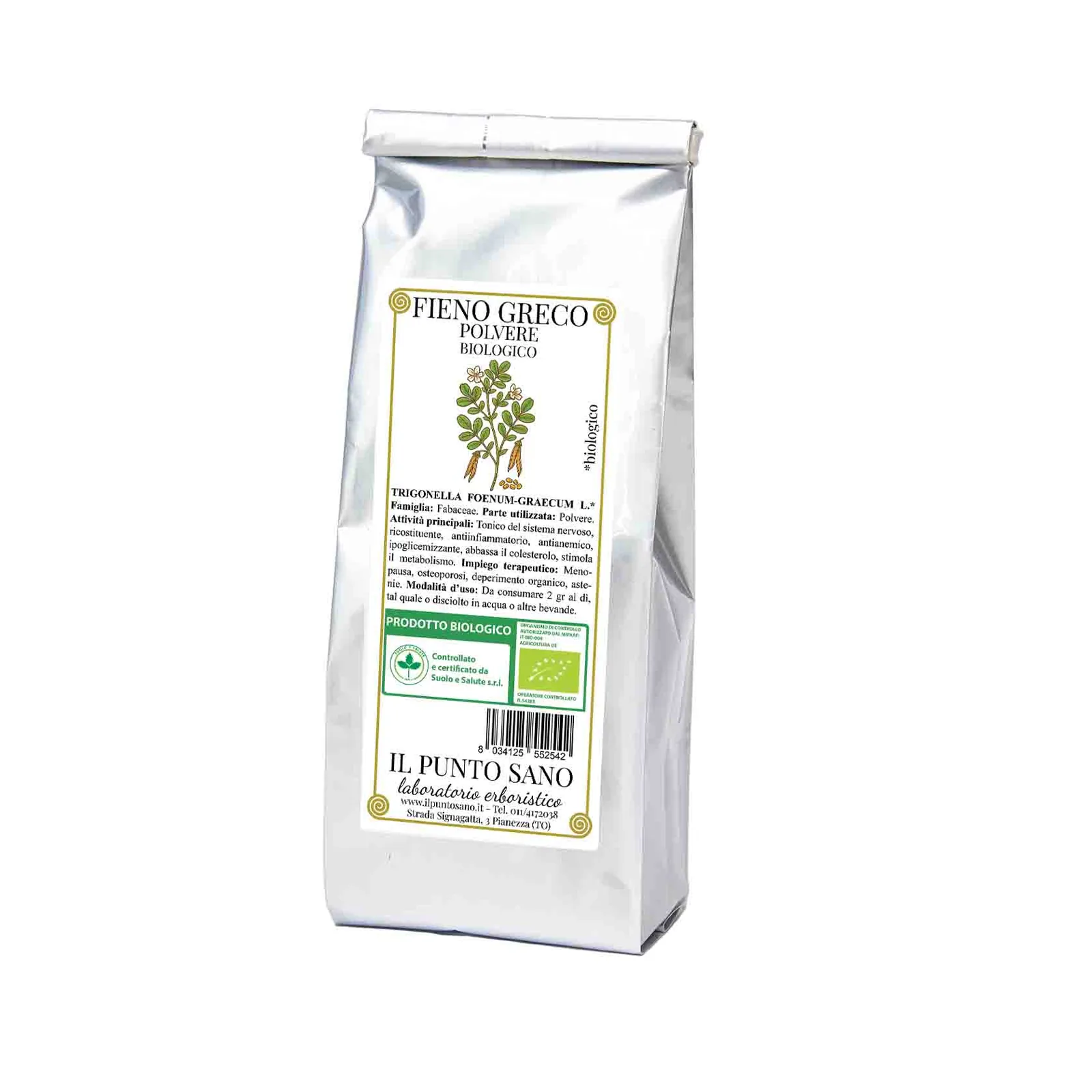



Organic Fenugreek Seed Powder
12,00 €
100 g
Fenugreek in a convenient powder.
Il Punto Sano Fenugreek Powder offers powdered fenugreek seeds, an ingredient from tonic and nutritional herbal tradition.
- ✓ Powdered fenugreek seeds.
- ✓ An ingredient from tonic and nutritional herbal tradition.
- ✓ Complete preparation and directions always available.
- Free shipping in Italy on orders of €70 or more
- Prepared within 1 working day + GLS transit of 2–4 working days
- Buy directly from our laboratory
- Free product advice from our biologist and nutritionist
The complete product information: features, composition and directions for use.


Organic Fenugreek: restorative seeds for appetite, metabolism and digestive wellbeing
Il Punto Sano Organic Fenugreek is a certified organic herbal tea made from the seeds of Trigonella foenum-graecum L., a plant belonging to the Fabaceae, traditionally used as a restorative tonic, support during tiredness and a plant for physiological carbohydrate, triglyceride and cholesterol metabolism.
Also known as Trigonella, Fenugreek or Methi, Fenugreek is an ancient food and herb used for centuries in Mediterranean, Middle Eastern and Indian traditions. Its seeds have an intense, warm, spicy, distinctive aroma recalling curry, maple syrup, hay and bitter spices.
Fenugreek seeds are naturally rich in mucilage, fibre, plant proteins, saponins, trigonelline, sterols and aromatic compounds. Historically they feature in restorative preparations, bitter teas and routines for appetite, digestion, metabolism and general vitality. References to diabetes, high cholesterol, anaemia, menopause, osteoporosis or wasting are traditional background: this tea supports physiological functions and does not replace diagnosis, treatment or targeted supplementation.
Why choose Il Punto Sano Organic Fenugreek
- Certified organic seeds of Trigonella foenum-graecum, a herb in the Fabaceae family.
- Traditionally restorative, used during tiredness, reduced vitality and increased nutritional requirements.
- Promotes appetite according to traditional herbal use also recognised in European monographs.
- Supports carbohydrate metabolism as physiological support rather than diabetes treatment.
- Contributes to triglyceride and cholesterol metabolism within a balanced diet.
- Rich in mucilage and fibre, with an emollient, soothing action on the digestive system.
- Contains plant proteins, saponins, trigonelline and sterols, characteristic seed constituents.
- Selected, certified organic raw material, without artificial flavourings, colourings or preservatives.
Trigonella foenum-graecum: Fenugreek botany
Trigonella foenum-graecum L. is an annual herbaceous plant belonging to the Fabaceae, the same family as pulses such as chickpeas, lentils, peas, beans, soya, lupins and peanuts.
It has upright stems, trifoliate leaves and small yellowish-white flowers. The fruits are pods containing hard, angular yellow-brown seeds, highly aromatic and bitter-tasting.
The part used in this preparation consists of seeds, prepared by infusion or maceration. Whole seeds are hard and rich in mucilage; lightly crushing them before preparation helps extract water-soluble constituents. This product is supplied as seed powder.
At a glance
Il Punto Sano Organic Fenugreek is a certified organic herbal preparation made from the seeds of Trigonella foenum-graecum, traditionally used for appetite, general vitality, restorative support, carbohydrate, triglyceride and cholesterol metabolism, digestive function and digestive-system emollience.
Fenugreek and traditional use
Fenugreek is an ancient plant used both as a spice and traditional remedy. Its seeds were known around the Mediterranean, Middle East, North Africa and India, where they still feature in spice blends, foods and folk preparations.
Tradition describes it as warming, nourishing, bitter and restorative, used during weakness, poor appetite, convalescence, tiredness and increased requirements, as well as in digestive and metabolic preparations.
Its role here is general support, nutritional tone and digestive-metabolic wellbeing, without direct promises for anaemia, osteoporosis, diabetes, high cholesterol, menopause or wasting.
Fenugreek as a restorative tonic
Fenugreek is historically considered a restorative profile. Its seeds are rich in plant proteins, fibre, mucilage and characteristic constituents, making them interesting when greater nutritional support is needed.
This preparation may complement a natural routine during tiredness, reduced vitality, irregular eating or recovery after demanding periods. Its bitter aromatic taste also suits use before or away from meals according to individual tolerance.
Persistent tiredness, unexplained weight loss, suspected anaemia, fever, marked weakness or significant appetite loss always require medical advice.
Fenugreek and appetite
One of Fenugreek’s strongest traditional uses is appetite support. The bitter aromatic taste stimulates sensory perception and may help the preparatory stage of digestion become more responsive.
This is particularly relevant to mild, occasional appetite reduction, for example during tiredness, seasonal changes or irregular eating routines.
Persistent or sudden appetite loss, or that accompanied by nausea, pain, weight loss, fever, intense tiredness or abnormal blood tests, always requires medical assessment.
Fenugreek, carbohydrate metabolism and blood glucose
Traditional accounts describe Fenugreek as relevant to carbohydrate metabolism. This particularly relates to fibre, mucilage, galactomannans and constituents such as 4-hydroxyisoleucine studied in carbohydrate metabolism.
Its role is support for carbohydrate metabolism rather than a direct glucose-lowering promise. Fenugreek is not a treatment for diabetes, insulin resistance or hyperglycaemia.
Anyone with diabetes, hypoglycaemia or taking glucose-lowering medicines or blood-glucose treatment should seek medical advice before use, as the plant may interfere with glycaemic control.
Fenugreek, triglycerides and cholesterol
Fenugreek is also traditionally associated with triglyceride and cholesterol metabolism. This relates to soluble fibre, steroidal saponins and plant sterols contributing to its metabolic profile.
Its role is lipid-metabolism support within a balanced diet and active lifestyle, rather than a cholesterol-lowering product or replacement for diet, treatment or medical monitoring.
With high cholesterol, high triglycerides, statins, fibrates, anticoagulants, antiplatelets or cardiovascular disease, seek medical advice before regular use.
Fenugreek and digestive function
Fenugreek seeds contain mucilage and fibre that form a viscous, soft component in water. This makes them interesting in preparations for digestive function and digestive-system emollience.
The bitter spicy taste supports digestion, while mucilage contributes a softer gastrointestinal feel. Fenugreek can therefore be prepared by infusion or cold maceration.
With significant bloating, persistent diarrhoea, stubborn constipation, abdominal pain, marked reflux, significant gastritis or intestinal disease, seek medical advice.
Fenugreek and traditional menopause references
Traditional accounts include menopause among its uses, potentially associated with steroidal saponins and plant compounds also studied in female wellbeing.
It is not a treatment for menopausal symptoms, hot flushes, dryness, osteoporosis or hormonal imbalances. Its role is tonic-nutritional support during physiological changes in adult women.
With hormone-sensitive cancers, endometriosis, fibroids, hormone treatment, significant menopausal symptoms or gynaecological disease, discuss regular use with a doctor.
Fenugreek, bones and osteoporosis
Traditional osteoporosis references require care. Fenugreek seeds are nutritious and rich in plant constituents but are not a remedy for bone loss, fractures or osteoporosis.
Their role is restorative, tonic-nutritional support within general wellbeing routines, alongside an adequate diet, protein, calcium, vitamin D, vitamin K2, magnesium, physical activity and specific checks where necessary.
With osteopenia, osteoporosis, recent fractures or bone medication, follow medical advice.
Fenugreek, anaemia and tiredness
Tradition also attributes an anti-anaemic profile to Fenugreek. Here this means restorative and nutritional support, not a remedy for anaemia or iron deficiency.
Tiredness has many causes: nutritional deficiencies, anaemia, thyroid problems, infections, stress, insufficient sleep, chronic disease or medication. Fenugreek may accompany a supportive routine but does not replace tests or targeted supplements.
Documented anaemia, low ferritin, heavy periods, pallor, breathlessness, rapid heartbeat or marked tiredness require medical advice.
Fenugreek’s traditional galactagogue use
Fenugreek is well known in folk tradition as a galactagogue. It is not presented here as a direct means to increase milk production: breastfeeding requires individual assessment and this plant has important warnings.
Use is discouraged during pregnancy. During breastfeeding use Fenugreek only after advice from a doctor or qualified professional, particularly with allergies, medication, diabetes, gastrointestinal complaints or a sensitive infant.
Breastfeeding problems, infant growth concerns or insufficient milk supply should be discussed with a midwife, paediatrician or specialist breastfeeding consultant.
Characteristic Fenugreek constituents
The seeds of Trigonella foenum-graecum contain mucilage and galactomannans, dietary fibre, plant proteins, steroidal saponins, diosgenin, yamogenin, tigogenin, trigonelline, choline, 4-hydroxyisoleucine, flavonoids, sterols, lipids, mineral salts and aromatic compounds such as sotolon.
Mucilage gives aqueous preparations their softer consistency. Saponins and sterols contribute to the traditional metabolic profile, while sotolon gives the sweet-spicy scent reminiscent of curry or maple syrup.
Quality depends on correct botanical identification, clean seeds, aroma, absence of impurities, storage and protection against light, air and moisture.
Fenugreek tea’s aromatic profile
Fenugreek tea tastes warm, bitter, spicy, mucilaginous, slightly sweet and persistent. Its distinctive scent can recall curry, hay, liquorice, maple syrup and some Eastern spices.
A bold preparation for lovers of bitter restorative plants, it can be softened in blends with Liquorice, Fennel, Green Anise, Cinnamon, Ginger, Mint or Orange peel.
Fenugreek may temporarily change the smell of sweat, urine or the body, giving a sweet-spicy maple-syrup-like note. This is a known effect of its aromatic compounds.
Il Punto Sano quality: certified organic Fenugreek, selected seeds and restorative profile
Il Punto Sano herbs and seeds start with carefully selected certified organic materials, with attention to botanical quality, freshness, natural aroma, clean herbal material and preparation performance.
Organic Fenugreek seeds are selected for correct botanical identification, integrity, colour, aroma and cleanliness. Good material has uniform seeds, a warm spicy scent, no rancid notes and a good capacity to release mucilage in water.
We use no artificial flavourings, colourings or preservatives. The taste comes from the organic seeds of Trigonella foenum-graecum: bitter, spicy and naturally herbal. The packaging protects against light, air and moisture, helping preserve freshness, aroma and quality over time.
Who are Organic Fenugreek seeds for?
Il Punto Sano Organic Fenugreek is intended for adults seeking a certified organic herbal preparation for:
- restorative and tonic-nutritional support;
- tiredness and reduced vitality;
- appetite support;
- carbohydrate metabolism;
- triglyceride and cholesterol metabolism;
- digestive function and digestive-system emollience;
- mucilage-rich cold macerations;
- certified organic seeds with traditional aroma and a fibre-rich profile.
Herbal information
Trigonella foenum-graecum L. – certified organic seeds
| Botanical name | Trigonella foenum-graecum L. |
| Common name | Fenugreek, Trigonella, Methi |
| Family | Fabaceae, historically Leguminosae |
| Part used | Seeds |
| Quality | Certified organic raw material |
| Characteristic constituents | Mucilage, galactomannans, fibre, plant proteins, steroidal saponins, diosgenin, trigonelline, choline, 4-hydroxyisoleucine, flavonoids, sterols and sotolon |
| Traditional profile | Restorative, tonic-nutritional, appetite-promoting, digestive and emollient for the digestive system; support for carbohydrate, triglyceride and cholesterol metabolism |
| Infusion taste | Warm, bitter, spicy, mucilaginous, slightly sweet and persistent |
Directions for use
Infusion: prepare a tea with 1 teaspoon of Fenugreek seeds, approximately 1 g, for a cup of boiling water measuring 150 ml. Leave to infuse for 10–15 minutes, preferably covering the cup. Strain thoroughly and enjoy 3 cups a day according to your needs and the label directions.
Cold maceration: use 1/2 teaspoon of seeds, approximately 0.5 g, for a cup of cold water. Leave to macerate for 3 hours, strain and drink several times a day. When using whole seeds, lightly crushing them before preparation helps extract mucilage.
Herbal tip
Fenugreek is ideal in restorative and metabolic teas. For appetite and digestion, combine with Gentian, Bitter Orange, Ginger or Fennel. For a metabolic routine, combine with Cinnamon, Gymnema, Berberis, Artichoke or Dandelion, always considering medication and blood-glucose/lipid status.
Warnings: Do not exceed the recommended amounts. Keep out of the reach of children. Intended for adults. Do not use if allergic or hypersensitive to Fenugreek, Fabaceae/Leguminosae or any component. Take particular care with peanut, soya, lupin, chickpea, lentil, pea, bean or other pulse allergies because cross-reactivity is possible. Do not use during pregnancy; during breastfeeding use only after medical or qualified professional advice. With diabetes, hypoglycaemia, glucose-lowering medicines, insulin, high cholesterol or triglycerides, anticoagulants, antiplatelets, hormone treatment, hormone-sensitive cancers, endometriosis, fibroids, thyroid disorders, liver or kidney disease, anaemia, unexplained weight loss, persistent tiredness, osteoporosis, recent fractures, cardiovascular disease, persistent gastrointestinal complaints, medication or planned surgery, seek medical advice before use. Mucilage and fibre may reduce or delay medicine absorption: separate intake by at least 2 hours. Do not use this tea to treat diabetes, high cholesterol, anaemia, menopause, osteoporosis, wasting, hormonal disorders or diagnosed conditions. If allergic reactions, breathing difficulties, swelling, hives, significant diarrhoea, abdominal pain or worsening symptoms occur, stop use and seek medical advice. This website’s information is provided for informational and herbal purposes and does not replace medical advice.
Frequently asked questions
Which part of the plant is used?
The plant part listed in the product information is: Seeds.
How should I prepare this herbal tea?
Infusion: prepare a tea with 1 teaspoon of Fenugreek seeds , approximately 1 g , for a cup of boiling water measuring 150 ml . Leave to infuse for 10–15 minutes , preferably covering the cup. Strain thoroughly and enjoy 3 cups a day according to your needs and the label directions. Cold maceration: use 1/2 teaspoon of seeds , approximately 0.5 g , for a cup of cold water. Leave to macerate for 3 hours , strain and drink several times a day. When using whole seeds, lightly crushing them before preparation helps extract mucilage.




 English (UK)
 Italiano
Reviews
There are no reviews yet.