
Free advice from our biologist and nutritionist. Learn More

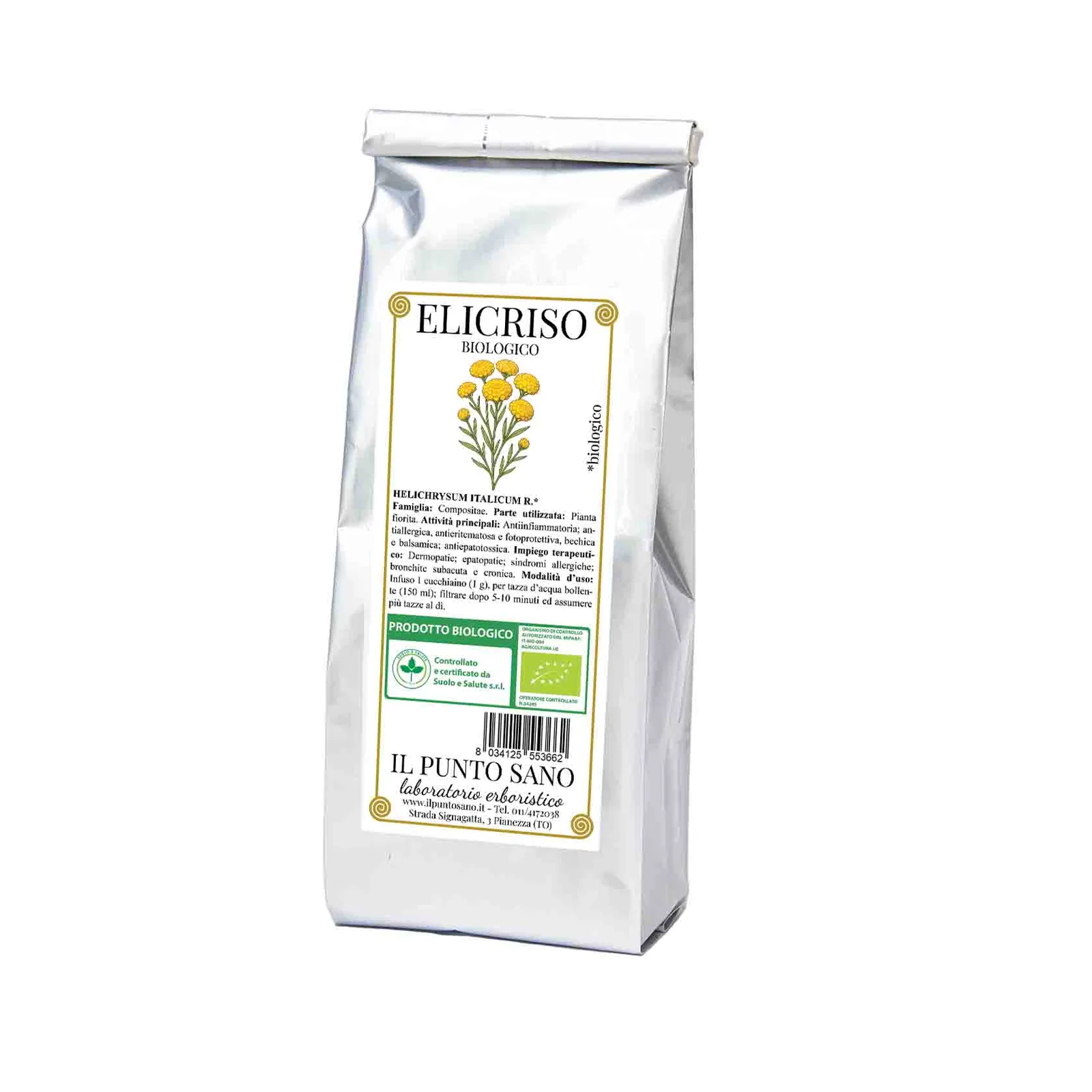



Organic Helichrysum Herbal Tea
8,30 €
40 g
Flowering helichrysum, a distinctly herbal pause.
Il Punto Sano Helichrysum offers flowering helichrysum, traditionally used for digestion and nose-and-throat wellbeing.
- ✓ Flowering helichrysum.
- ✓ Traditionally used for digestion and nose-and-throat wellbeing.
- ✓ Full preparation directions and product information are always available below.
- Free shipping in Italy on orders of €70 or more
- Prepared within 1 working day + GLS transit of 2–4 working days
- Buy directly from our laboratory
- Free product advice from our biologist and nutritionist
Full product information: features, composition and directions for use.


Organic Helichrysum: a balsamic tea for the nose, throat, digestion and liver function
Il Punto Sano Organic Helichrysum is a certified organic medicinal herbal tea made with flowering plant of Helichrysum italicum (Roth) G. Don, a plant in the Asteraceae family, historically also called Compositae. It is traditionally used for nose and throat wellbeing, a balsamic effect, digestive and liver functions and microcirculatory support.
Also known as Italian helichrysum, Everlasting or Immortelle, is a Mediterranean plant with an unmistakable warm, aromatic, slightly resinous fragrance, often compared to liquorice, curry, honey and Mediterranean scrub.
Helichrysum tea suits times when a warm aromatic drink can accompany upper respiratory wellbeing, digestion and a bright traditional plant in your routine. Historical references to skin disease, allergies, bronchitis or liver disorders are not therapeutic indications: the tea supports physiological functions and does not replace medical treatment.
Why choose Il Punto Sano Organic Helichrysum
- Certified organic flowering plant of Helichrysum italicum, a Mediterranean medicinal plant in the Asteraceae family.
- Supports nose and throat wellbeing, particularly during cold or seasonal periods.
- Traditional balsamic effect, for aromatic upper respiratory teas.
- Encourages digestive and liver functions, according to traditional herbal use.
- Supports microcirculatory function, within an overall wellbeing routine.
- An aromatic plant with a Mediterranean fragrance, intense, warm and resinous.
- Selected, certified organic raw material, without artificial flavourings, colours or preservatives.
- Ideal in balsamic and digestive teas, including blends with Thyme, Mallow, Plantain, Mint or Fennel.
Helichrysum italicum: the botany of Helichrysum
Helichrysum italicum (Roth) G. Don is an aromatic perennial in the Asteraceae family. Typical of the Mediterranean, it grows wild in dry, sunny, rocky, sandy, well-drained places, contributing to Mediterranean scrub’s characteristic scent.
The name Helichrysum derives from the Greek helios, sun, and chrysos, gold, recalling its golden-yellow flower heads. Small woody stems bear narrow, silver-grey, finely downy leaves and yellow inflorescences that retain colour after drying.
The part used in this preparation is the flowering plant, the herbaceous tops with flowers, harvested at peak aromatic quality and carefully dried to preserve fragrance, colour and herbal value.
At a glance
Il Punto Sano Organic Helichrysum is a certified organic medicinal herbal tea made with flowering plant of Helichrysum italicum, traditionally used for nose-and-throat wellbeing, a balsamic effect, digestive and liver functions, microcirculation and seasonal support.
Helichrysum and Mediterranean tradition
Helichrysum is emblematic of Mediterranean scrub. Sunny, dry, breezy habitats produce an intense, lasting aroma recognisable even at a distance.
Folk tradition includes balsamic teas, digestive preparations, skin oil macerates, compresses and traditional applications for redness and skin discomfort. This history makes it valued in herbal practice and natural cosmetics.
Internal tea use differs from traditional or cosmetic external use. The infusion principally concerns nose-and-throat wellbeing, digestion, liver function and microcirculation; it does not treat bronchitis, allergies, skin or liver disease.
Helichrysum for the nose, throat and balsamic character
A principal area of interest is nose and throat wellbeing. Its aromatic, balsamic flowering parts traditionally feature in upper respiratory teas.
Enjoy the warm infusion during cold weather, seasonal changes or when seeking aromatic support for upper respiratory mucous membranes.
For a broader blend, combine with Thyme, Plantain, Mallow, Marshmallow, Eucalyptus, Elderflower, Mint, Liquorice or Rosehip.
Helichrysum and cough: traditional background
Traditional herbal texts describe it as cough-soothing and balsamic. Historically it joins upper respiratory teas when the throat feels irritated or congested.
This tea supports nose-and-throat wellbeing, balsamic comfort and seasonal routines. It is not treatment for subacute or chronic bronchitis, respiratory infections or lung disease.
Persistent cough, fever, breathing difficulty, chest pain, significant phlegm, uncontrolled asthma or worsening symptoms require medical advice.
Helichrysum for digestion and liver function
Helichrysum also appears in approaches focused on digestive function and liver function. It suits teas combining digestion and cleansing, particularly when an assertive Mediterranean aroma is desired.
Enjoy after meals or in seasonal routines with Milk thistle, Artichoke, Dandelion, Fumitory, Mint, Fennel or Rosemary.
Liver-function support is physiological, not treatment for liver disease, hepatitis, fatty liver, liver failure or abnormal liver enzymes.
Helichrysum and microcirculation
Its associated physiological roles also include microcirculatory function. This suits general wellbeing alongside balanced eating, hydration, movement and attention to peripheral circulation.
Combine with Bilberry, Butcher’s broom, Gotu kola, Red vine, Witch hazel or Horse chestnut, according to individual circumstances.
Significant circulatory problems, persistent oedema, pain, skin changes, marked varicose veins or anticoagulant/antiplatelet therapies require medical advice.
Helichrysum, skin and cosmetic tradition
Helichrysum is also known for skin applications. Oil macerates, extracts and cosmetics often associate it with red, sensitive, dry or sun-exposed skin.
These external and cosmetic traditions do not transfer directly to tea. The infusion is not treatment for skin disease, erythema, burns, eczema, psoriasis or lesions.
This cosmetic history is background information. The product offered is for infusion and physiological support for the nose, throat, digestion and liver function.
Helichrysum and seasonal sensitivity
Traditional antiallergic references relate here to seasonal support for nose-and-throat wellbeing, particularly when respiratory mucous membranes feel more sensitive.
The tea is not treatment for allergies, allergic rhinitis, allergic asthma, allergic dermatitis or respiratory attacks. It can complement seasonal herbal routines, particularly with emollient, soothing plants.
Seek medical advice before use with significant allergies, asthma, breathing difficulty, antihistamines or corticosteroids.
Helichrysum and traditional anti-inflammatory activity
Traditional herbal texts often describe an anti-inflammatory profile. This history particularly concerns skin, mucous membranes, the respiratory tract and general wellbeing.
Its tea offers mucosal wellbeing, balsamic character and digestive and liver-function support, with cosmetic tradition kept distinct from treatment of inflammation, dermatitis, bronchitis or chronic disease.
Helichrysum may suit seasonal teas but does not replace diagnosis, therapy or specific treatment.
Characteristic constituents of Helichrysum
The flowering plant of Helichrysum italicum contains a phytocomplex characterised by flavonoids, phenolic compounds, tannins, coumarins, essential oil, italidiones, neryl acetate, alpha-pinene, gamma-curcumene and other characteristic aromatic substances.
Composition varies with botanical origin, growing area, harvest time, drying and storage, as is typical of Mediterranean aromatic plants.
Fragrance is a key sensory quality indicator: good material retains intense, warm, resinous, slightly spicy aromatic notes.
The aromatic profile of Helichrysum tea
Helichrysum tea has an aromatic, warm, resinous, slightly bitter, Mediterranean and persistent taste. Its scent recalls Mediterranean scrub, liquorice, curry, honey and sun-dried herbs.
Assertive character appeals to lovers of balsamic aromatics but may feel intense for those preferring sweet or floral infusions.
Mallow, Marshmallow, Liquorice, Fennel, Lemon balm or Rosehip soften it. Thyme, Eucalyptus, Plantain, Mint and Elderflower create a more balsamic blend.
Il Punto Sano quality: certified organic Helichrysum, selected flowering plant and Mediterranean fragrance
Il Punto Sano medicinal plants begin with careful selection of certified organic raw materials, focusing on botanical quality, freshness, natural fragrance, colour, herbal cut and infusion performance.
Organic flowering Helichrysum is selected for aromatic intensity, clean cut, balanced leaves and flowering tops and overall herbal quality. Good material releases a warm, balsamic Mediterranean fragrance.
We use no artificial flavourings, colours or preservatives. The taste comes from the organic flowering plant of Helichrysum italicum: aromatic, resinous and natural. The pack protects against light, air and moisture, preserving freshness, aroma and quality.
Who may consider Organic flowering Helichrysum
Il Punto Sano Organic Helichrysum is intended for adults seeking a certified organic medicinal herbal tea for:
- nose and throat wellbeing;
- balsamic character in seasonal teas;
- digestive-function support;
- liver-function support;
- microcirculatory function;
- balsamic blends with Thyme, Mallow, Plantain, Eucalyptus or Mint;
- digestive blends with Fennel, Mint, Milk thistle, Dandelion or Rosemary;
- a certified organic, aromatic Mediterranean medicinal plant.
Herbal profile
Helichrysum italicum (Roth) G. Don – certified organic flowering plant
| Botanical name | Helichrysum italicum (Roth) G. Don |
| Common name | Helichrysum, Italian helichrysum, Everlasting, Immortelle |
| Family | Asteraceae, historically Compositae |
| Part used | Flowering plant, flowering tops with herbaceous parts |
| Quality | Certified organic raw material |
| Characteristic constituents | Flavonoids, phenolic compounds, tannins, coumarins, essential oil, italidiones, neryl acetate, alpha-pinene, gamma-curcumene and aromatic compounds |
| Traditional profile | Balsamic, traditionally cough-soothing, digestive and liver support, microcirculation, traditional external skin applications and seasonal use |
| Infusion flavour | Aromatic, warm, resinous, slightly bitter, Mediterranean and persistent |
Directions for use
Prepare an infusion with 1 teaspoon of flowering Helichrysum, approximately 1 g, for a cup containing 150 ml of boiling water. Steep for 5–10 minutes, preferably covered. Filter thoroughly and enjoy several cups throughout the day as needed and according to the label directions.
Herbal tip
Helichrysum is ideal in balsamic nose-and-throat teas. Pair with Thyme, Plantain, Mallow, Marshmallow, Eucalyptus or Mint. For digestive and liver-focused blends, combine with Milk thistle, Dandelion, Fennel, Mint and Rosemary. Seek medical advice with significant allergies, asthma, chronic bronchitis, liver disease or medicines.
Warnings: Do not exceed the recommended amounts. Keep out of reach of children. For adults. Do not use if allergic or hypersensitive to Helichrysum, Asteraceae/Compositae or any component. Take care with known allergy to related plants such as Chamomile, Calendula, Yarrow, Dandelion, Mugwort or Milk thistle. Seek medical advice before use during pregnancy, breastfeeding or childhood, or with significant allergies, asthma, chronic bronchitis, respiratory or liver disease, hepatitis, abnormal liver enzymes, gallstones, bile-duct obstruction, cholecystitis, gallbladder disease, significant microcirculatory problems, persistent oedema, anticoagulant, antiplatelet, antihistamine, corticosteroid or liver therapies, or particular clinical conditions. Do not use as treatment for skin disease, erythema, burns, allergies, subacute or chronic bronchitis, liver disease, respiratory infections or diagnosed conditions. Seek medical advice if respiratory symptoms persist or worsen, or fever, breathing difficulty, chest pain or persistent cough develop. This website provides herbal information and does not replace medical advice.
Frequently asked questions
Which part of the plant is used?
The plant part listed in the product information is: Flowering plant, flowering tops with herbaceous parts.
How should I prepare this herbal tea?
Prepare an infusion with 1 teaspoon of flowering Helichrysum , approximately 1 g , for a cup containing 150 ml of boiling water. Steep for 5–10 minutes , preferably covered. Filter thoroughly and enjoy several cups throughout the day as needed and according to the label directions.


 English (UK)
 Italiano
Reviews
There are no reviews yet.