
Free advice from our biologist and nutritionist. Learn More

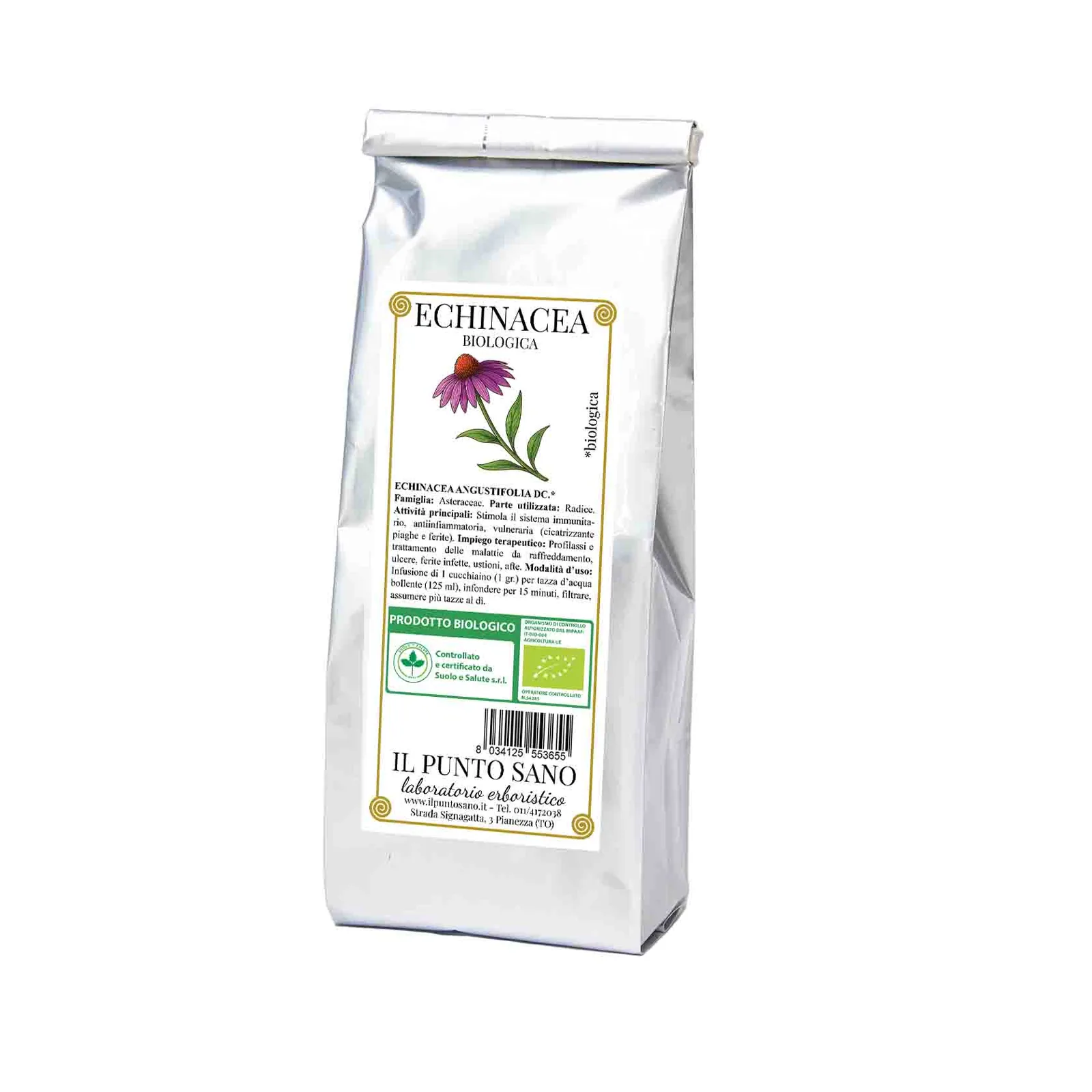



Organic Echinacea Root Herbal Tea
10,50 €
60 g
Echinacea for your seasonal-change routine.
Il Punto Sano Echinacea offers echinacea angustifolia root, traditionally dedicated to the body’s natural defences.
- ✓ Echinacea angustifolia root.
- ✓ A traditional plant for the body’s natural defences.
- ✓ Complete preparation and directions always available.
- Free shipping in Italy on orders of €70 or more
- Prepared within 1 working day + GLS transit of 2–4 working days
- Buy directly from our laboratory
- Free product advice from our biologist and nutritionist
The complete product information: features, composition and directions for use.


Organic Echinacea Angustifolia: a tea for immune defences and upper respiratory wellbeing
Il Punto Sano Organic Echinacea Angustifolia is a certified organic herbal tea made from the root of Echinacea angustifolia DC., a plant belonging to the Asteraceae, traditionally used to support the body’s natural defences and upper respiratory wellbeing during colder periods.
Echinacea is among modern herbal practice’s best-known plants for immune support. Its root is rich in characteristic constituents such as alkylamides, polysaccharides, glycoproteins, caffeic acid derivatives and polyphenols.
Echinacea Angustifolia tea suits periods of greater exposure to temperature changes, seasonal colds, upper respiratory discomfort and a greater need for natural support. Its role is physiological defence support, not direct treatment for infections, fever, flu or respiratory disease.
Why choose Il Punto Sano Organic Echinacea Angustifolia
- Certified organic root of Echinacea angustifolia, a herb in the Asteraceae family.
- Supports the body’s natural defences, particularly in colder periods and seasonal changes.
- Supports upper respiratory wellbeing during mild seasonal discomfort.
- Traditionally used during the common cold as short-term herbal support.
- Contains alkylamides, polysaccharides and caffeic acid derivatives, characteristic root constituents.
- Selected, certified organic raw material, with attention to botanical quality and herbal cut.
- Ideal in seasonal routines alongside rest, hydration and balanced nutrition.
- No artificial flavourings: an authentic, green, naturally herbal taste.
Echinacea angustifolia: the plant’s botany
Echinacea angustifolia DC. is a herbaceous perennial belonging to the Asteraceae. Native to North America, it grew wild in prairies and dry areas and was historically used by indigenous peoples in various traditional contexts.
The name Echinacea derives from the Greek echinos, meaning hedgehog, referring to the spiny central flower-head disc. Angustifolia refers to the narrow leaves distinguishing this species from other Echinaceas such as Echinacea purpurea and Echinacea pallida.
The part used in this preparation is the root, herbal material distinct from aerial parts and flowers. Echinacea Angustifolia root is traditionally valued for immune-defence support and use during seasonal colds.
At a glance
Il Punto Sano Organic Echinacea Angustifolia is a certified organic herbal tea made from the root of Echinacea angustifolia, traditionally used to support the body’s natural defences, upper respiratory wellbeing and seasonal support during colder periods.
Echinacea and traditional use
Echinacea is deeply connected to North American tradition. Indigenous peoples used it in various preparations, particularly for general wellbeing, skin, mucous membranes and periods of greater vulnerability.
Over time it became widespread in European herbal products for immune defences. Its reputation comes from longstanding traditional use and scientific interest in its phytocomplex, particularly alkylamides, polysaccharides and phenolic compounds.
Its role here is natural-defence support, rather than a cure, flu treatment, natural antibiotic or therapeutic antiviral.
Echinacea for the body’s natural defences
Echinacea’s principal use is support for the body’s natural defences. It is particularly valued during seasonal changes, colder months, greater environmental exposure or more stressful daily routines.
The tea can form part of a broader seasonal approach including a vegetable-rich diet, adequate sleep, hydration, movement, stress reduction and attention to sudden temperature changes.
Its role is physiological support. It does not replace medicines, diagnosis or medical assessment for infections, high fever, significant symptoms or persistent problems.
Echinacea and seasonal colds
Echinacea Angustifolia root is traditionally used as support during seasonal upper respiratory discomfort, particularly at the first signs of a cold.
Its focus is support during colder periods, upper respiratory wellbeing and natural defences, rather than direct treatment for colds, flu, bronchitis, sinusitis or other respiratory conditions.
High fever, worsening symptoms, breathing difficulties, chest pain, persistent cough, substantial secretions or symptoms lasting more than a few days require medical advice.
Echinacea and the upper airways
Echinacea is often included in throat, nose and upper respiratory teas. It accompanies seasonal routines when a warm, functional drink is wanted, particularly with emollient, balsamic or soothing plants.
For a more comprehensive blend, combine with Marshmallow, Mallow, Thyme, Eucalyptus, Plantain, Elder, Rosehip, Ginger or Propolis, according to preparation and desired profile.
As a tea, Echinacea has a distinctly herbal taste that aromatic or naturally sweet plants can make more enjoyable.
Echinacea and skin: internal and external use
Traditional accounts also describe Echinacea as vulnerary, referring to historical use for skin, sores, wounds, mouth ulcers, burns and mucous membranes. This mainly concerns external preparations or specific traditional uses.
This oral tea is not a wound-healing treatment for wounds, burns, ulcers or mouth ulcers. Such uses are historical background; this product supports natural defences and seasonal wellbeing.
Infected wounds, burns, ulcers, recurring mouth ulcers or skin and mucous membrane lesions require medical or pharmaceutical assessment rather than tea treatment.
Echinacea and mucous membrane wellbeing
Echinacea is also traditionally associated with mucous membrane wellbeing, particularly in the upper airways during colder seasons.
In herbal blends, combine with emollient plants such as Mallow and Marshmallow, balsamic plants such as Thyme and Eucalyptus, or naturally vitamin-C-associated plants such as Rosehip.
This creates a more comprehensive, enjoyable tea without turning it into a remedy for infections or mucous membrane lesions.
Echinacea’s traditional anti-inflammatory profile
Herbal accounts often describe Echinacea as having a traditional anti-inflammatory profile. Here this relates to its phytocomplex, mucous membrane wellbeing and physiological support.
This tea is not a treatment for acute inflammation, infections, cold-related illnesses, tonsillitis, mouth ulcers, wounds or skin disease.
Echinacea’s role is traditional support for natural defences and upper respiratory wellbeing, particularly during sensitive seasonal periods.
Echinacea: short, targeted use
Echinacea is preferably used in a short, targeted way, particularly at the first signs of a cold or when immune-defence support is wanted.
It is not a tea for continuous, indefinite use over long periods. Tradition and European monographs point towards time-limited use, with medical advice if symptoms persist, worsen or include high fever and significant discomfort.
This approach supports responsible use, particularly for a plant associated with immune function.
Characteristic Echinacea Angustifolia constituents
The root of Echinacea angustifolia contains a phytocomplex characterised by alkylamides, polysaccharides, glycoproteins, caffeic acid derivatives, echinacoside, chicoric acid, flavonoids, polyphenols, traces of essential oil and antioxidant compounds.
The alkylamides are among the most studied Echinacea Angustifolia root constituents and contribute to its herbal identity. Polysaccharides and phenolic derivatives complete its profile.
Quality depends on correct botanical identification, root quality, cut, storage and freshness. Good Echinacea root should have a clean botanical profile without dull or dusty odours.
Echinacea tea’s aromatic profile
Echinacea Angustifolia tea tastes herbal, root-like, slightly bitter, green and earthy. It is a bold herbal preparation rather than a sweet or floral tea.
Some preparations may produce mild pungency or tingling, related to the plant’s nature and alkylamides. This varies with root quality and preparation.
To improve taste, combine with Rosehip, Elder, Thyme, Liquorice, Mint, Ginger, Sweet Orange, Mallow or Marshmallow.
Il Punto Sano quality: certified organic Echinacea, selected root and herbal cut
Il Punto Sano herbs start with carefully selected certified organic materials, with attention to botanical quality, freshness, natural aroma, colour, herbal cut and infusion performance.
Organic Echinacea Angustifolia root is selected for correct botanical identification, a clean cut and herbal-material quality. Well-preserved material retains a clean, recognisable root-like botanical profile.
We use no artificial flavourings, colourings or preservatives. The taste comes from the organic root of Echinacea angustifolia: herbal, root-like and natural. The packaging protects against light, air and moisture, helping preserve freshness and quality over time.
Who is Organic Echinacea Angustifolia for?
Il Punto Sano Organic Echinacea Angustifolia is intended for adults seeking a certified organic herbal tea to:
- support the body’s natural defences;
- accompany colder periods and seasonal changes;
- support upper respiratory wellbeing;
- enjoy a traditional tea at the first seasonal discomfort;
- create seasonal blends with Rosehip, Elder, Thyme, Mallow or Marshmallow;
- include a targeted herb in short-term immune-support routines;
- choose a natural, unflavoured, certified organic root;
- enjoy an authentic herbal preparation with a green botanical taste.
Herbal information
Echinacea angustifolia DC. – certified organic root
| Botanical name | Echinacea angustifolia DC. |
| Common name | Echinacea angustifolia, Narrow-leaved Coneflower |
| Family | Asteraceae |
| Part used | Root |
| Quality | Certified organic raw material |
| Characteristic constituents | Alkylamides, polysaccharides, glycoproteins, echinacoside, chicoric acid, caffeic acid derivatives, flavonoids, polyphenols and traces of essential oil |
| Traditional profile | Support for natural defences, upper respiratory wellbeing, traditional common-cold use and a traditional external vulnerary profile |
| Infusion taste | Herbal, root-like, slightly bitter, green and earthy |
Directions for use
Prepare an infusion with 1 teaspoon of Echinacea root, approximately 1 g, for a cup of boiling water measuring 125 ml. Leave to infuse for 15 minutes, preferably covering the cup. Strain thoroughly and enjoy several cups a day according to your needs and the label directions. Short, targeted use is recommended.
Herbal tip
Echinacea Angustifolia is ideal in seasonal immune-defence teas. Combine with Rosehip, Elder, Thyme, Marshmallow, Mallow, Ginger or Liquorice. Prefer use at the first seasonal discomfort and for short periods, avoiding prolonged continuous use without professional advice.
Warnings: Do not exceed the recommended amounts. Keep out of the reach of children. Intended for adults and adolescents over 12 unless professionally advised otherwise. Do not use if allergic or hypersensitive to Echinacea, Asteraceae/Compositae or any component. Avoid with autoimmune disease, immune deficiencies, immunosuppressive treatment, transplants, progressive systemic disease, tuberculosis, leukaemia, connective-tissue diseases, multiple sclerosis, HIV/AIDS or particular immunological conditions without medical advice. During pregnancy, breastfeeding or childhood, or with significant respiratory allergies, allergic asthma, atopic dermatitis, medication or particular medical conditions, seek medical advice before use. Stop if allergic reactions, rashes, itching, swelling, breathing difficulties or worsening symptoms occur. If respiratory symptoms persist, worsen, last over 10 days or include high fever, breathing difficulties, chest pain or significant illness, consult a doctor. Do not use this tea to treat infections, flu, wounds, ulcers, burns, mouth ulcers, sores or skin and respiratory diseases. This website’s information is provided for informational and herbal purposes and does not replace medical advice.
Frequently asked questions
Which part of the plant is used?
The plant part listed in the product information is: Root.
How should I prepare this herbal tea?
Prepare an infusion with 1 teaspoon of Echinacea root , approximately 1 g , for a cup of boiling water measuring 125 ml . Leave to infuse for 15 minutes , preferably covering the cup. Strain thoroughly and enjoy several cups a day according to your needs and the label directions. Short, targeted use is recommended.


 English (UK)
 Italiano
Reviews
There are no reviews yet.