
Free advice from our biologist and nutritionist. Learn More

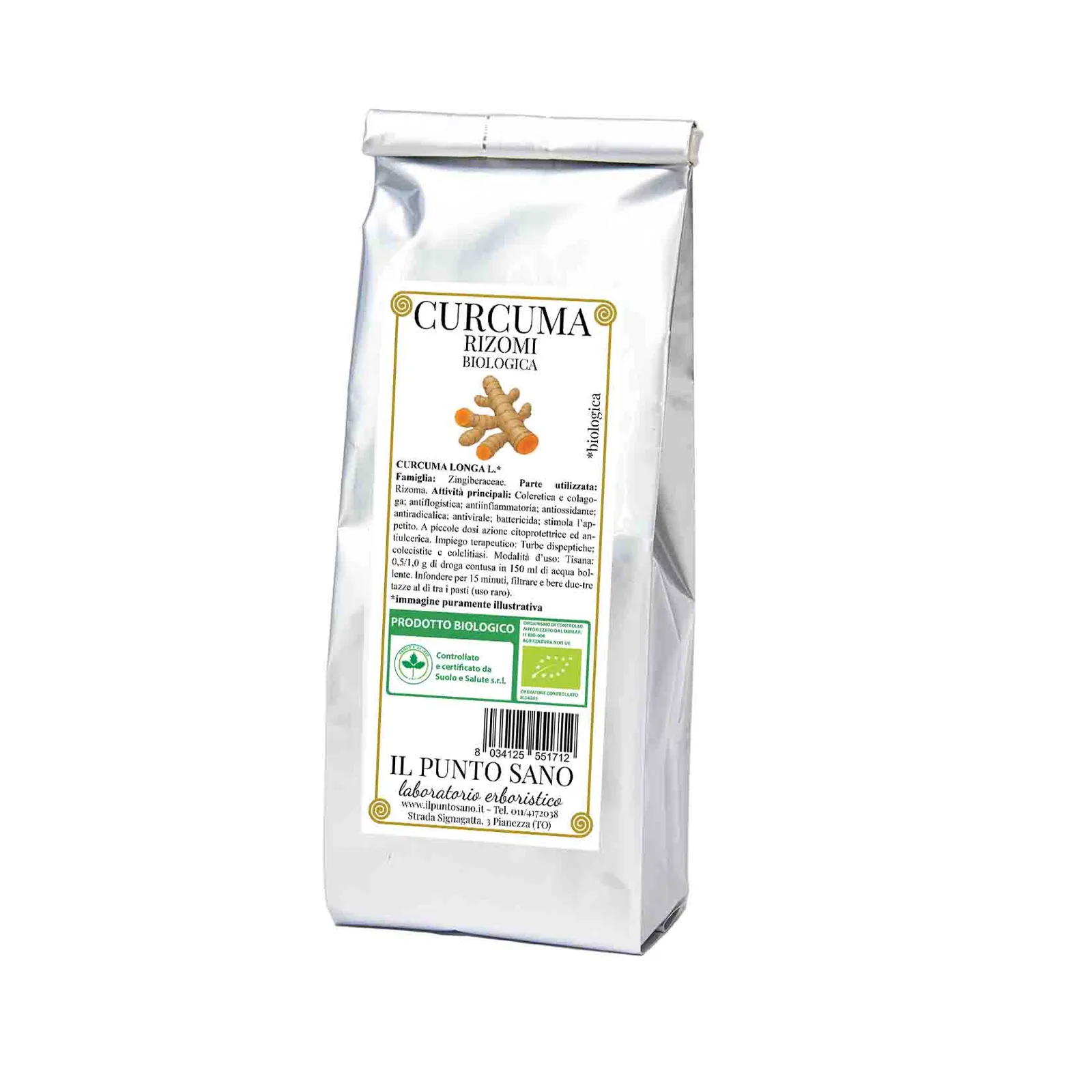



Organic Turmeric Rhizome Herbal Tea
7,70 €
60 g
Discover turmeric rhizome in your cup.
Il Punto Sano Turmeric Rhizome brings you turmeric rhizomes: a traditional digestive ingredient with a warm, distinctive herbal character.
- ✓ Turmeric rhizomes.
- ✓ A traditional digestive ingredient with a warm, distinctive herbal character.
- ✓ Complete preparation and directions always available.
- Free shipping in Italy on orders of €70 or more
- Prepared within 1 working day + GLS transit of 2–4 working days
- Buy directly from our laboratory
- Free product advice from our biologist and nutritionist
The complete product information: features, composition and directions for use.


Organic Turmeric Rhizome: traditional digestive herbal tea for fullness, bile flow and antioxidant wellbeing
Il Punto Sano Organic Turmeric is a certified organic herbal tea made from the rhizome of Curcuma longa L., a plant belonging to the Zingiberaceae, traditionally used to support digestive function, comfort after meals and the normal management of fullness, slow digestion and flatulence.
Turmeric is one of the best-known medicinal plants in Eastern traditions. Its intensely yellow-orange rhizome contains curcuminoids, essential oil and aromatic substances that give this distinctive herbal material its warm, spicy and slightly bitter character.
Turmeric rhizome is less commonly used as a herbal tea than the powder is in cooking, but it has a place in traditional digestive herbal preparations. It is particularly suited to those seeking a warm, spicy, functional drink to enjoy between meals in moderate amounts, with careful attention to precautions concerning the liver, bile, gallbladder and medicines.
Why choose Il Punto Sano Organic Turmeric
- Certified organic rhizome of Curcuma longa, a medicinal plant in the Zingiberaceae family.
- Traditionally used for digestive function, particularly for slow digestion and a feeling of fullness.
- Useful in herbal teas for flatulence and bloating after meals according to traditional herbal use.
- Traditional choleretic and cholagogue profile, requiring caution and unsuitable where biliary disorders are present.
- Contains curcuminoids, including curcumin, the characteristic plant pigments of the rhizome.
- Traditional antioxidant profile, associated with the plant’s natural complex of constituents.
- Selected, certified organic raw material, with a warm, spicy, authentic taste.
- No artificial flavourings: natural taste without sweeteners or masking flavours.
Curcuma longa: the botany of turmeric
Curcuma longa L. is a herbaceous perennial belonging to the Zingiberaceae, the same botanical family as ginger, cardamom and galangal. Native to southern Asia, it has been cultivated for centuries in tropical areas, particularly India and South-East Asia.
The plant develops large lance-shaped leaves and a branching underground rhizome with intensely yellow or orange flesh. The rhizome is the part used in herbalism: it is harvested, cleaned, dried and cut or crushed for traditional preparations.
Turmeric’s golden colour comes mainly from its curcuminoids, characteristic phenolic compounds of the plant. The rhizome also contains essential oil, turmerones, zingiberene, polysaccharides, starches, bitter substances and aromatic constituents that contribute to its digestive and spicy profile.
At a glance
Il Punto Sano Organic Turmeric is a certified organic herbal tea made from the rhizome of Curcuma longa, traditionally used for slow digestion, fullness, flatulence, digestive support and antioxidant wellbeing. Its use as a herbal tea is uncommon and should be moderate; avoid it if you have liver or biliary disorders or bile duct stones unless advised otherwise by a doctor.
Turmeric and traditional Eastern use
Turmeric is a medicinal spice central to the food and herbal traditions of India and southern Asia. It has been used for centuries in cooking, spice blends, hot drinks and traditional herbal preparations.
In Ayurvedic culture and traditional cooking, it is regarded as a warm, intense spice closely associated with digestion. Its rhizome is often combined with spices such as ginger, cumin, coriander, cardamom and black pepper.
Its history, colour, taste and digestive tradition are central to its appeal. Turmeric is not a treatment for inflammation, infections or diseases of the liver and biliary system.
Turmeric for slow digestion, fullness and flatulence
The most appropriate traditional role of turmeric herbal tea is support for digestive function. The rhizome is traditionally used for mild digestive complaints such as fullness, slow digestion and flatulence.
Its warm, aromatic and slightly bitter taste makes it an interesting choice for herbal teas between meals, particularly when you want a spicy drink that differs from classic sweet or carminative digestive herbs.
For a more balanced digestive blend, combine it with ginger, fennel, cumin, coriander, mint, lemon balm or chamomile, always in moderate amounts.
Turmeric, bile and fat digestion
Traditional herbal accounts describe turmeric as choleretic and cholagogue, terms relating to bile production and flow. This profile connects with its digestive tradition, particularly in relation to rich or fatty meals.
This is precisely why considerable caution is needed. Turmeric is not recommended in cases of impaired liver or biliary function, bile duct stones, gallstones, cholecystitis, biliary obstruction or gallbladder disorders unless advised otherwise by a doctor.
Turmeric has a traditional role in supporting digestion; it is not a treatment for cholecystitis, gallstones, hepatitis, fatty liver or other diagnosed conditions.
Turmeric and natural antioxidants
Turmeric rhizome is naturally rich in curcuminoids, including curcumin, a plant pigment known for its intense yellow-orange colour. These compounds contribute to the plant’s traditional antioxidant profile.
Its natural pigments and complex of plant constituents are associated with antioxidant wellbeing. This does not establish anti-inflammatory, antiviral, bactericidal or anti-ulcer effects for this product.
Turmeric can be part of a varied dietary and herbal routine rich in vegetables, spices, aromatic herbs and fresh foods. It does not replace medical assessment or treatment for persistent symptoms.
Turmeric and the stomach lining
Traditional accounts sometimes refer to cytoprotective or anti-ulcer actions at small doses. Here, the relevant role is traditional support for digestive and gastric wellbeing, rather than treatment for ulcers, gastritis or reflux.
In sensitive individuals, turmeric can irritate the stomach, particularly at high doses, over prolonged periods or alongside very pungent spices.
Ask a doctor before use if you have significant gastritis, a gastroduodenal ulcer, marked reflux or persistent pain.
Turmeric and appetite
Turmeric can make warm, spicy preparations more appetising. Its golden colour, intense fragrance and aromatic taste engage the senses and make the drink more enjoyable.
This fits its traditional role as a digestive, aromatic spice. Turmeric should not be used to treat poor appetite, particularly if it persists or accompanies significant symptoms.
Sudden loss of appetite, unexplained weight loss, persistent nausea, marked tiredness or pain always require medical assessment.
Use as a herbal tea: uncommon but traditional
Turmeric is more often used as a culinary powder or as a dry extract in food supplements. Herbal tea made with crushed rhizome is less common but has a place in traditional herbalism.
Preparation requires a moderate amount of herbal material and a sufficiently long infusion. The result is a warm, spicy, bitter drink to enjoy between meals, rather than a drink for indiscriminate daily use over long periods.
As this plant has specific precautions, sensitive individuals should limit regular use and seek advice if taking medicines or living with liver or biliary disorders.
Characteristic constituents of turmeric
The rhizome of Curcuma longa contains curcuminoids, including curcumin, demethoxycurcumin and bisdemethoxycurcumin, together with essential oil, turmerones, zingiberene, polysaccharides, starches, proteins, mineral salts and bitter substances.
Curcumin is the best-known pigment and contributes to the rhizome’s yellow-orange colour. The aromatic fraction gives turmeric its warm, earthy and slightly spicy fragrance.
Raw material quality depends on botanical origin, correct drying, colour intensity, fragrance and storage. Good turmeric should have a vivid colour, a clean aroma and no dull or dusty odours.
The aromatic profile of turmeric herbal tea
Turmeric herbal tea tastes warm, earthy, slightly bitter, aromatic, spicy and lingering. It is a bold herbal preparation rather than a sweet or floral tea.
The infusion can be made more enjoyable by combining it with aromatic, digestive herbs such as ginger, fennel, cumin, coriander, cinnamon, lemon balm or liquorice.
The intense yellow colour is a natural characteristic of the rhizome and can stain surfaces, fabrics or porous utensils.
Il Punto Sano quality: certified organic turmeric, selected rhizome and natural colour
Il Punto Sano medicinal plants begin with carefully selected certified organic raw materials, with attention to botanical quality, freshness, natural fragrance, colour and performance in use.
Our organic turmeric rhizome is selected for colour intensity, aromatic purity and herbal material quality. Good turmeric should have a vivid yellow-orange colour, a warm fragrance and its characteristic taste, without stale or excessively dusty notes.
We use no artificial flavourings, added colours or preservatives. The colour is that of the organic rhizome of Curcuma longa. The packaging protects the herbal material from light, air and moisture, helping preserve freshness, aroma and quality over time.
Who is Organic Turmeric Rhizome for?
Il Punto Sano Organic Turmeric is intended for adults seeking a certified organic herbal tea for:
- traditional support for digestive function;
- a feeling of fullness after meals;
- slow digestion and flatulence;
- spicy preparations to enjoy between meals;
- antioxidant wellbeing associated with the plant’s complex of constituents;
- digestive blends with ginger, cumin, coriander, fennel or lemon balm;
- a certified organic medicinal plant with an intense golden colour;
- traditional, uncommon and moderate use of rhizome in herbal tea.
Herbal information
Curcuma longa L. – certified organic rhizome
| Botanical name | Curcuma longa L. |
| Common name | Turmeric, Curcuma |
| Family | Zingiberaceae |
| Part used | Rhizome, preferably crushed for preparing herbal tea |
| Quality | Certified organic raw material |
| Characteristic constituents | Curcuminoids, curcumin, demethoxycurcumin, bisdemethoxycurcumin, essential oil, turmerones, zingiberene, polysaccharides, starches and bitter substances |
| Traditional profile | Traditional digestive, traditional choleretic and cholagogue, antioxidant, aromatic, bitter and traditionally appetite-stimulating |
| Infusion taste | Warm, earthy, slightly bitter, aromatic, spicy and lingering |
Directions for use
Prepare a herbal tea with 0.5-1.0 g of crushed turmeric rhizome per 150 ml of boiling water. Leave to infuse for 15 minutes, preferably covering the cup. Strain thoroughly and enjoy 2-3 cups a day between meals. Use as a herbal tea is uncommon: use moderately and follow the label instructions.
Herbal tip
Turmeric herbal tea can be combined with ginger, cumin, coriander, fennel or lemon balm in spicy digestive blends. Avoid regular or concentrated use if you have liver or biliary disorders, bile duct stones or take medicines, unless you have medical advice.
Important warning: use of this product is not recommended in cases of impaired liver or biliary function or bile duct stones. Do not use during pregnancy or breastfeeding. Do not use for prolonged periods without consulting a doctor. If taking medicines, seek medical advice. Do not exceed the recommended amounts. Keep out of reach of children. Do not use if allergic or hypersensitive to turmeric, the Zingiberaceae family or any component. Consult a doctor before use if you have liver disease, hepatitis, diagnosed fatty liver, altered liver enzymes, cholecystitis, gallstones, bile duct obstruction, significant gastritis, marked reflux, a gastroduodenal ulcer, persistent gastrointestinal complaints, diabetes, hypoglycaemia or any particular medical condition, or if taking anticoagulants, antiplatelets, blood-glucose-lowering, liver-protective, chemotherapy or immunosuppressive medicines. Do not use turmeric to treat inflammation, infections, cholecystitis, gallstones, hepatitis, fatty liver, joint diseases or persistent digestive complaints. The information on this website is provided for informational, food and herbal purposes and does not replace medical advice.
Frequently asked questions
Which part of the plant is used?
The plant part listed in the product information is: Rhizome, preferably crushed for preparing herbal tea.
How should I prepare this herbal tea?
Prepare a herbal tea with 0.5-1.0 g of crushed turmeric rhizome per 150 ml of boiling water . Leave to infuse for 15 minutes , preferably covering the cup. Strain thoroughly and enjoy 2-3 cups a day between meals . Use as a herbal tea is uncommon: use moderately and follow the label instructions.


 English (UK)
 Italiano
Reviews
There are no reviews yet.