
Free advice from our biologist and nutritionist. Learn More

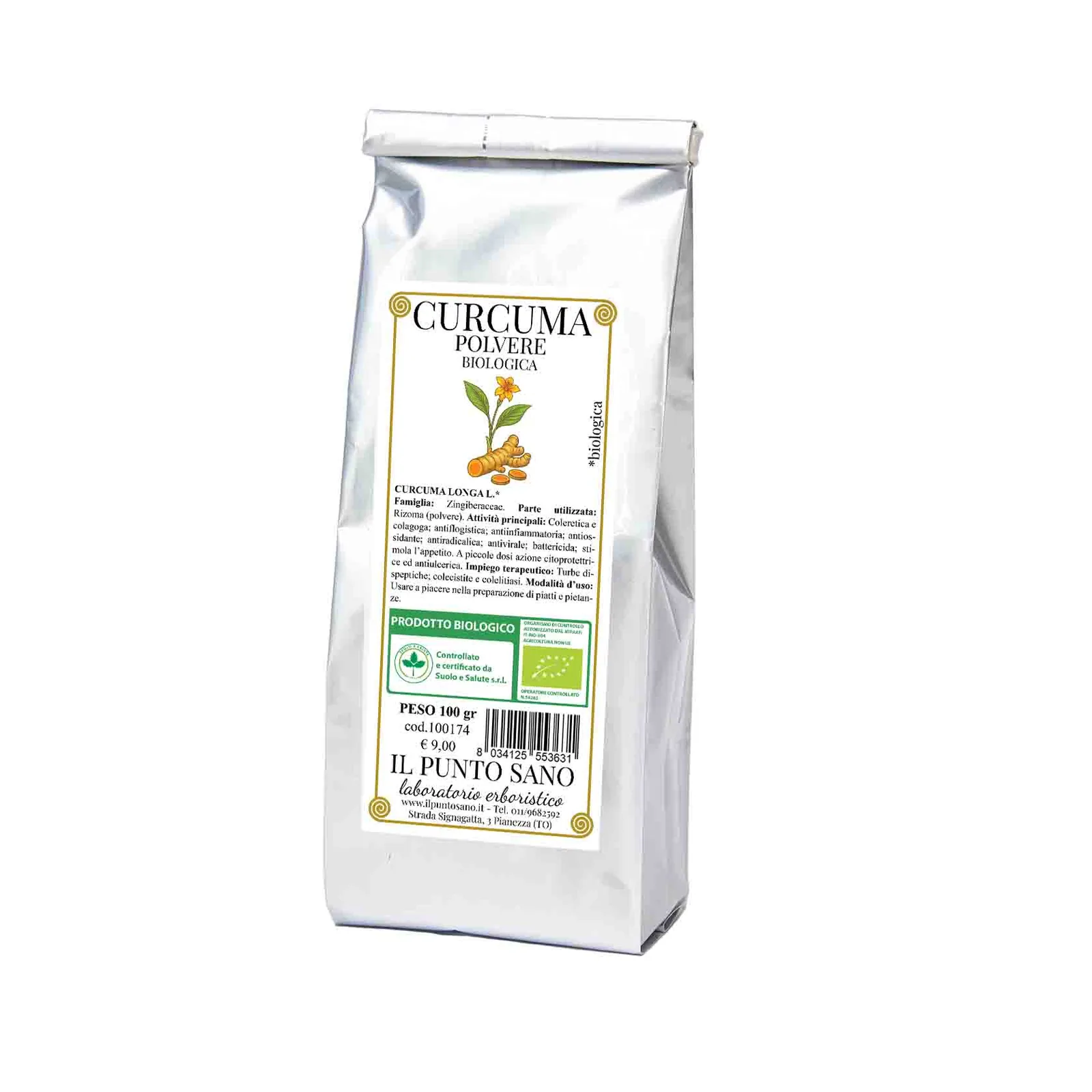



Organic Turmeric Powder
9,00 €
100 g
Turmeric’s colour, in convenient powder form.
Il Punto Sano Turmeric Powder offers powdered turmeric rhizome, a versatile spice for preparations following the directions.
- ✓ Powdered turmeric rhizome.
- ✓ A versatile spice for preparations following the directions.
- ✓ Full preparation directions and product information are always available below.
- Free shipping in Italy on orders of €70 or more
- Prepared within 1 working day + GLS transit of 2–4 working days
- Buy directly from our laboratory
- Free product advice from our biologist and nutritionist
Full product information: features, composition and directions for use.


Organic Turmeric Powder: a herbal spice for cooking, digestion and antioxidant tradition
Il Punto Sano Organic Turmeric is a certified organic herbal spice made with powdered rhizome of Curcuma longa L., a plant in the Zingiberaceae family, traditionally used in cooking and herbal practice for its golden colour, warm aroma and naturally curcuminoid-rich phytocomplex.
Turmeric is an iconic Asian traditional spice. The dried powdered rhizome gives intense yellow colour, warmth, slight bitterness and a familiar aromatic note to curry, masala, soups, vegetables, rice, pulses and plant-based drinks.
A valued spice with a rich history and characteristic plant compounds, this powder is for traditional food use. It is not treatment for inflammation, liver disease, biliary disorders, infections or joint problems. Enjoy certified organic powder thoughtfully in cooking, according to taste and individual suitability.
Why choose Il Punto Sano Organic Turmeric
- Certified organic powdered rhizome of Curcuma longa, a medicinal plant in the Zingiberaceae family.
- A naturally intense yellow spice, ideal for cooking, spiced teas, soups, vegetables, rice and pulses.
- Contains curcuminoids, including curcumin, demethoxycurcumin and bisdemethoxycurcumin.
- Traditionally used as a digestive spice, particularly in Asian and Ayurvedic cuisines.
- A warm, earthy, slightly bitter aromatic profile, ideal for savoury recipes and spiced drinks.
- Selected, certified organic raw material, without artificial flavourings, added colours or preservatives.
- Ideal in everyday wellbeing-focused recipes, in small amounts within a varied, balanced diet.
- Versatile powder, easy to add to dishes according to taste.
Curcuma longa: plant botany
Curcuma longa L. is a perennial herbaceous plant in the Zingiberaceae family, alongside Ginger, Cardamom and Galangal. Native to southern Asia, it has been cultivated for centuries in tropical regions, particularly India and South-East Asia.
It has large lance-shaped leaves and a branched underground rhizome with intense yellow or orange flesh. The rhizome is harvested, cleaned, dried and ground to make a bright powder with a warm, vegetal, slightly spicy fragrance.
Turmeric’s golden colour principally comes from curcuminoids, characteristic phenolic compounds. Essential oil, starches, polysaccharides, bitterness and aromatics also contribute its sensory and traditional profile.
At a glance
Il Punto Sano Organic Turmeric is certified organic powdered rhizome of Curcuma longa, a culinary herbal spice rich in colour, aroma and tradition. Use to taste in dishes, observing precautions with liver or biliary disorders, stones, pregnancy, breastfeeding or medicines.
Turmeric and Asian traditional use
Turmeric is central to Indian, southern Asian and many other Asian food traditions, colouring and flavouring rice, pulses, vegetables, sauces, stocks, soups and spice blends for centuries.
Ayurvedic tradition and everyday cooking consider it a “warming” spice closely linked to digestive balance. It often joins cooked aromatic dishes with fats, pepper, ginger or other spices.
Its appeal lies in history, versatility and raw-material quality rather than therapeutic promises from traditional use.
Turmeric as a traditional digestive spice
Spiced cuisines use Turmeric alongside rich, fatty or elaborate dishes. Its warmth and slight bitterness stimulate sensory interest and make meals more aromatic.
EMA records traditional rhizome use for mild digestive complaints such as fullness, slow digestion and flatulence. In food and supplement use, the plant’s specific precautions still apply.
For balanced culinary use, add small amounts to warm dishes, vegetables, pulses, rice, stocks, soups, purées and dressings.
Turmeric, bile and fat digestion
Older herbal literature describes a choleretic and cholagogue profile, relating to bile production and flow. This accords with its digestive tradition in spiced preparations accompanying fatty meals.
For this reason, use is not recommended with abnormal liver or biliary function, bile-duct stones, gallstones, cholecystitis, biliary obstruction or gallbladder disorders unless medically advised otherwise.
Turmeric is a traditional food spice, not treatment for cholecystitis, gallstones or other liver-biliary disorders.
Turmeric and natural antioxidants
Turmeric is known for curcuminoids, natural pigments creating its intense yellow colour. Among these, curcumin is the best-known and most studied constituent.
Antioxidant and free-radical references describe the phytocomplex and herbal tradition. This powder is not a curative product or a high-dose standardised supplement.
In small amounts within a plant-rich diet of spices, aromatic herbs and fresh foods, Turmeric contributes colour and botanical aroma to everyday eating.
Turmeric and the joint-wellbeing tradition
Botanical literature and popular discussion often connect Turmeric with joints and inflammatory processes. This culinary powder is not treatment for inflammation, joint pain, arthritis, osteoarthritis or pathological conditions.
Enjoy it as a traditional, naturally curcuminoid-rich spice in a varied, colourful diet. Persistent joint pain, significant inflammation or diagnosed disease require medical assessment, treatment or specific supplementation.
Combine in cooking with Ginger, Black pepper, Rosemary, Extra virgin olive oil, cooked vegetables and pulses for tasty, balanced recipes.
Turmeric and appetite
Like many aromatic spices, Turmeric makes dishes more appealing. Golden colour, warmth and spice stimulate meal enjoyment and add interest to simple recipes.
This is useful when reducing salt, ready-made sauces or heavy dressings in favour of natural organic spices.
Persistent or sudden appetite loss, or loss with weight loss, nausea, pain, fever or marked tiredness, always requires medical assessment.
Turmeric, culinary use and absorption
Turmeric is lipophilic, so culinary tradition often uses it with fat such as Extra virgin olive oil, Coconut milk, Ghee or oil-based dressings, particularly in warm cooked dishes.
It is also often paired with Black pepper, containing piperine. Use this familiar combination carefully with medicines, gastric sensitivity or liver-biliary disorders, as piperine may alter bioavailability of certain substances.
For everyday cooking, prefer small amounts adjusted to taste and individual tolerance.
Turmeric and antimicrobial tradition
Traditional herbal literature sometimes describes antiviral, bactericidal or antiseptic activities. These are historical references and do not make this food spice an infection treatment.
Turmeric is an aromatic spice long used in traditional cooking for its warm, intense character and sensory preservation of preparations.
It is not a product to prevent or treat viral, bacterial or other infections.
Turmeric in cooking: ideas to try
Use Organic Turmeric Powder to taste in rice, couscous, pulses, smooth soups, minestrone, roasted vegetables, potatoes, tofu, eggs, sauces, dressings, hummus and spiced drinks.
Add during cooking or at the end. Its taste is intense, so start with small amounts and increase according to preference.
It pairs with Ginger, Black pepper, Cinnamon, Cumin, Coriander, Cardamom, Curry, Paprika, Rosemary, Lemon, Coconut milk and Extra virgin olive oil.
Characteristic constituents of Turmeric
The rhizome of Curcuma longa contains curcuminoids, including curcumin, demethoxycurcumin and bisdemethoxycurcumin, alongside essential oil, turmerones, zingiberene, polysaccharides, starches, proteins, minerals and bitter substances.
Curcumin is the best-known pigment contributing yellow-orange colour. Aromatics provide the warm, earthy, slightly spicy fragrance.
Powder quality depends on botanical origin, appropriate drying, grind fineness, colour intensity, fragrance and storage. Good Turmeric has vibrant colour and a clean aroma without dull or dusty odours.
The aromatic profile of Organic Turmeric
Turmeric has a warm, earthy, slightly bitter, aromatic, spicy and persistent taste. Distinctive and assertive without chilli heat.
Its profile particularly suits savoury and Asian-inspired cooking. Small amounts add colour, depth and warmth without overpowering other ingredients.
It pairs with Ginger, Black pepper, Cumin, Coriander, Cinnamon, Cardamom, Curry, Extra virgin olive oil, Lemon, Rosemary and cooked vegetables.
Il Punto Sano quality: certified organic Turmeric, vibrant colour and selected powder
Il Punto Sano medicinal plants and spices begin with careful selection of certified organic raw materials, focusing on botanical quality, freshness, natural fragrance, colour and performance in use.
Organic Turmeric is selected for colour intensity, powder fineness, clean aroma and rhizome quality. Good material has a vivid yellow-orange colour, warm fragrance and characteristic taste without stale or excessively dusty notes.
We use no artificial flavourings, added colours or preservatives. Its colour comes naturally from the organic rhizome of Curcuma longa. The pack protects the powder from light, air and moisture, preserving freshness, aroma and quality.
Who may consider Organic Turmeric Powder
Il Punto Sano Organic Turmeric is intended for adults seeking a certified organic herbal spice to:
- enrich dishes with a natural golden spice;
- prepare spiced recipes, curries, soups, vegetables, rice, pulses and purées;
- add warm aromatic character to everyday cooking;
- use selected, certified organic rhizome powder;
- reduce ready-made dressings, salt and industrial sauces;
- make spice blends with Ginger, Cumin, Coriander, Black pepper or Cinnamon;
- include a traditional spice rich in colour and history;
- choose natural Turmeric without flavourings or sweeteners.
Herbal profile
Curcuma longa L. – certified organic powdered rhizome
| Botanical name | Curcuma longa L. |
| Common name | Turmeric, Curcuma |
| Family | Zingiberaceae |
| Part used | Powdered rhizome |
| Quality | Certified organic raw material |
| Characteristic constituents | Curcuminoids, curcumin, demethoxycurcumin, bisdemethoxycurcumin, essential oil, turmerones, zingiberene, polysaccharides, starches and bitter substances |
| Traditional profile | Aromatic spice, natural food colouring, traditional digestive, choleretic-cholagogue and antioxidant uses, and an Asian-cuisine ingredient |
| Powder flavour | Warm, earthy, slightly bitter, aromatic, spicy and persistent |
Directions for use
Use Organic Turmeric Powder to taste in dishes. Add small amounts to rice, vegetables, pulses, soups, purées, sauces, dressings, curries, spice blends and warm drinks. Begin moderately according to taste and individual tolerance.
Herbal tip
To enjoy Turmeric in cooking, combine with a little suitable fat such as Extra virgin olive oil and complementary spices such as Ginger, Cumin, Coriander or Black pepper. Avoid regular or concentrated use without medical advice with medicines or liver-biliary sensitivity.
Important warning: Use is not recommended with abnormal liver or biliary function or bile-duct stones. Do not use during pregnancy or breastfeeding. Do not use for prolonged periods without medical advice. If taking medicines, consult your doctor. Keep amounts within sensible culinary use. Keep out of reach of children. Do not use if allergic or hypersensitive to Turmeric, Zingiberaceae or any component. Consult your doctor before use with liver disease, hepatitis, diagnosed fatty liver, abnormal liver enzymes, cholecystitis, gallstones, bile-duct obstruction, significant gastritis, marked reflux, gastroduodenal ulcers, persistent gastrointestinal complaints, diabetes, hypoglycaemia, anticoagulant, antiplatelet, glucose-lowering, liver-protective, chemotherapy or immunosuppressive therapies, or particular clinical conditions. Do not use as treatment for inflammation, infections, cholecystitis, gallstones, hepatitis, fatty liver, joint disease or persistent digestive complaints. This website provides food and herbal information and does not replace medical advice.
Frequently asked questions
Which part of the plant is used?
The plant part listed in the product information is: Powdered rhizome.
How should I prepare this herbal tea?
Use Organic Turmeric Powder to taste in dishes. Add small amounts to rice, vegetables, pulses, soups, purées, sauces, dressings, curries, spice blends and warm drinks. Begin moderately according to taste and individual tolerance.




 English (UK)
 Italiano
Reviews
There are no reviews yet.