
Free advice from our biologist and nutritionist. Learn More

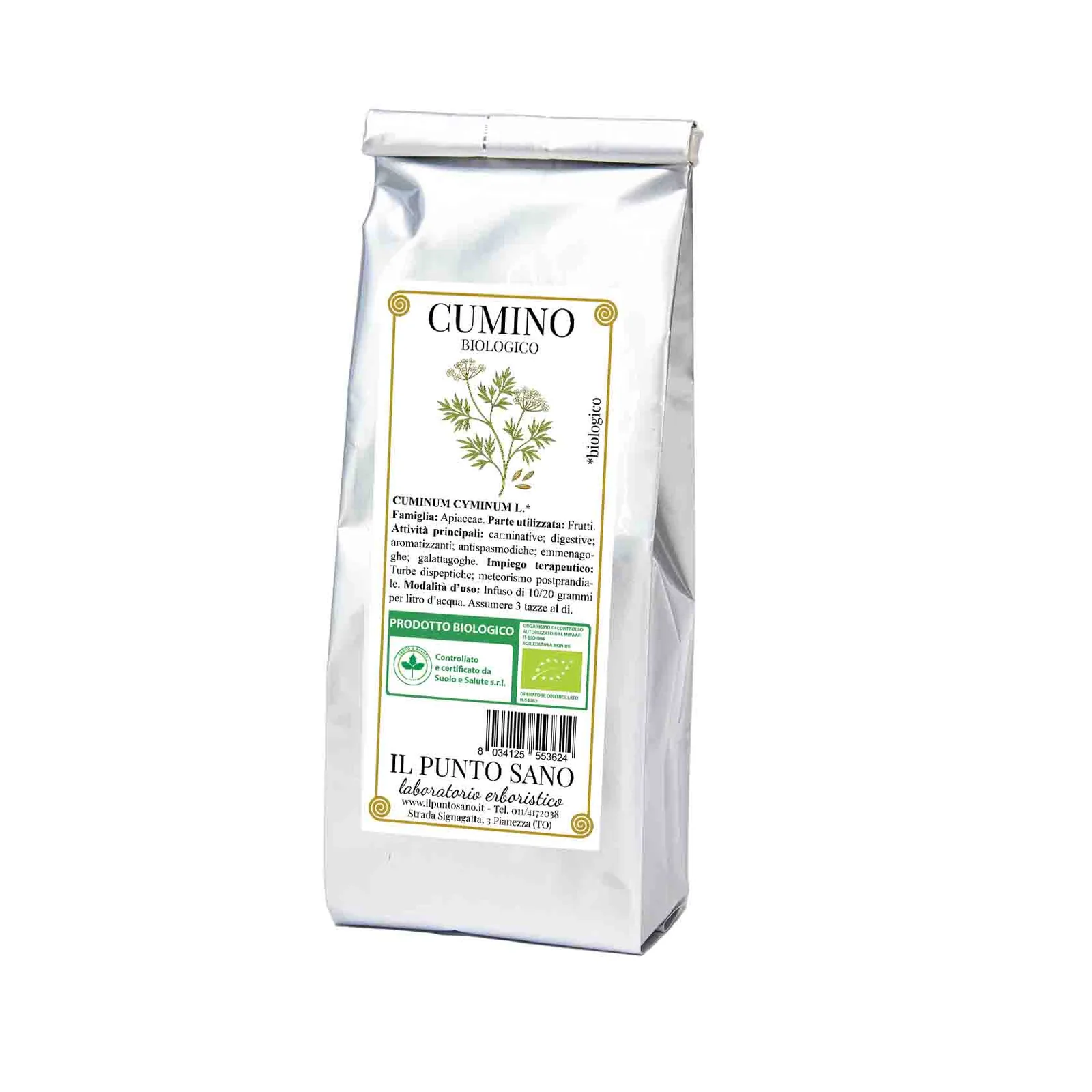



Organic Cumin Herbal Tea
9,20 €
100 g
Cumin for your lighter-feeling tea break.
Il Punto Sano Cumin offers cumin fruits, an aromatic plant from digestive and carminative herbal tradition.
- ✓ Cumin fruits.
- ✓ An aromatic plant from digestive and carminative herbal tradition.
- ✓ Complete preparation and directions always available.
- Free shipping in Italy on orders of €70 or more
- Prepared within 1 working day + GLS transit of 2–4 working days
- Buy directly from our laboratory
- Free product advice from our biologist and nutritionist
The complete product information: features, composition and directions for use.


Organic Cumin: a digestive tea for bloating and intestinal gas
Il Punto Sano Organic Cumin is a certified organic herbal tea made from the fruits of Cuminum cyminum L., a plant belonging to the Apiaceae, traditionally used to support digestive function, promote regular gastrointestinal motility and contribute to intestinal gas elimination.
Cumin is a herbal spice with a warm, intense, slightly earthy aroma, valued in Mediterranean, Middle Eastern and Ayurvedic traditions. Herbal practice uses its fruits mainly in digestive and carminative teas when meals bring bloating, gas, abdominal fermentation or minor gastrointestinal spasms.
Our Organic Cumin tea is made with certified organic raw material, selected for aroma, a clean cut and botanical quality. A natural preparation without artificial flavourings, colourings or preservatives, ideal for an authentic, spicy, functional digestive tea.
Why choose Il Punto Sano Organic Cumin
- Certified organic fruits of Cuminum cyminum, a herb in the Apiaceae family.
- Promotes digestive function, particularly after large, rich or hard-to-digest meals.
- Supports regular gastrointestinal motility and gas elimination.
- Traditionally carminative, used in teas for bloating and gas after meals.
- Traditional antispasmodic profile, relevant when abdominal tension accompanies minor functional cramps.
- An aromatic digestive spice, ideal with Fennel, Anise, Coriander or Caraway.
- Selected, certified organic raw material, with a warm, spicy, authentic taste.
- No artificial flavourings: natural taste without sweeteners or masking flavours.
Cuminum cyminum: Cumin botany
Cuminum cyminum L., commonly known as Cumin, is an annual herbaceous plant belonging to the Apiaceae, the same botanical family as Fennel, Green Anise, Coriander, Caraway, Angelica, Celery, Parsley and Carrot.
Native to the eastern Mediterranean and western Asia, it is now cultivated in many warm, dry regions. It has fine, divided leaves, small flowers in umbels and elongated, aromatic yellow-brown fruits.
The part used in herbal practice is the fruits, often incorrectly called seeds. Lightly crush before infusion to release aroma and improve extraction of characteristic aromatic constituents.
At a glance
Il Punto Sano Organic Cumin is a certified organic herbal tea made from the fruits of Cuminum cyminum, traditionally used for slow digestion, after-meal gas, abdominal bloating, intestinal gas, minor gastrointestinal spasms and appetite.
Cumin and traditional use
Cumin is one of humanity’s oldest spices. Mediterranean, Middle Eastern, North African and Indian food and herbal traditions used it both to flavour food and promote digestion.
Traditional cuisines often serve Cumin with pulses, grains, meats, cooked vegetables and spicy dishes, foods that can encourage fermentation and bloating in susceptible people.
Herbal practice groups it with aromatic carminatives such as Fennel, Anise, Coriander and Caraway, valued when digestion is slow and the abdomen bloats after meals.
Cumin for slow digestion and dyspeptic discomfort
Cumin’s main use is support for digestive function. Its fruits are traditionally used when meals feel heavy, digestion is slow or the stomach needs a warm, aromatic, stimulating tea.
Its digestive profile relates to aromatic constituents and spicy taste, making the infusion particularly suitable after meals or in blends to ease digestion.
For a more comprehensive digestive blend, combine with Fennel, Green Anise, Coriander, Caraway, Mint, Lemon Balm, Chamomile, Ginger or Bitter Orange.
Cumin for after-meal bloating and intestinal gas
Cumin is useful in teas for after-meal gas, abdominal bloating and intestinal gas. Traditionally considered carminative, it promotes gas elimination and more comfortable digestion.
It is particularly suited to bloating after meals rich in pulses, flour, grains, fermentable vegetables, spices, rich dishes or food eaten quickly.
Persistent bloating, significant abdominal pain, bowel changes, unexplained weight loss or new symptoms require medical advice.
Cumin and minor gastrointestinal spasms
Traditional herbal accounts also attribute an antispasmodic profile. This is interesting when bloating and intestinal gas accompany abdominal tension, minor cramps or a contracted-bowel feeling.
Enjoy warm Cumin infusion alone or with more soothing, antispasmodic plants such as Lemon Balm, Chamomile, Mint, Fennel or Mallow.
This is functional support for digestion and gastrointestinal motility, not treatment for significant abdominal pain or digestive-system disease.
Cumin and appetite
Cumin is traditionally an aromatic digestive spice. Its intense warm scent also suits pre-meal teas when appetite is reduced or digestion feels sluggish.
The aromatic component pleasantly stimulates taste and may prepare you for a meal, particularly when reduced appetite relates to tiredness, irregular meals or slow digestion.
Persistent or sudden loss of appetite, or appetite loss with nausea, weight loss, pain, fever or marked tiredness, always requires medical assessment.
Cumin and female-wellbeing tradition
Herbal tradition also describes Cumin as emmenagogic and galactagogic. These are historical uses, not direct interventions for the menstrual cycle, pregnancy or breastfeeding.
Menstrual regularity is a traditional reference, without therapeutic promises for absent periods, significant irregularities or gynaecological disorders.
Concentrated Cumin tea is not recommended during pregnancy without medical advice. During breastfeeding, despite its galactagogue tradition, seek professional advice before regular use.
Cumin and fluid drainage
Cumin also appears in traditional approaches to drainage of body fluids. This makes it interesting in digestive and cleansing blends, particularly when abdominal bloating accompanies general heaviness.
In blended teas, Cumin contributes aroma and function alongside Fennel, Coriander, Orthosiphon, Birch, Dandelion or Horsetail.
With significant fluid retention, oedema, kidney disease, heart failure or diuretic medicines, seek medical advice.
Cumin as an aromatic spice
Beyond its functional profile, Cumin is a distinctive flavouring spice. Its warm, bold taste can enhance digestive, carminative and cleansing blends, particularly those containing bitter or very herbal plants.
A spice with strong character: small amounts add depth, while excessive quantities can be too intense for those unfamiliar with its aroma.
It pairs well with Fennel, Coriander, Caraway, Green Anise, Ginger, Cinnamon, Cardamom, Mint, Lemon Balm, Liquorice and Lemon peel.
Characteristic Cumin constituents
The fruits of Cuminum cyminum contain an aromatic fraction rich in essential oil, with cuminaldehyde as a characteristic constituent, alongside terpenes, flavonoids, phenolic acids, tannins, proteins, fibre, mineral salts and antioxidant compounds.
The cuminaldehyde contributes to Cumin’s warm, spicy, slightly pungent, earthy scent. Its aromatic fraction underpins traditional digestive, carminative and flavouring uses.
Quality depends greatly on fruit integrity, fragrance and proper storage. Old or poorly stored fruits quickly lose aromatic intensity and infusion performance.
Cumin tea’s aromatic profile
Cumin tea tastes warm, spicy, intense, slightly earthy, aromatic and persistent. Bolder than Fennel and Anise, it is less citrusy than Coriander and has greater aromatic depth.
Distinctly digestive on the palate, this tea suits lovers of genuine spices and traditional flavours, particularly after-meal preparations.
For a softer taste, combine with Fennel, Lemon Balm, Chamomile or Liquorice. For a spicier blend, combine with Coriander, Ginger, Cinnamon or Cardamom.
Il Punto Sano quality: certified organic Cumin, selected fruits and authentic aroma
Il Punto Sano teas start with carefully selected certified organic herbal materials, with attention to freshness, natural aroma, cut quality and infusion performance.
Organic Cumin fruits are selected for aromatic intensity, integrity and cleanliness. Good herbal material should release a warm, spicy, recognisable fragrance as soon as it is crushed.
We use no artificial flavourings, colourings or masking sweeteners. The taste comes from the organic fruits of Cuminum cyminum: spicy, warm and natural. The packaging protects against light, air and moisture, helping preserve freshness, aroma and quality over time.
Who are Organic Cumin fruits for?
Il Punto Sano Organic Cumin is intended for adults seeking a natural tea for:
- slow digestion and heaviness after meals;
- after-meal gas and bloating;
- intestinal gas and abdominal fermentation;
- minor functional digestive spasms;
- regular gastrointestinal motility;
- reduced appetite or sluggish digestion;
- digestive blends with Fennel, Anise, Coriander or Caraway;
- a certified organic, aromatic, traditional herbal spice.
Herbal information
Cuminum cyminum L. – certified organic fruits
| Botanical name | Cuminum cyminum L. |
| Common name | Cumin |
| Family | Apiaceae |
| Part used | Fruits, often incorrectly called seeds |
| Quality | Certified organic raw material |
| Characteristic constituents | Essential oil, cuminaldehyde, terpenes, flavonoids, phenolic acids, tannins, fibre, mineral salts and antioxidant compounds |
| Traditional profile | Carminative, digestive, aromatic, traditionally antispasmodic, emmenagogic and galactagogic; support for gastrointestinal motility |
| Infusion taste | Warm, spicy, intense, slightly earthy, aromatic and persistent |
Directions for use
Prepare an infusion with 10–20 g of Cumin fruits per 1 litre of boiling water. Leave to infuse for 10–15 minutes, preferably covering the container. Strain thoroughly and enjoy 3 cups a day according to your needs and the label directions.
Herbal tip
Cumin is ideal in teas for after-meal gas and slow digestion. For more comprehensive carminative support, combine with Fennel, Green Anise, Coriander or Caraway. For nervous digestion, it pairs well with Lemon Balm and Chamomile.
Warnings: Do not exceed the recommended amounts. Keep out of the reach of children. Do not use if allergic or hypersensitive to Cumin, Apiaceae or any component. Take care with known allergies to related plants such as Fennel, Anise, Coriander, Caraway, Celery, Carrot, Angelica or Parsley. During pregnancy, breastfeeding or childhood, or with menstrual disorders, hormone treatment, diabetes, hypoglycaemia, glucose-lowering medication, anticoagulants, antiplatelets, significant gastritis, marked reflux, gastroduodenal ulcers, persistent gastrointestinal complaints, persistent appetite loss, significant fluid retention, kidney disease, diuretic treatment or particular medical conditions, seek medical advice before use. Do not use this tea to treat gastrointestinal, gynaecological, metabolic or lactation disorders. This website’s information is provided for informational and herbal purposes and does not replace medical advice.
Frequently asked questions
Which part of the plant is used?
The plant part listed in the product information is: Fruits, often incorrectly called seeds.
How should I prepare this herbal tea?
Prepare an infusion with 10–20 g of Cumin fruits per 1 litre of boiling water . Leave to infuse for 10–15 minutes , preferably covering the container. Strain thoroughly and enjoy 3 cups a day according to your needs and the label directions.


 English (UK)
 Italiano
Reviews
There are no reviews yet.