
Free advice from our biologist and nutritionist. Learn More

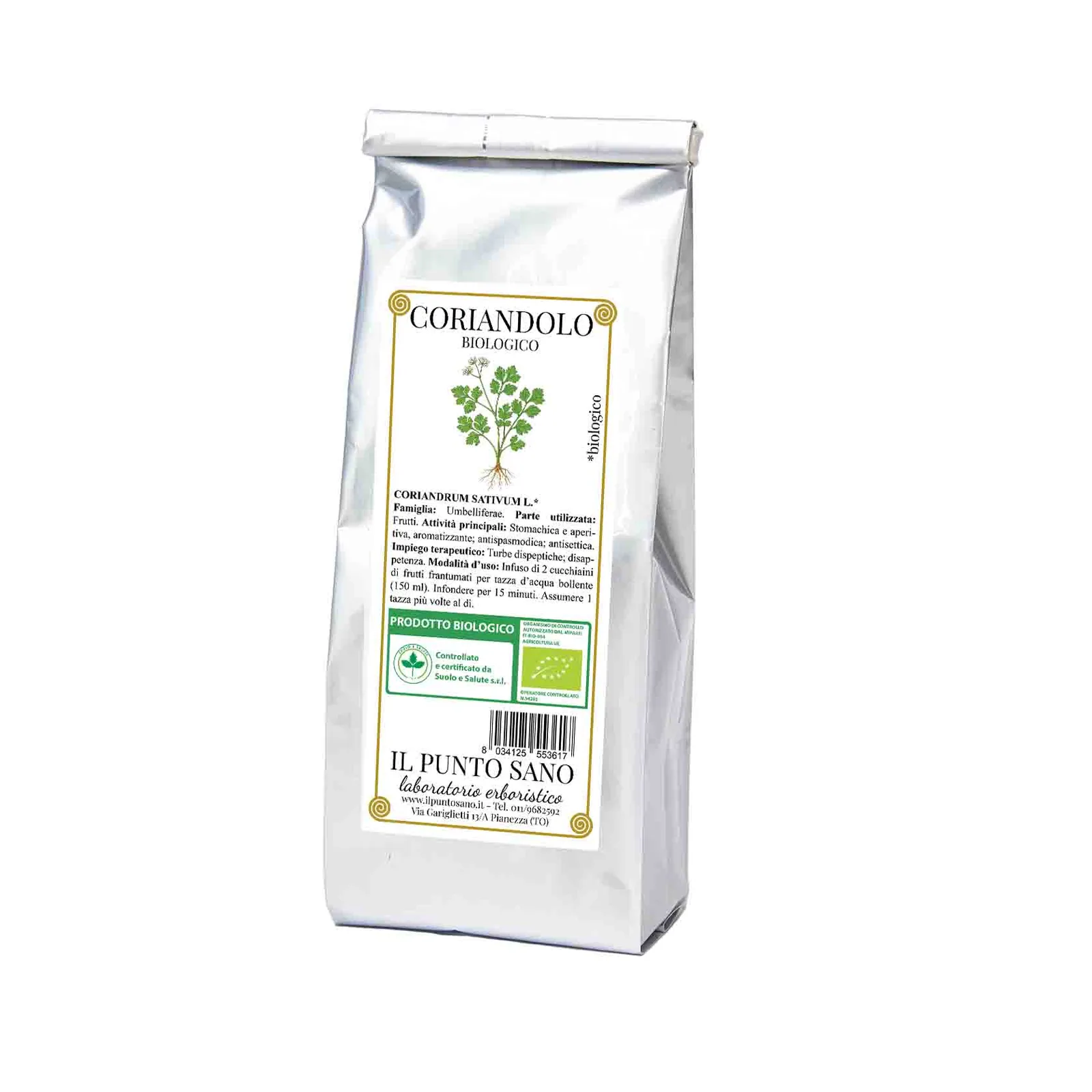



Organic Coriander Herbal Tea
8,20 €
100 g
Coriander: an aromatic touch after meals.
Coriander by Il Punto Sano provides coriander fruits, a traditional herbal spice for digestion and intestinal gas.
- ✓ Coriander fruits.
- ✓ A traditional herbal spice for digestion and intestinal gas.
- ✓ Full preparation and directions always available.
- Free shipping in Italy on orders of €70 or more
- Prepared within 1 working day + GLS transit of 2–4 working days
- Buy directly from our laboratory
- Free product advice from our biologist and nutritionist
Full product information: features, ingredients and directions for use.


Coriander fruits: an aromatic digestive tea for bloating, intestinal gas and appetite
Coriander by Il Punto Sano is a herbal tea based on the fruits of Coriandrum sativum L., a plant belonging to the Apiaceae, historically also called Umbelliferae. This herbal spice is traditionally used to support digestive function, normal gastrointestinal motility, gas elimination and after-meal wellbeing.
Coriander fruits are small, rounded and aromatic, with a warm, spicy, lightly citrus scent. Herbal practice uses them in digestive, carminative and appetite-supporting teas, particularly during slow digestion, abdominal bloating or reduced appetite.
Coriander tea combines an enjoyable aroma with a digestive herbal profile. It is suited to after meals, blends for a bloated abdomen and combinations with fennel, aniseed, cumin, caraway, lemon balm, mint or ginger.
Why choose Coriander by Il Punto Sano
- Selected fruits of Coriandrum sativum, a herb in the Apiaceae family.
- Supports digestive function, particularly after large or hard-to-digest meals.
- Supports regular gastrointestinal motility and gas elimination.
- Traditionally carminative and antispasmodic, for bloating and abdominal-fermentation teas.
- Traditional stomachic and appetite-supporting profile, when appetite is low or digestion slow.
- Supports carbohydrate metabolism within balanced eating habits.
- Warm, spicy, citrus and aromatic taste, pleasant in blends too.
- No artificial flavourings: authentic, natural taste without sweeteners.
Coriandrum sativum: the botany of Coriander
Coriandrum sativum L., commonly known as Coriander, is an annual herbaceous plant belonging to the Apiaceae, alongside Fennel, Anise, Cumin, Caraway, Angelica, Parsley and Carrot.
Traditional classifications called this family Umbelliferae, referring to its characteristic umbrella-shaped flower clusters. Apiaceae is the modern name, while the historical Umbelliferae remains widespread in herbal texts.
The part used is the fruits, often incorrectly called seeds. These small, round, yellow-brown schizocarps are rich in aromatic compounds. Lightly crush before infusion to release aroma and improve extraction of characteristic constituents.
At a glance
Coriander by Il Punto Sano is a herbal tea made with fruits of Coriandrum sativum, traditionally used for digestion, appetite, abdominal bloating, intestinal gas, fermentation, mild gastrointestinal spasms and carbohydrate metabolism.
Coriander and traditional use
Coriander is among the oldest spices used by humans. It was known in the Mediterranean, Middle East and Asia as both food and an aromatic herb.
Herbal tradition groups Coriander with warming digestive plants such as Fennel, Anise, Cumin and Caraway. These aromatic herbs are especially valued for slow digestion, abdominal bloating or fermentation after meals.
Coriander also adds flavour: its rounded spicy scent improves digestive blends that may otherwise be bitter or intensely herbaceous.
Coriander for slow digestion and dyspeptic complaints
Coriander’s principal application is digestive function. Its fruits are traditionally used when meals feel heavy, the stomach sluggish, or fullness and inefficient digestion occur.
Its traditional stomachic profile suits tea after meals or before eating for gentle stimulation of the digestive response.
For a broader digestive blend, combine with Fennel, Anise, Mint, Lemon Balm, Chamomile, Bitter Orange, Ginger or Angelica.
Coriander for bloating, fermentation and intestinal gas
Coriander is traditionally used in carminative teas for abdominal bloating, fermentation and intestinal gas. It is particularly relevant when bloating follows meals rich in carbohydrates, flour products, sweets, pulses or fermentable foods.
Its aromatic fraction contributes to normal gastrointestinal motility and gas elimination, making the tea relevant when the abdomen feels tense or heavy.
Persistent bloating, significant abdominal pain, unexplained weight loss, altered bowel habits or new symptoms warrant medical advice.
Coriander and mild gastrointestinal spasms
Traditional herbal descriptions give Coriander an antispasmodic profile. This suits stomach and bowel teas when tension, gas and fermentation accompany mild functional cramps.
Enjoy the warm aromatic infusion alone or with more distinctly antispasmodic and soothing plants such as Chamomile, Lemon Balm, Mint, Fennel or Mallow.
Its action is functional digestive support, not treatment for significant abdominal pain or gastrointestinal disease.
Coriander and appetite
Coriander is also traditionally considered an appetite-supporting herb. This suits pre-meal teas when appetite is reduced or digestion feels unresponsive.
Its spicy citrus scent pleasantly stimulates the palate and may help prepare for meals, particularly for people who enjoy aromatic spices and warm infusions.
Persistent or sudden appetite loss, or appetite loss with weight loss, nausea, pain, marked tiredness or other symptoms, always needs medical assessment.
Coriander and carbohydrate metabolism
Coriander also features in approaches to carbohydrate metabolism. This makes it relevant in digestive teas after meals rich in flour products, sugars or starchy foods.
This is physiological metabolic support, not a promise of blood glucose control or diabetes treatment.
With diabetes, hypoglycaemia, glucose-lowering medicines or diagnosed metabolic conditions, seek medical advice before regular use.
Coriander and traditional antimicrobial descriptions
Coriander is also traditionally described as aromatic and antiseptic. This relates mainly to its essential oils and characteristic aromatic compounds.
The product does not promise antibacterial effects or treatment of infections. Coriander’s role is an aromatic herbal spice traditionally used for digestion and to improve herbal blends’ flavour.
Its warm, spicy aroma also suits cold-season teas, particularly alongside Ginger, Cinnamon, Fennel, Star Anise or Orange peel.
Characteristic constituents of Coriander
The fruits of Coriandrum sativum contain an aromatic phytocomplex rich in essential oil, with linalool as a characteristic constituent, alongside pinene, γ-terpinene, limonene, camphor, coumarins, flavonoids, phenolic acids and small amounts of tannins.
The linalool contributes substantially to Coriander’s smooth, citrus-spice scent. The aromatic fraction underpins its traditional digestive, carminative and flavouring uses.
Quality depends greatly on fruit integrity, scent and storage: old or poorly stored fruits quickly lose aromatic intensity and infusion performance.
Coriander tea: aromatic profile
Coriander tea has a warm, spicy, citrus, lightly sweet, aromatic and gently balsamic taste. Less sweet than Anise and less pungent than Cumin, it has a balanced, pleasant character.
It tastes rounded and digestive, recalling Orange peel, sweet spices and aromatic seeds. Enjoy alone or in blends.
It combines well with Fennel, Anise, Cumin, Caraway, Mint, Lemon Balm, Chamomile, Bitter Orange, Cinnamon, Ginger, Liquorice and Lemon peel.
Il Punto Sano quality: selected fruits, natural aroma and a herbal cut
Il Punto Sano teas begin with carefully selected herbal materials, with attention to freshness, natural scent, cut quality and infusion performance.
Coriander fruits are selected for aromatic intensity, integrity and cleanliness. Good herbal material releases a warm, fresh, spicy scent as soon as it is crushed.
We use no artificial flavourings, colourings or masking sweeteners. The taste comes from the fruits of Coriandrum sativum: spicy, citrus and natural. Packaging protects them from light, air and moisture to preserve freshness, aroma and quality over time.
Who are Coriander Fruits for?
Coriander by Il Punto Sano is intended for adults seeking a natural tea for:
- slow digestion and heaviness after meals;
- abdominal bloating, fermentation and intestinal gas;
- regular gastrointestinal motility;
- minor functional digestive spasms;
- reduced appetite or sluggish digestion;
- carbohydrate metabolism support within a balanced routine;
- digestive blends with Fennel, Anise, Cumin, Caraway or Mint;
- an aromatic, pleasant, traditional herbal spice.
Herbal profile
Coriandrum sativum L. – fruits
| Botanical name | Coriandrum sativum L. |
| Common name | Coriander |
| Family | Apiaceae, historically Umbelliferae |
| Plant part used | Fruits, often incorrectly called seeds |
| Characteristic constituents | Essential oil, linalool, pinene, γ-terpinene, limonene, camphor, coumarins, flavonoids, phenolic acids and tannins |
| Traditional profile | Stomachic, appetite-supporting, flavouring, carminative, traditionally antispasmodic and antiseptic, digestive and supportive of carbohydrate metabolism |
| Infusion taste | Warm, spicy, citrus, lightly sweet, aromatic and gently balsamic |
Directions for use
Prepare an infusion with 2 teaspoons of crushed Coriander fruits for a cup of boiling water containing 150 ml. Leave to infuse for 15 minutes, preferably covering the cup. Strain thoroughly and drink 1 cup several times a day, as needed and according to the label directions.
Herbal advice
For a broad digestive tea, Coriander combines well with Fennel, Anise, Caraway and Cumin. For digestion affected by nervous tension, add Lemon Balm or Chamomile; for a warmer, spicier blend, add Ginger, Cinnamon or Orange peel.
Warnings: Do not exceed recommended amounts. Keep out of reach of children. Do not use with allergy or hypersensitivity to Coriander, Apiaceae/Umbelliferae or any constituent. Take care with known allergy to related plants such as Fennel, Anise, Cumin, Caraway, Celery, Carrot or Parsley. Seek medical advice before use during pregnancy, breastfeeding or childhood, or with diabetes, hypoglycaemia, glucose-lowering medicines, anticoagulants or antiplatelets, significant gastritis, marked reflux, gastroduodenal ulcers, persistent gastrointestinal complaints, persistent appetite loss, unexplained weight loss or particular medical circumstances. Do not use the tea to treat infections, gastrointestinal disease, diabetes or significant appetite loss. Information on this website is provided for herbal and informational purposes and does not replace medical advice.
Frequently asked questions
Which part of the plant is used?
The plant part listed in the product information is: Fruits, often incorrectly called seeds.
How should I prepare this herbal tea?
Prepare an infusion with 2 teaspoons of crushed Coriander fruits for a cup of boiling water containing 150 ml . Leave to infuse for 15 minutes , preferably covering the cup. Strain thoroughly and drink 1 cup several times a day , as needed and according to the label directions.



 English (UK)
 Italiano
Reviews
There are no reviews yet.