
Free advice from our biologist and nutritionist. Learn More


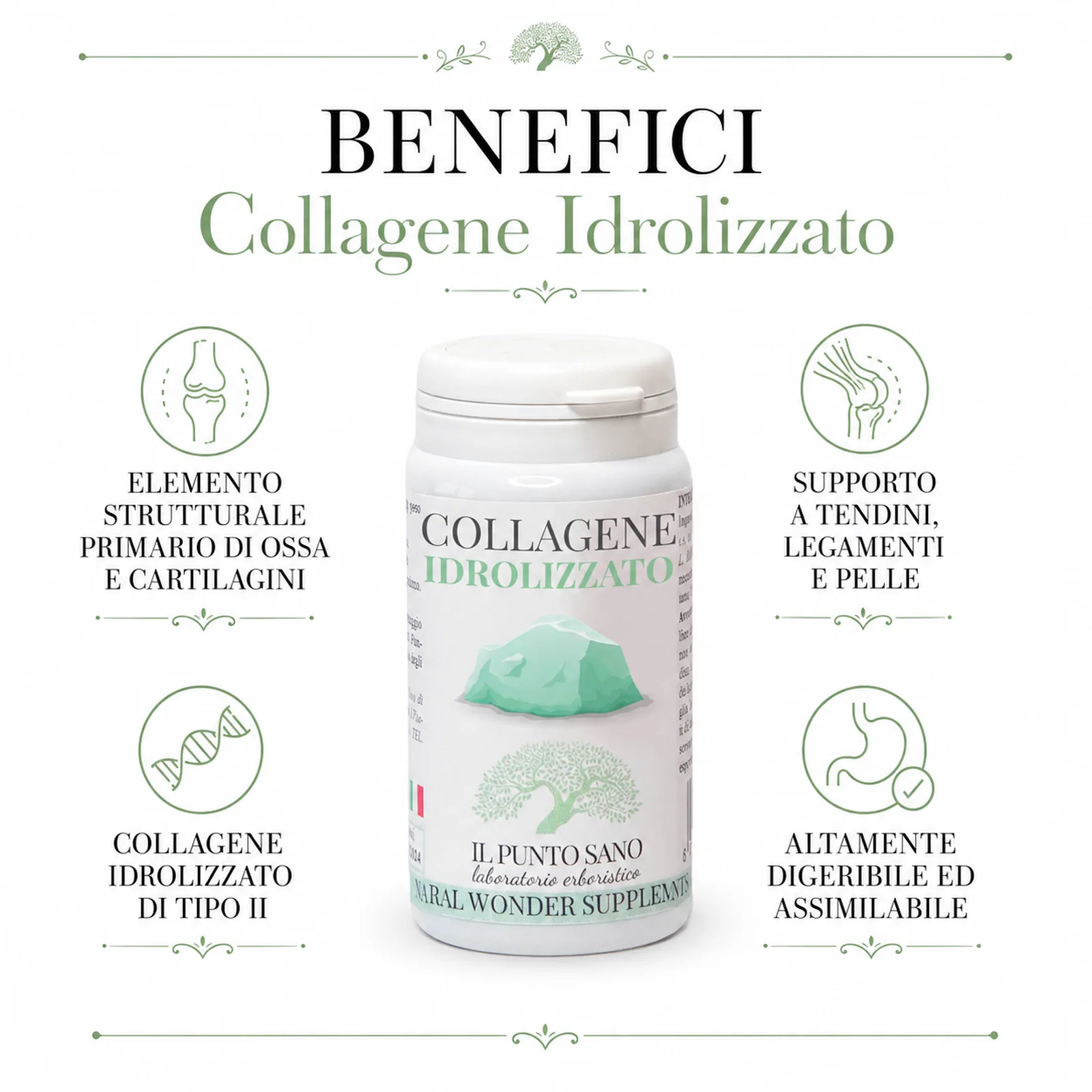




Hydrolysed Collagen
17,50 €
60 Capsules
An everyday step to care for your tissues.
Hydrolysed Collagen combines marine-source collagen with rosehip standardised for vitamin C. A convenient formula for anyone wishing to care for skin and cartilage, with vitamin C supporting normal collagen formation.
- ✓ Marine-source type II hydrolysed collagen.
- ✓ Vitamin C for normal skin and cartilage function.
- ✓ One capsule a day with a meal.
- Free shipping in Italy on orders of €70 or more
- Prepared within 1 working day + GLS transit of 2–4 working days
- Buy directly from our laboratory
- Free product advice from our biologist and nutritionist
The complete product information: ingredients, features and directions for use.


Marine Collagen: a supplement for joints, cartilage and skin, with background on arthritis and osteoarthritis
Marine Collagen is a food supplement based on marine-source hydrolysed collagen and rosehip standardised for vitamin C, formulated to provide natural support for joint wellbeing, cartilage function, skin nourishment and normal collagen formation.
Collagen is one of the most abundant structural proteins in the human body. It is found extensively in joints, cartilage, tendons, ligaments, bones and skin. Its presence is fundamental to maintaining connective tissue elasticity, strength, firmness and function.
Through numerous scientific studies and over 30 years working in natural supplements, we have seen the interest in collagen supplementation in approaches to joint degeneration, preventing cartilage loss and maintaining mobility.
Why choose Marine Collagen
- With marine-source hydrolysed collagen, made easier to digest by being broken down into peptides.
- Natural support for joints, cartilage, tendons, ligaments and skin.
- With rosehip standardised for vitamin C, which contributes to normal collagen formation.
- Support in approaches to arthritis, osteoarthritis, stiffness and joint discomfort.
- Anti-ageing support for maintaining skin tone, firmness and elasticity.
- A formula in an HPMC vegetable capsule.
- Marine origin, with a lower environmental impact than certain conventional animal sources.
- A formula with extracts.
Collagen supplementation in arthritis and osteoarthritis
Can a supplement be useful in arthritis and osteoarthritis? The rationale for collagen use arises from its structural role in joint tissues. Cartilage, tendons and ligaments contain collagen, proteoglycans and other molecules that allow joints to maintain elasticity, strength and the ability to absorb mechanical forces.
Collagen supplementation has shown multiple benefits for bones and joints, particularly in approaches to stiffness, reduced mobility, cartilage wear and joint discomfort. More noticeable benefits may be observed when collagen is combined with complementary products such as
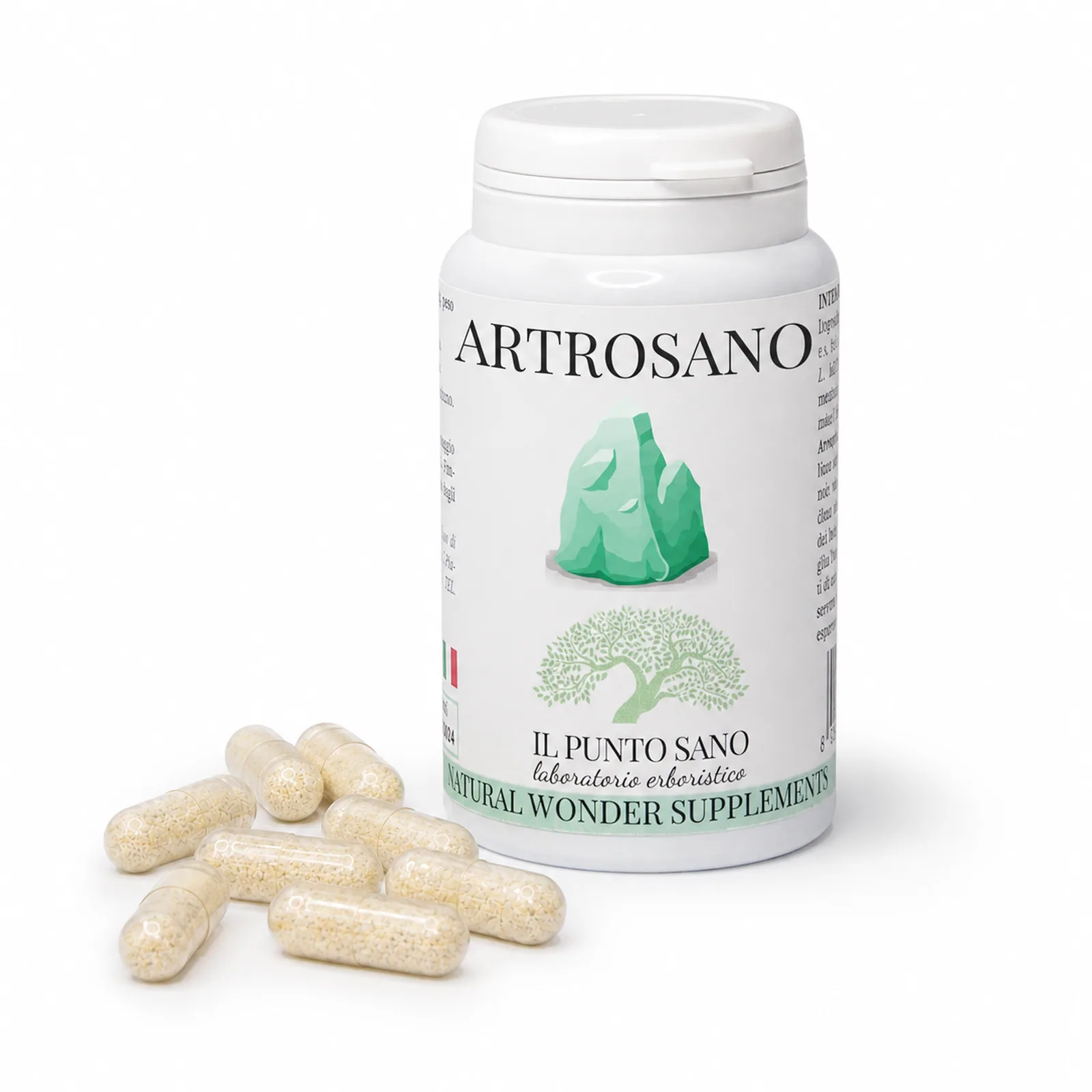
Artrosano and
In particular, collagen supplementation may provide support in approaches to joint pain associated with absent or reduced cartilage. Worn cartilage is one factor that can contribute to inflammation, joint friction, stiffness and pain.
Numerous studies have assessed how collagen and bioactive peptide supplementation may provide substrates that help maintain the cartilage cushion and address inflammation upstream. This information refers to biological plausibility and studies of constituents, rather than therapeutic indications replacing medical assessment.
Origin of hydrolysed collagen
Hydrolysed collagen commonly comes from bovine, porcine, poultry or marine sources. Our collagen comes from fish, a source valued for its quality profile, lower environmental impact than certain land-animal sources and lower microbiological risk.
This product is obtained by subjecting native collagen to thermal, acid, alkaline and/or enzymatic hydrolysis, to break it down into lower-molecular-weight protein fragments.
Breaking native collagen into peptide chains of varying lengths aims to aid digestion, dietary absorption and metabolic use. The resulting collagen peptides are more readily handled by the body than intact native protein.
In cosmetics, collagen fragmentation also produces smaller peptides used in topical products. For systemic support of skin, joints and connective tissues, however, oral supplementation remains one of the most interesting strategies.
Collagen, cartilage and approaches to degeneration
Cartilage degeneration increases with age and may affect everyone to varying degrees. Progressive cartilage loss can reduce a joint’s ability to move without friction, contributing to stiffness, pain, inflammation and functional limitation.
The considerable interest in hydrolysed collagen stems from this protein’s role in the body. Collagen is the primary structural component of bones, cartilage, tendons, ligaments and skin.
Hydrolysed collagen is therefore used to promote joint health, for example to support recovery after injury, connective tissues and approaches intended to prevent osteoarthritic and osteoporotic changes.
In medicine, collagen has also found applications in supporting tissue recovery, such as skin regeneration and burn recovery. These uses confirm collagen’s biological importance as a structural tissue protein.
Collagen and skin: anti-ageing support and firmness
Hydrolysed collagen’s uses extend beyond joint wellbeing. Collagen is also used for skin support in anti-ageing approaches.
Collagen concentrations in the skin tend to decline with ageing, reducing its fullness, elasticity and firmness. Over the years, skin may appear thinner, less toned and more prone to wrinkles.
As large protein fragments have difficulty crossing the epidermis, collagen is generally preferred in dedicated supplements rather than relying solely on cosmetics of uncertain usefulness. Cosmetics often use highly hydrolysed collagens or small precursor peptides such as Palmitoyl Pentapeptide-4.
Clinical skin treatments also use substances that stimulate collagen synthesis, as with retinoic acid. Oral collagen supplementation therefore fits into nutritional support for skin structure, firmness and approaches to preventing signs of ageing.
The role of vitamin C in collagen formation
The formula also contains rosehip dry extract standardised for vitamin C. Vitamin C is an essential cofactor for normal collagen formation and contributes to the normal function of skin, cartilage, bones, gums, teeth and blood vessels.
Vitamin C makes the formula more complete: collagen supplies structural peptides and amino acids, while vitamin C supports the normal physiological processes needed to form the body’s own collagen.
Marine Collagen therefore supplies hydrolysed collagen together with a plant ingredient that helps support physiological collagen synthesis in the body.
Who is Marine Collagen for?
Marine Collagen is intended for adults seeking natural support for:
- joint wellbeing and cartilage function;
- approaches to preventing joint degeneration;
- stiffness, joint discomfort and reduced mobility;
- approaches to arthritis, osteoarthritis and cartilage wear, always under medical supervision;
- the nourishment of skin, tendons, ligaments and connective tissues;
- anti-ageing support for skin elasticity and firmness;
- vitamin C supplementation for normal collagen formation;
- combining with Artrosano and Hyaluronic Acid in more comprehensive joint routines.
Ingredients and daily amounts
A formula with marine-source hydrolysed collagen and rosehip standardised for vitamin C
| Ingredient | Daily amount | Function / Notes |
|---|---|---|
| Type II hydrolysed collagen | 300 mg | Marine-source collagen; support for cartilage, skin and connective tissues |
| Rosehip dry extract ≥ 70% vitamin C
L-ascorbic acid |
182 mg | Vitamin C 159% NRV*; contributes to normal collagen formation |
| HPMC vegetable cellulose capsule | as required | Capsule shell |
*NRV = Nutrient Reference Value.
Directions for use
1 capsule a day, preferably with a meal, with water.
Formula characteristics
A formula with extracts.
The information on this website is provided solely for informational and educational purposes. It does not constitute therapeutic advice or replace medical advice. Food supplements are not medicines and are not intended to diagnose, prevent, treat or cure human disease. References to arthritis, osteoarthritis, cartilage, degeneration, skin, burns, anti-ageing, retinoic acid, injury recovery, joint pain and prevention of inflammation are descriptive, documentary and informational background on the biological plausibility and studied activities of collagen and vitamin C. They do not replace medical assessment, diagnosis or treatment.
Frequently asked questions
What pack size is available?
The pack contains 60 capsules.
How should I use the product?
Take 1 capsule a day, preferably with a meal, with water.




 English (UK)
 Italiano
Reviews
There are no reviews yet.