
Free advice from our biologist and nutritionist. Learn More

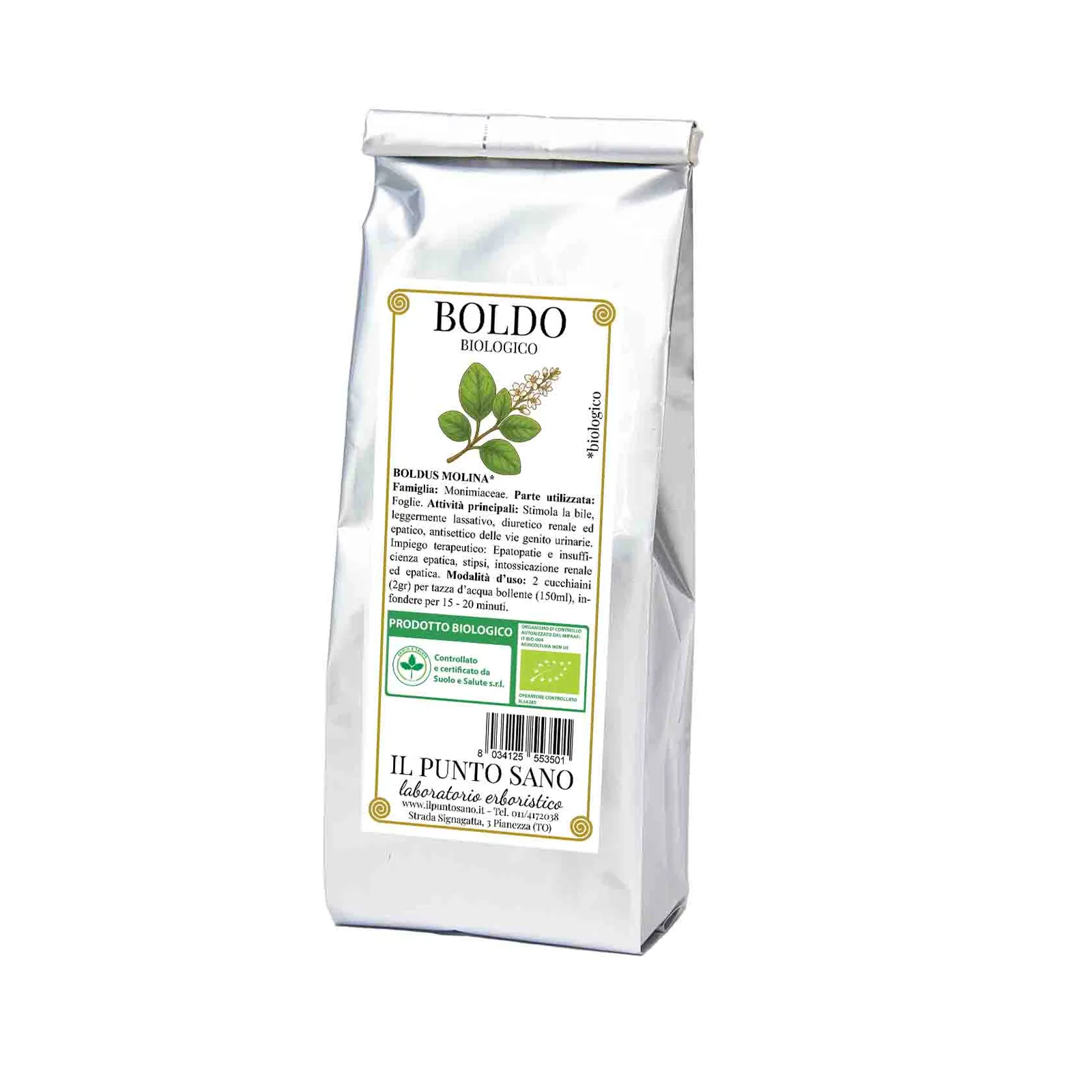



Organic Boldo Herbal Tea
10,50 €
60 g
Boldo for lovers of bitter digestive tradition.
Il Punto Sano Boldo offers boldo leaves: a plant with distinctive herbal character, dedicated to digestive function.
- ✓ Boldo leaves.
- ✓ A plant with distinctive herbal character for digestive function.
- ✓ Complete preparation and directions always available.
- Free shipping in Italy on orders of €70 or more
- Prepared within 1 working day + GLS transit of 2–4 working days
- Buy directly from our laboratory
- Free product advice from our biologist and nutritionist
The complete product information: features, composition and directions for use.


Boldo leaves: a digestive and cleansing tea for liver, bile and a sluggish bowel
Il Punto Sano Boldo is a herbal tea based on the leaves of Peumus boldus Molina, an aromatic plant belonging to the Monimiaceae, traditionally used to support digestive function, liver function, bile secretion and the body’s physiological cleansing processes.
Boldo has an intense, aromatic, bitter character, valued particularly in digestive and cleansing teas. Its leaves are traditionally used in herbal approaches to the liver, bile, slow digestion, heaviness after meals and a sluggish bowel.
Our Boldo tea is supplied as selected leaves with a herbal cut suited to infusion. An authentic preparation without artificial flavourings, colourings or preservatives, for anyone seeking a genuine herb with bold taste and functional character.
Why choose Il Punto Sano Boldo
- Selected leaves of Peumus boldus, a herb in the Monimiaceae family.
- Supports digestive function, particularly after large or rich meals.
- Promotes liver function and the body’s physiological cleansing processes.
- Traditionally used to stimulate bile and accompany fat digestion.
- Useful in teas for a sluggish bowel through its traditionally mild laxative profile.
- Supports fluid drainage and cleansing, particularly during seasonal changes.
- An aromatic, bitter, balsamic taste, ideal in liver and digestive blends.
- No artificial flavourings: authentic, natural taste without sweeteners.
Peumus boldus: Boldo botany
Peumus boldus Molina, commonly known as Boldo, is an evergreen tree or shrub native to South America, particularly Chile and the Andean regions. It belongs to the Monimiaceae.
It has leathery, aromatic, grey-green leaves with an intense, distinctive fragrance. The leaves are the part used in herbal practice and form the traditional herbal material.
Older herbal references may also call it “Boldus Molina”, but the more accurate, recognised botanical name today is Peumus boldus Molina. The leaves remain the part used, rich in aromatic constituents and bitter substances.
At a glance
Il Punto Sano Boldo is a herbal tea made from the leaves of Peumus boldus, traditionally used for digestive function, liver function, bile, cleansing, fluid drainage and a sluggish bowel.
Boldo and South American traditional use
Boldo is deeply connected to South American folk tradition, particularly Chilean. Its aromatic leaves were infused after meals, especially when digestion was slow, the liver felt burdened or there was general heaviness.
European herbal practice mainly adopted Boldo as a bitter, aromatic, choleretic plant for liver and digestive support. It is often found in blends for liver, bile, fat digestion and seasonal cleansing.
Its intense bitterness makes it a functional herb with strong, recognisable character, suited to those seeking an authentic herbal infusion.
Boldo for the liver, bile and fat digestion
Boldo is traditionally used to support liver function and bile production. Bile is fundamental to fat digestion and digestive balance after rich or heavy meals.
Boldo tea may be useful when digestion is slow, a meal feels as though it is sitting in the stomach or fatty, rich or large meals leave heaviness.
For a more comprehensive liver and digestive blend, combine with Dandelion, Artichoke, Milk Thistle, Fumitory, Turmeric, Rosemary, Bitter Orange or Mint.
Boldo, slow digestion and gastrointestinal spasms
Boldo leaves are also traditionally used to relieve functional digestive discomfort such as slow digestion, bloating and minor gastrointestinal spasms.
Its bitter, aromatic profile is interesting when the stomach feels sluggish, digestion is slow or the bowel tends to contract after meals.
Combine in digestive teas with carminative and antispasmodic herbs such as Fennel, Green Anise, Lemon Balm, Chamomile, Mint, Angelica or Bitter Orange.
Boldo and a sluggish bowel
Herbal tradition also considers Boldo mildly laxative, particularly through its connection with bile, digestion and liver function. It is not a drastic laxative, but a plant that may accompany a sluggish bowel when transit delay is associated with slow digestion and heaviness.
It is particularly interesting in cleansing teas that aim to support liver, bile and bowel regularity more broadly.
For more comprehensive support, combine with Dandelion, Mallow, Psyllium, Fennel, Liquorice, Alder Buckthorn or Senna, selecting according to individual sensitivity.
Boldo, fluid drainage and the urinary tract
Boldo is also traditionally described as supporting kidney and liver drainage. In an integrated herbal perspective, the liver, kidneys, bowel and bile contribute together to physiological elimination processes.
Boldo can therefore be included in seasonal cleansing teas, particularly for digestion, fluid drainage and general lightness.
For fluid drainage, combine with Birch, Orthosiphon, Hawkweed, Dandelion, Horsetail or Goldenrod.
Boldo and the genitourinary tract
Traditional accounts also attribute a genitourinary antiseptic profile to Boldo. Here this is understood as traditional background, with the product’s role focused on urinary tract function and physiological cleansing rather than antiseptic treatment.
Urinary burning, recurring infections, pain, fever, blood in the urine or persistent symptoms always require medical advice. This tea may accompany urinary wellbeing but does not replace diagnosis or specific treatment.
For a urinary tract blend, Boldo may be combined with Bearberry, Goldenrod, Horsetail, Couch Grass, Corn Silk, Mallow or Marshmallow, always considering individual circumstances.
Characteristic Boldo constituents
The leaves of Peumus boldus contain characteristic alkaloids, including boldine, flavonoids, tannins, essential oil, aromatic substances and bitter compounds. Boldine is among the plant’s best-known constituents and contributes to its liver and digestive reputation.
Essential oil contributes to Boldo’s intense aroma, while bitter substances support the traditional digestive and choleretic profile.
These aromatic components and important active substances mean Boldo should be used thoughtfully, avoiding prolonged use or excessive amounts.
Boldo tea’s aromatic profile
Boldo tea tastes bitter, aromatic, herbal, slightly camphoraceous and balsamic. Its character is bold, very different from sweet or floral teas.
It leaves an intense, persistent note typical of liver and digestive herbs. Strong when used alone, it pairs well with citrusy, balsamic or digestive plants that round out its profile.
It combines well with Mint, Bitter Orange, Dandelion, Artichoke, Fennel, Lemon Balm, Chamomile, Liquorice, Rosemary and Lemon peel.
Il Punto Sano quality: selected leaves, natural aroma and herbal cut
Il Punto Sano teas start with carefully selected herbal raw materials, with attention to freshness, natural aroma, colour, cut quality and infusion performance.
Boldo leaves are selected for aromatic quality, a clean cut and recognisable fragrance. Good raw material should retain an intense herbal, balsamic note without dull or dusty odours.
We use no artificial flavourings, colourings or masking sweeteners. The taste is genuine Boldo: bitter, aromatic and natural. The packaging protects against light, air and moisture, helping preserve freshness and quality over time.
Who is Boldo for?
Il Punto Sano Boldo is intended for adults seeking a natural tea for:
- slow or difficult digestion;
- heaviness after rich or fatty meals;
- support for liver function;
- support for bile production and flow;
- a sluggish bowel associated with slow digestion;
- seasonal cleansing approaches;
- fluid drainage and general lightness;
- a bitter, aromatic, traditional liver and digestive herb.
Herbal information
Peumus boldus Molina – leaves
| Botanical name | Peumus boldus Molina |
| Common name | Boldo |
| Family | Monimiaceae |
| Part used | Leaves |
| Characteristic constituents | Boldine, alkaloids, flavonoids, tannins, essential oil, bitter substances and aromatic constituents |
| Traditional profile | Liver and digestive support, choleretic, cleansing, mildly laxative, fluid-drainage and bitter-aromatic profile |
| Infusion taste | Bitter, aromatic, herbal, balsamic, slightly camphoraceous and persistent |
Directions for use
Prepare an infusion with 2 teaspoons of Boldo leaves, approximately 2 g, for a cup of boiling water measuring 150 ml. Leave to infuse for 15–20 minutes, preferably covering the cup. Strain and enjoy according to your needs and the label directions.
Herbal tip
Boldo has an intense taste: for a more harmonious liver and digestive tea, combine with Mint, Dandelion, Artichoke, Fennel, Bitter Orange or Lemon Balm. It is particularly suited to blends after large meals or during seasonal cleansing routines.
Warnings: Do not exceed the recommended amounts. Keep out of the reach of children. Intended for adults. Avoid prolonged use or high amounts. Do not use during pregnancy, breastfeeding or childhood. Do not use if allergic or hypersensitive to Boldo or any component. Do not use with bile duct obstruction, cholangitis, gallstones, gallbladder disease, liver disease, liver failure, hepatitis, gastroduodenal ulcers, significant gastritis, significant kidney disease or persistent gastrointestinal complaints. With medication, anticoagulants, antiplatelets, hepatoprotective treatments, liver medicines or particular medical conditions, seek medical advice before use. Do not take Boldo essential oil internally. This website’s information is provided for informational and herbal purposes and does not replace medical advice.
Frequently asked questions
Which part of the plant is used?
The plant part listed in the product information is: Leaves.
How should I prepare this herbal tea?
Prepare an infusion with 2 teaspoons of Boldo leaves , approximately 2 g , for a cup of boiling water measuring 150 ml . Leave to infuse for 15–20 minutes , preferably covering the cup. Strain and enjoy according to your needs and the label directions.



 English (UK)
 Italiano
Reviews
There are no reviews yet.