
Free advice from our biologist and nutritionist. Learn More

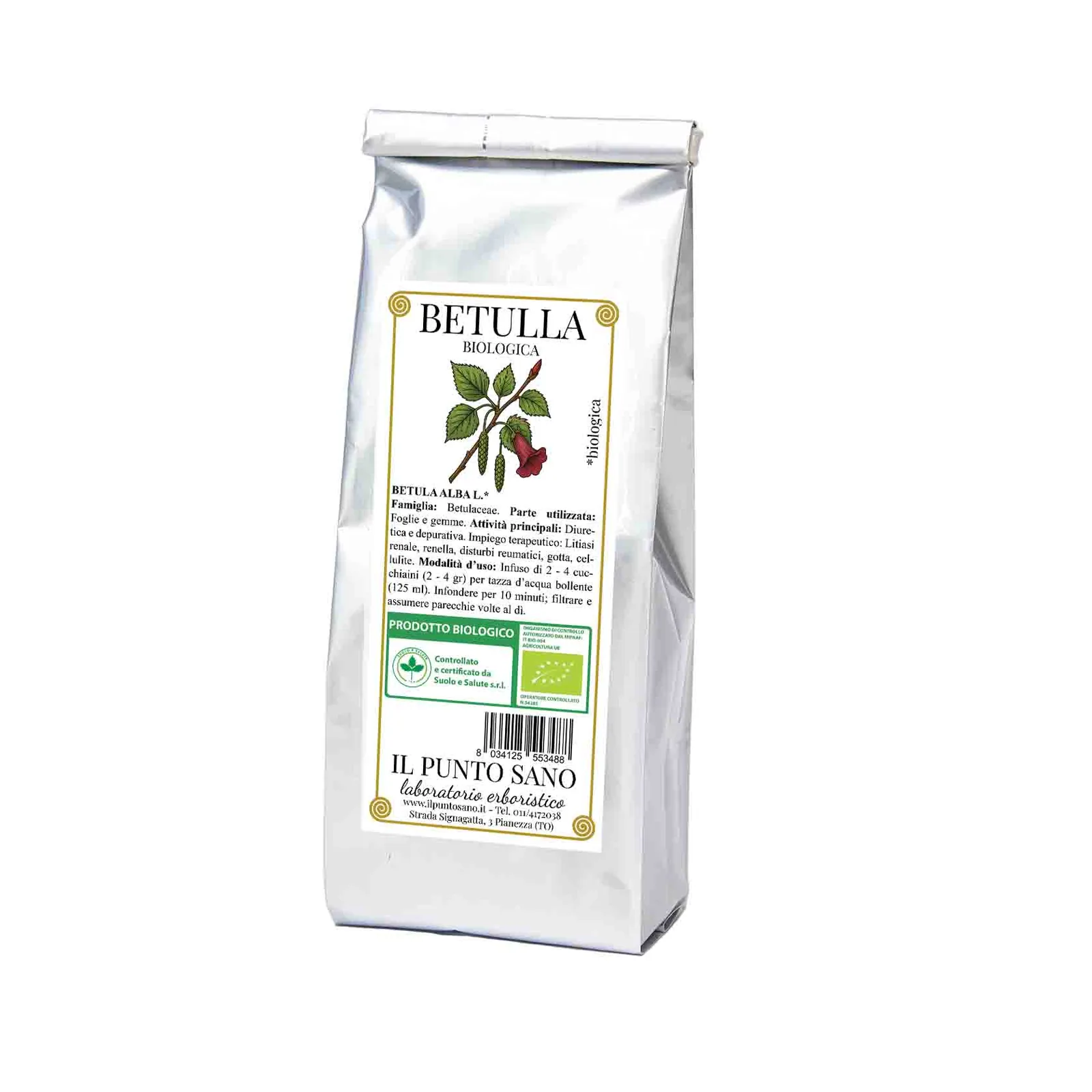



Organic Birch Herbal Tea
7,80 €
60 g
Birch for your fluid-drainage tea break.
Il Punto Sano Birch offers birch leaves and buds, a plant from herbal tradition for fluid drainage and the urinary tract.
- ✓ Birch leaves and buds.
- ✓ A traditional herb for fluid drainage and the urinary tract.
- ✓ Complete preparation and directions always available.
- Free shipping in Italy on orders of €70 or more
- Prepared within 1 working day + GLS transit of 2–4 working days
- Buy directly from our laboratory
- Free product advice from our biologist and nutritionist
The complete product information: features, composition and directions for use.


Betula alba: a fluid-drainage and cleansing tea for body fluids, the urinary tract and joint wellbeing
Il Punto Sano Betula Alba is a herbal tea based on Birch leaves and buds, a plant belonging to the Betulaceae, traditionally used to promote drainage of body fluids, support urinary tract function and accompany the body’s natural cleansing functions.
Birch is highly valued in herbal approaches to fluid retention, bloating, seasonal cleansing and joint wellbeing. The leaves and buds contain flavonoids and other characteristic constituents contributing to its fluid-drainage and cleansing profile.
This tea has a light, herbal, gently green taste, suited to drinking throughout the day, particularly when you tend to retain fluid or feel heavy.
Why choose Il Punto Sano Betula Alba
- Selected Birch leaves and buds, a herb in the Betulaceae family.
- Promotes drainage of body fluids, useful during fluid retention and heaviness.
- Supports urinary tract function and physiological urinary flushing.
- Supports the body’s cleansing functions, particularly during seasonal changes.
- Traditionally used in approaches to cellulite and fluid retention alongside balanced nutrition and movement.
- Of interest for joint wellbeing, particularly in cleansing and fluid-drainage programmes.
- A delicate herbal taste, suited to drinking throughout the day.
- No artificial flavourings: authentic, natural taste without sweeteners.
Betula alba: the plant’s botany
Betula alba L. is a historical name often used in herbal practice for White Birch. Modern botanical classification most often recognises Betula pendula Roth and Betula pubescens Ehrh., both belonging to the Betulaceae.
Birch is an elegant, bright-looking tree, easily recognised by its thin, pale whitish bark peeling in sheets. It grows in temperate and cold climates, woodland, mountain areas and cool soils, often as a pioneer capable of colonising poor or disturbed ground.
Herbal practice mainly uses the leaves, rich in flavonoids, and in some preparations the buds and sap. This tea combines leaves and buds with a profile focused on fluid drainage, the urinary tract and cleansing.
At a glance
Il Punto Sano Betula Alba is a herbal tea made from Birch leaves and buds, traditionally used for drainage of body fluids, urinary tract function, cleansing, fluid retention, cellulite and joint wellbeing.
Birch and traditional cleansing use
Birch symbolises lightness, purification and renewal. Nordic and European traditions associate it with spring, the body’s fresh start and cleansing routines after winter.
Herbal practice mainly uses it in fluid-drainage and cleansing teas, supporting elimination of fluids and metabolic waste through the urinary tract.
It suits seasonal changes, periods of greater bloating or heaviness and natural approaches seeking bodily support from a simple, light everyday tea.
Birch for fluid drainage and fluid retention
Birch’s principal use is drainage of body fluids. This tea can be included in programmes for fluid retention, bloating, heaviness and fluid accumulation, particularly alongside good hydration and an active lifestyle.
Birch is herbal support within a broader approach: balanced nutrition, reduced salt, regular movement and adequate water intake remain fundamental.
For more comprehensive fluid-drainage support, combine with Orthosiphon, Hawkweed, Horsetail, Couch Grass, Corn Silk, Dandelion or Goldenrod.
Birch and urinary tract function
Birch leaves are traditionally used to support urinary tract function. Increased urine flow promotes physiological urinary tract flushing and contributes to natural cleansing and fluid-drainage approaches.
Birch is often included in kidney and urinary tract teas when a light, fluid-drainage plant that combines well with other herbs is wanted.
With kidney stones, colic, pain, blood in the urine, persistent burning, fever or recurring urinary infections, this tea does not replace medical assessment and should be used only after professional advice.
Birch, urinary gravel and cleansing
Herbal tradition often cites Birch in approaches to urinary gravel and a tendency to mineral deposits. This use comes from its fluid-drainage profile and support for urine flow.
Its role is physiological drainage and urinary flushing, rather than treatment for kidney stones.
For urinary wellbeing, combine with Couch Grass, Corn Silk, Horsetail, Goldenrod, Orthosiphon or Stonebreaker, always considering individual circumstances.
Birch, cellulite and heavy legs
Its fluid-drainage profile makes Birch popular in approaches to cellulite, fluid retention and heavy legs. Its role is to support fluid drainage alongside attention to nutrition, movement and microcirculation.
Birch tea may be useful during general bloating, heaviness, fluid-laden tissues or a tendency to retain fluid, particularly with consistent use and good daily habits.
For a more comprehensive blend, combine with Hawkweed, Orthosiphon, Centella, Butcher’s Broom, Sweet Clover, Horsetail or Dandelion, according to the herbal approach’s purpose.
Birch and joint wellbeing
Birch is also traditionally used in approaches focused on joint wellbeing. This relates to its fluid-drainage and cleansing action, particularly when addressing metabolic context and fluid elimination.
In joint teas, combine Birch with Nettle, Ash, Horsetail, Blackcurrant, Devil’s Claw, Boswellia or Meadowsweet for targeted joint-comfort and musculoskeletal-function formulas.
Gout, persistent joint pain, swelling, redness or restricted movement require medical advice. This tea offers physiological support and does not replace diagnosis or treatment.
Characteristic Birch constituents
Birch leaves contain a phytocomplex rich in flavonoids, including hyperoside, quercetin and other flavone derivatives, alongside tannins, phenolic acids, saponins, mineral salts and small amounts of essential oil.
Flavonoids are characteristic constituents contributing to the plant’s fluid-drainage and cleansing profile. The buds complete its herbal character through their connection with gemmotherapy tradition.
A gentle yet practical plant, Birch has a milder taste than bitter herbs and suits everyday teas, particularly when aiming to increase fluid intake and support drainage.
Birch tea’s aromatic profile
Birch tea tastes herbal, light, fresh, gently green and only mildly bitter. It is enjoyable even for those who dislike intense or strongly bitter teas.
Clean and simple on the palate, it has a green, slightly woody note. It is easy to enjoy throughout the day, including several cups according to the directions.
It pairs well with Dandelion, Nettle, Horsetail, Hawkweed, Couch Grass, Fennel, Mint, Lemon, Liquorice and Goldenrod.
Il Punto Sano quality: selected leaves and buds, freshness and herbal cut
Il Punto Sano teas start with carefully selected herbal raw materials, with attention to freshness, natural aroma, colour, herbal cut and infusion performance.
Birch leaves and buds are selected for quality, a clean cut and preservation of their natural botanical profile. Good Birch should retain a fresh, green, slightly woody aroma without dull or dusty odours.
We use no artificial flavourings, colourings or masking sweeteners. The plant’s taste is genuine: light, herbal and natural. The packaging protects against light, air and moisture, helping preserve freshness and quality over time.
Who is Betula Alba for?
Il Punto Sano Betula Alba is intended for adults seeking a natural tea for:
- fluid retention and bloating;
- drainage of body fluids;
- support for urinary tract function;
- seasonal cleansing programmes;
- cellulite and fluid-related heaviness;
- joint wellbeing and cleansing routines;
- a light tea to drink throughout the day;
- a traditional, simple, well-tolerated fluid-drainage plant.
Herbal information
Betula alba L. – leaves and buds
| Botanical name | Betula alba L., historical herbal name; related modern species: Betula pendula Roth and Betula pubescens Ehrh. |
| Family | Betulaceae |
| Part used | Leaves and buds |
| Characteristic constituents | Flavonoids, hyperoside, quercetin, tannins, phenolic acids, saponins, mineral salts and natural aromatic constituents |
| Traditional profile | Diuretic, fluid-drainage and cleansing profile, urinary tract support, joint wellbeing and fluid retention |
| Infusion taste | Herbal, light, fresh, green, delicate and only mildly bitter |
Directions for use
Prepare an infusion with 2–4 teaspoons of Betula Alba, approximately 2–4 g, for a cup of boiling water measuring 125 ml. Leave to infuse for 10 minutes, preferably covering the cup. Strain and enjoy several times a day according to your needs and the label directions.
Herbal tip
Birch is ideal throughout the day in fluid-drainage routines. For a more comprehensive blend, combine with Dandelion, Orthosiphon, Hawkweed, Horsetail, Couch Grass or Corn Silk. For cellulite and fluid-related heaviness, it also pairs well with Centella, Butcher’s Broom and Sweet Clover.
Warnings: Do not exceed the recommended amounts. Keep out of the reach of children. Intended for adults. Do not use if allergic or hypersensitive to Birch, Betulaceae, birch pollen or any component. Do not use for oedema caused by impaired heart or kidney function, kidney failure, heart failure, serious kidney disease or urinary tract obstruction. During pregnancy, breastfeeding or childhood, or with diuretics, anticoagulants, blood-pressure medicines, diabetes, kidney stones, renal colic, gout, urinary infections, persistent urinary symptoms, fever, blood in the urine, lower-back pain or particular medical conditions, seek medical advice before use. Maintain adequate fluid intake during use. This website’s information is provided for informational and herbal purposes and does not replace medical advice.
Frequently asked questions
Which part of the plant is used?
The plant part listed in the product information is: Leaves and buds.
How should I prepare this herbal tea?
Prepare an infusion with 2–4 teaspoons of Betula Alba , approximately 2–4 g , for a cup of boiling water measuring 125 ml . Leave to infuse for 10 minutes , preferably covering the cup. Strain and enjoy several times a day according to your needs and the label directions.


 English (UK)
 Italiano
Reviews
There are no reviews yet.