
Free advice from our biologist and nutritionist. Learn More

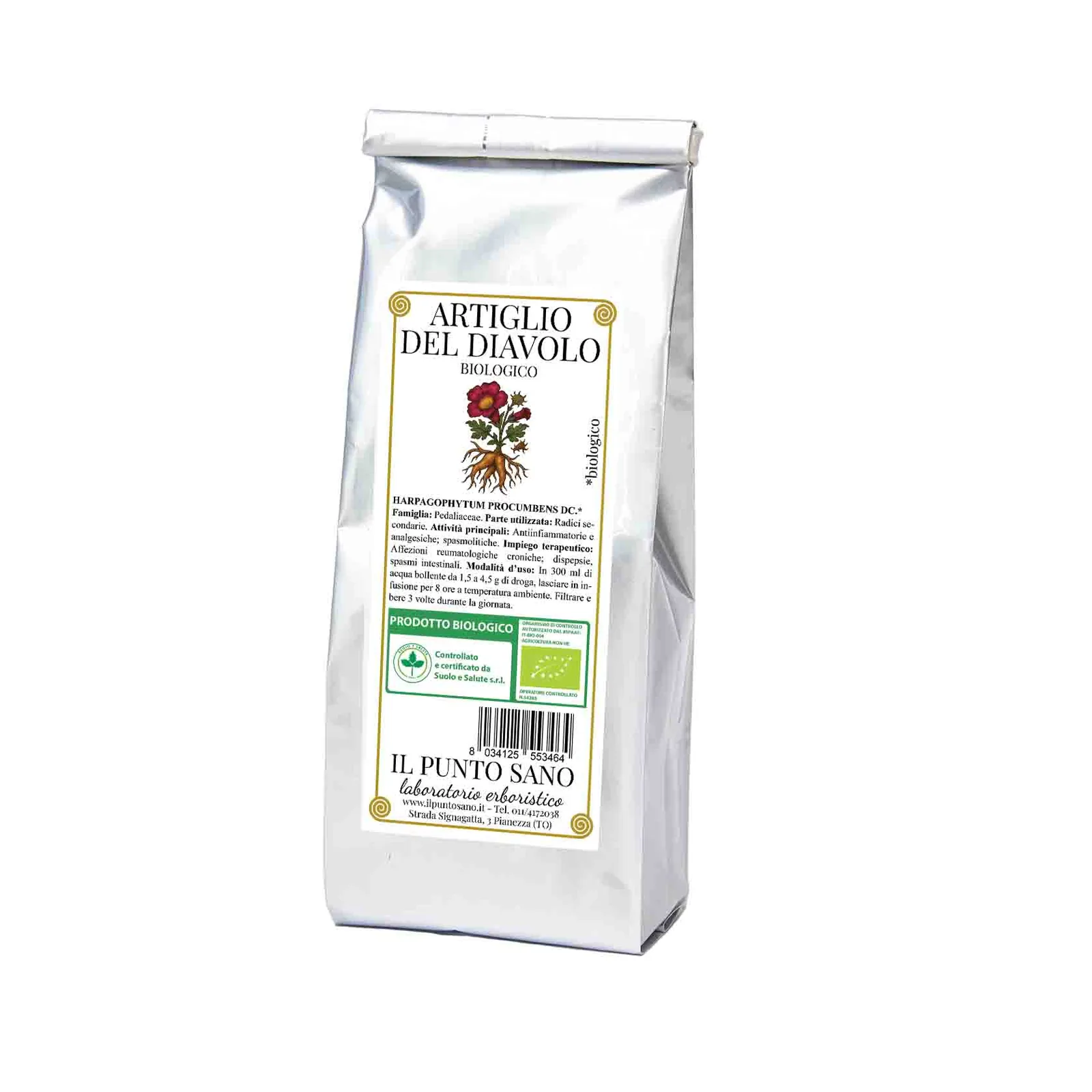



Organic Devil's Claw Root Herbal Tea
11,60 €
60 g
A traditional root for your mobility routine.
Devil’s Claw Root by Il Punto Sano provides roots of a herb dedicated to joint function and digestive wellbeing.
- ✓ Devil’s claw roots.
- ✓ A herb dedicated to joint function and digestive wellbeing.
- ✓ Full preparation and directions always available.
- Free shipping in Italy on orders of €70 or more
- Prepared within 1 working day + GLS transit of 2–4 working days
- Buy directly from our laboratory
- Free product advice from our biologist and nutritionist
Full product information: features, ingredients and directions for use.


Devil’s Claw: herbal tea for joints, digestion and musculoskeletal comfort
Devil’s Claw by Il Punto Sano is a herbal tea based on secondary roots of Harpagophytum procumbens DC., a plant belonging to the Pedaliaceae, traditionally used to support joint wellbeing, musculoskeletal comfort and digestive function.
Also known as Harpagophytum or Devil’s Claw, it is among African and European herbal tradition’s best-known plants for joint support. Its tuberous secondary roots contain characteristic bitter substances, including harpagoside, contributing to the plant’s functional profile.
Its taste is bitter, earthy and intense: an authentic herbal tea for those seeking a traditional, unflavoured plant. Alongside joint wellbeing, Devil’s Claw is valued as a bitter tonic for slow digestion, bloating and poor appetite.
Why choose Devil’s Claw by Il Punto Sano
- Selected secondary roots of Harpagophytum procumbens, a herb in the Pedaliaceae family.
- Supports joint function and musculoskeletal comfort.
- Traditionally used for mild joint aches and functional stiffness.
- Support during joint tension, particularly when movement feels less fluid.
- A bitter digestive plant, also relevant to slow digestion, bloating and poor appetite.
- Contains characteristic iridoids, including harpagoside and harpagide.
- Slow traditional preparation, with a long infusion at room temperature.
- No artificial flavourings: an authentic, bitter, natural, unsweetened taste.
Harpagophytum procumbens: the botany of Devil’s Claw
Harpagophytum procumbens DC. is a perennial herb native to arid southern African regions, particularly desert and semi-desert areas of the Kalahari and Namibia. It belongs to the Pedaliaceae.
It produces long trailing stems, lobed leaves and striking red-purple flowers. “Devil’s Claw” refers to woody fruits with curved hooks that catch on animals’ fur, helping disperse seeds.
Herbal practice uses the tuberous secondary root, rather than the fruit. These storage roots are harvested, cut and dried for traditional teas, extracts and herbal preparations.
At a glance
Devil’s Claw by Il Punto Sano is a herbal tea made with secondary roots of Harpagophytum procumbens, traditionally used for joint function, musculoskeletal comfort, slow digestion, bloating and poor appetite.
Devil’s Claw and traditional use
Devil’s Claw is deeply associated with southern African tradition, where local communities used it in various herbal preparations. In Europe, it became known mainly for joint and musculoskeletal wellbeing.
Its bitter, intense profile also gives it a digestive tradition. Like many bitter herbs, it has been used to support appetite and digestive function when the stomach feels sluggish or unresponsive.
Its herbal value lies in the root, bitterness and long history of use, with a strong character rather than sweetness or fragrance.
Devil’s Claw for joints and musculoskeletal comfort
Devil’s Claw is widely used in natural formulas dedicated to joint function, stiffness and musculoskeletal comfort. Tradition associates it with periods when joints, back, knees, shoulders or hands feel more sensitive or less mobile.
It is particularly relevant when support for daily movement, joint flexibility and a greater sense of ease during stiffness is desired.
It can feature in joint-wellbeing routines alongside Boswellia, Turmeric, Willow, Ash, Blackcurrant, Horsetail or Nettle, according to the blend’s purpose.
Devil’s Claw and mild joint aches
European herbal practice knows Devil’s Claw root for traditional use in mild joint aches and non-acute musculoskeletal discomfort. It is particularly valued when movement feels less fluid or stiffness tends to recur.
It does not replace medical assessment for persistent pain, swelling, redness, fever, injury or significantly restricted movement. Always seek medical advice in these circumstances.
Within a herbal routine, it offers targeted traditional support for adults seeking a distinctive plant for joint comfort.
Devil’s Claw for digestion, bloating and appetite
Alongside joint applications, Harpagophytum has a bitter-tonic digestive profile. Bitter root constituents stimulate bitter taste perception and belong to the tradition of plants used for appetite and digestion.
The tea may suit slow digestion, heaviness, temporarily reduced appetite or after-meal bloating. Here, Devil’s Claw is used as a bitter herb rather than simply an aromatic drink.
For broader digestive support, combine with Angelica, Bitter Orange, Lemon Balm, Fennel, Mint or Anise to round out the taste and gastrointestinal profile.
Devil’s Claw and intestinal spasms
Herbal tradition also attributes a spasmolytic profile, relevant when slow digestion, bloating and abdominal tension accompany mild functional spasms or a contracted feeling.
Its bitter taste and long water preparation may feature in a targeted tea alongside more aromatic carminatives such as Lemon Balm, Fennel, Caraway, Anise or Chamomile.
This creates a broader preparation when both digestive function and abdominal comfort are the aim.
Characteristic constituents of Harpagophytum
The secondary roots of Harpagophytum procumbens contain a phytocomplex rich in iridoids, including harpagoside, harpagide and procumbide. Harpagoside is among the markers most used to characterise the quality of Devil’s Claw herbal material and extracts.
The root also contains sugars, phytosterols, flavonoids, phenolic acids and bitter substances contributing to its overall profile.
Bitterness is important, indicating the bitter-tonic constituents and making Harpagophytum distinctive compared with more common aromatic teas.
Devil’s Claw tea: aromatic profile
Devil’s Claw tea has a bitter, earthy, root-like, dry and persistent taste. An intense traditional preparation for those seeking a functional herb, rather than a sweet, fragrant drink.
Its distinct bitter note can be softened with aromatic or digestive plants. For a more pleasant taste, combine with Bitter Orange, Liquorice, Mint, Lemon Balm, Fennel or Ginger.
People who enjoy bitter plants and authentic herbal teas will appreciate a strong character consistent with the root’s traditional use.
Il Punto Sano quality: selected secondary roots and traditional preparation
Il Punto Sano teas begin with careful selection of medicinal raw materials, focusing on freshness, cut quality, preparation performance and preservation of the phytocomplex.
Devil’s Claw secondary roots are selected for quality, cleanliness and correct botanical identification. Good roots have distinct bitterness and a recognisable profile, important signs of authentic, well-stored herbal material.
We use no artificial flavourings, colourings or masking sweeteners. The taste is authentic Harpagophytum: bitter, root-like and natural. Packaging protects it from light, air and moisture to preserve quality and freshness over time.
Who is Devil’s Claw for?
Devil’s Claw by Il Punto Sano is intended for adults seeking a natural tea for:
- Joint-function support;
- joint stiffness and less fluid movement;
- musculoskeletal comfort;
- mild functional joint aches;
- slow digestion and poor appetite;
- bloating, flatulence and abdominal tension;
- functional intestinal spasms;
- a bitter, intense, traditional herb.
Herbal profile
Harpagophytum procumbens DC. – secondary roots
| Botanical name | Harpagophytum procumbens DC. |
| Family | Pedaliaceae |
| Plant part used | Tuberous secondary roots |
| Characteristic constituents | Iridoids, harpagoside, harpagide, procumbide, flavonoids, phytosterols, phenolic acids and bitter substances |
| Traditional profile | Joint support, musculoskeletal comfort, bitter-tonic, digestive, traditionally spasmolytic and appetite-supporting |
| Taste of the preparation | Bitter, earthy, root-like, dry, intense and persistent |
Directions for use
Use 1.5 to 4.5 g Devil’s Claw root to 300 ml boiling water. Leave to infuse for approximately 8 hours at room temperature. Strain and drink in 3 portions throughout the day.
Herbal advice
Devil’s Claw needs slow preparation: the long infusion helps extract the root’s constituents. To soften the bitterness, combine with Bitter Orange, Liquorice, Mint, Lemon Balm or Fennel.
Warnings: Do not exceed recommended amounts. Keep out of reach of children. Intended for adults. Do not use during pregnancy or breastfeeding. Do not use with allergy or hypersensitivity to Devil’s Claw or any constituent. Avoid with gastric or duodenal ulcers, significant gastritis, marked reflux, gallstones, bile-duct obstruction, liver or kidney disease or significant gastrointestinal complaints. Seek medical advice before use with medicines, anticoagulants or antiplatelets, anti-inflammatories, diabetes, hypertension, heart disease, persistent joint pain, joint swelling, redness, fever, injury or particular medical circumstances. Consult a doctor if joint complaints persist beyond 4 weeks or digestive complaints beyond 2 weeks. Information on this website is provided for herbal and informational purposes and does not replace medical advice.
Frequently asked questions
Which part of the plant is used?
The plant part listed in the product information is: Tuberous secondary roots.
How should I prepare this herbal tea?
Use 1.5 to 4.5 g Devil’s Claw root to 300 ml boiling water . Leave to infuse for approximately 8 hours at room temperature. Strain and drink in 3 portions throughout the day .


 English (UK)
 Italiano
Reviews
There are no reviews yet.