
Free advice from our biologist and nutritionist. Learn More

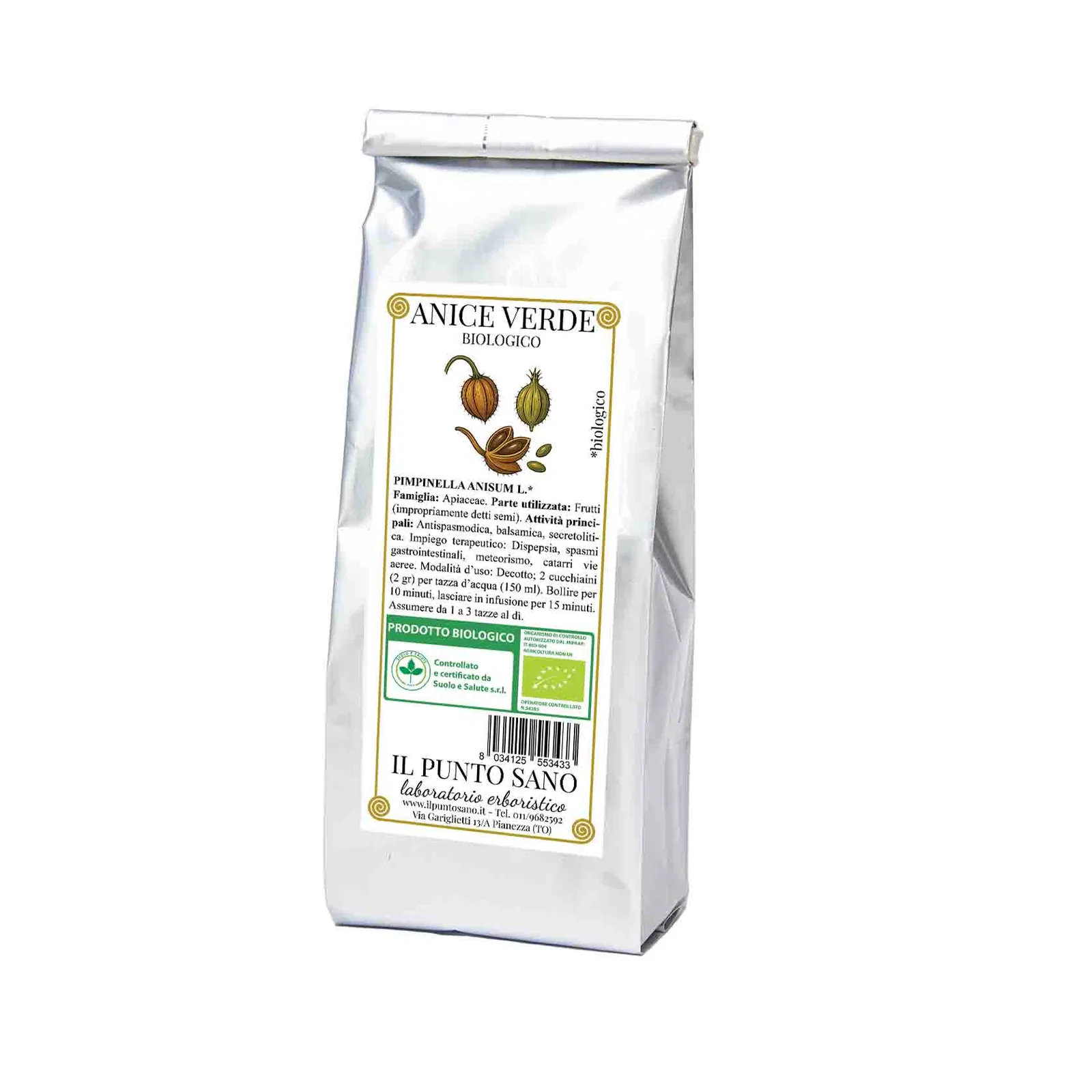



Organic Green Anise Herbal Tea
9,50 €
100 g
Green anise’s sweet fragrance after meals.
Il Punto Sano Green Anise offers green anise fruits, an aromatic plant from digestive and carminative herbal tradition.
- ✓ Green anise fruits.
- ✓ An aromatic plant from digestive and carminative herbal tradition.
- ✓ Complete preparation and directions always available.
- Free shipping in Italy on orders of €70 or more
- Prepared within 1 working day + GLS transit of 2–4 working days
- Buy directly from our laboratory
- Free product advice from our biologist and nutritionist
The complete product information: features, composition and directions for use.


Green Anise: a digestive, carminative, balsamic tea with Pimpinella anisum fruits
Il Punto Sano Green Anise is a herbal tea based on the fruits of Pimpinella anisum L., often incorrectly called seeds, from an aromatic plant belonging to the Apiaceae. It is traditionally used to support digestive function, promote intestinal gas elimination, address bloating and accompany respiratory wellbeing.
Green Anise is among Mediterranean tradition’s best-loved aromatic plants. Its sweet, fresh aniseed fragrance is instantly recognisable and enjoyable in after-meal teas, digestive blends and winter preparations for the throat, bronchi and airways.
Unlike Star Anise, Green Anise belongs to a completely different botanical family: an Apiaceae herb related to fennel, caraway, coriander and cumin. Sharing their aromatic carminative profile, it is particularly useful for slow digestion, abdominal bloating or intestinal gas after meals.
Why choose Il Punto Sano Green Anise
- Selected fruits of Pimpinella anisum, an aromatic digestive plant in the Apiaceae family.
- Promotes digestive function, particularly after large or heavy meals.
- Helps intestinal gas elimination and supports bowel wellbeing.
- Traditionally used for bloating and gastrointestinal spasms.
- Balsamic and secretolytic profile, relevant to respiratory teas.
- A naturally sweet aniseed taste, enjoyable without sugar.
- Ideal in after-meal teas, including with fennel, caraway, lemon balm or mint.
- No artificial flavourings: only the plant’s natural fragrance.
Pimpinella anisum: Green Anise botany
Pimpinella anisum L., commonly known as Green Anise, is an annual herb in the Apiaceae. It has slender stems, aromatic leaves and small white flowers in umbels, typical of this family.
The part used in herbal practice is the fruit, commonly called the seed. Botanically, these are small, dry aromatic fruits rich in essential oil and fragrant substances.
Green Anise fruits are small, oval, ridged and grey-green. Crushing them lightly releases the characteristic sweet aniseed fragrance, signalling essential oil rich in anethole.
At a glance
Il Punto Sano Green Anise is an aromatic tea made from the fruits of Pimpinella anisum, traditionally used for slow digestion, bloating, intestinal gas, gastrointestinal spasms and respiratory wellbeing.
Green Anise and Mediterranean traditional use
Green Anise is deeply rooted in Mediterranean tradition. Its culinary and herbal uses are ancient: flavouring breads, sweets, liqueurs, infusions and digestive preparations.
Folk tradition considered it warm, sweet, aromatic and digestive. The infusion was taken after meals to ease the stomach, promote gas elimination and make digestion more comfortable.
Its pleasant taste makes it easy to use in herbal blends: it improves bitter teas, rounds out digestive formulas and adds natural sweetness without artificial flavourings.
Green Anise for slow digestion and heaviness
Green Anise is a eupeptic and stomachic plant, traditionally used for digestion and stomach wellbeing. Its infusion particularly suits after meals when there is heaviness, fullness or slow digestion.
Its sweet, warm aroma makes the tea enjoyable while aromatic constituents support digestive function. Use alone or with Fennel, Mint, Lemon Balm, Caraway, Coriander or Chamomile.
For anyone who dislikes very bitter teas, Green Anise offers a natural, enjoyable after-meal option.
Green Anise, bloating and intestinal gas
One of Green Anise’s best-known activities is its carminative action. It helps counter intestinal gas formation and promotes elimination of accumulated gastrointestinal air.
It is therefore particularly suited to intestinal gas, abdominal bloating, after-meal tension and intestinal fermentation. Functionally its aromatic profile resembles fennel and caraway, with which it pairs perfectly.
Green Anise can be a principal ingredient in bloating-focused teas, combining traditional function, pleasant taste and good tolerance.
Green Anise and gastrointestinal spasms
Green Anise is also traditionally used as an antispasmodic action, useful when digestion accompanies tension, minor cramps or functional gastrointestinal spasms.
Warm infusion may make digestion more comfortable, particularly with bloating and a tense or contracted abdomen. Combine with Chamomile, Lemon Balm, Mallow or Fennel for a softer, more comprehensive blend.
Its gentleness suits everyday digestive teas, always within recommended amounts.
Green Anise for the respiratory tract and colder months
Beyond digestion, Green Anise is valued for its balsamic and secretolytic profile. Its warm sweet aroma is interesting in winter teas for the throat, bronchi and airways.
Traditionally used in blends for bronchial secretion fluidity and respiratory wellbeing during colder months, particularly with Thyme, Eucalyptus, Liquorice, Marshmallow, Mallow or Plantain.
Warm Green Anise infusion is versatile: digestive after meals and balsamic when a warm, aromatic tea is wanted.
Characteristic Green Anise constituents
The fruits of Pimpinella anisum contain essential oil naturally rich in anethole, the aromatic molecule responsible for the sweet aniseed fragrance. Also present in Star Anise and Fennel, anethole gives Green Anise a fresher, greener Mediterranean profile.
The fruits also contain flavonoids, coumarins, organic acids, lipids and other aromatic substances completing the phytocomplex.
As aromatic constituents are volatile, cover the cup during infusion or resting after decoction to retain essential oils for a more fragrant, complete tea.
Green Anise tea’s aromatic profile
Green Anise tea tastes sweet, aromatic, warm, aniseed-like and slightly spicy. Its fragrance is greener and fresher than Star Anise while retaining the typical sweet aniseed note.
Pleasant, round and naturally sweet on the palate, it is often enjoyed without sugar. Ideal for making digestive, carminative or balsamic blends more enjoyable.
It pairs well with Fennel, Caraway, Coriander, Lemon Balm, Chamomile, Mallow, Mint, Liquorice, Thyme and Orange peel.
Il Punto Sano quality: selected fruits, natural fragrance and freshness
Il Punto Sano teas start with carefully selected herbal raw materials, with attention to freshness, natural aroma, herbal cut and preparation performance.
Green Anise fruits are selected for aromatic quality, a clean cut and fragrance intensity. Good material releases a sweet, fresh aniseed note when the pack opens, indicating well-preserved essential oil.
We use no artificial flavourings, colourings or sweeteners to strengthen the taste. The flavour comes from the fruits of Pimpinella anisum, naturally sweet and aromatic. The packaging protects against light, air and moisture, helping preserve freshness and fragrance over time.
Who is Green Anise for?
Il Punto Sano Green Anise is intended for adults seeking a natural tea for:
- slow digestion or after-meal heaviness;
- abdominal bloating and intestinal gas;
- gas and intestinal fermentation;
- functional gastrointestinal spasms;
- a sweet, aromatic after-meal tea;
- respiratory wellbeing during colder months;
- a naturally enjoyable digestive, carminative plant.
Herbal information
Pimpinella anisum L. – fruits
| Botanical name | Pimpinella anisum L. |
| Family | Apiaceae |
| Part used | Fruits, often incorrectly called seeds |
| Characteristic constituents | Essential oil rich in anethole, flavonoids, coumarins and aromatic substances |
| Traditional profile | Antispasmodic, carminative, digestive, balsamic and secretolytic |
| Infusion taste | Sweet, aniseed-like, warm, aromatic, fresh and slightly spicy |
Directions for use
Prepare a decoction with 2 teaspoons of Green Anise, approximately 2 g, for a cup of water measuring 150 ml. Boil for 10 minutes, then leave to infuse for 15 minutes, preferably covering the cup. Strain and enjoy 1 to 3 cups a day.
Herbal tip
To make the most of Green Anise’s aroma, cover the cup while resting after boiling. For a more comprehensive digestive tea, pair with Fennel, Caraway, Coriander or Lemon Balm; for winter blends, with Thyme, Liquorice and Mallow.
Warnings: Do not exceed the recommended amounts. Keep out of the reach of children. Do not use if allergic or hypersensitive to Green Anise, Apiaceae or any component. During pregnancy, breastfeeding or childhood, or with epilepsy, neurological disease, hormone-sensitive conditions, medication, persistent gastrointestinal complaints, liver disease or particular medical conditions, seek medical advice before use. This website’s information is provided for informational and herbal purposes and does not replace medical advice.
Frequently asked questions
Which part of the plant is used?
The plant part listed in the product information is: Fruits, often incorrectly called seeds.
How should I prepare this herbal tea?
Prepare a decoction with 2 teaspoons of Green Anise , approximately 2 g , for a cup of water measuring 150 ml . Boil for 10 minutes , then leave to infuse for 15 minutes , preferably covering the cup. Strain and enjoy 1 to 3 cups a day .


 English (UK)
 Italiano
Reviews
There are no reviews yet.